The Psychology of Monopoly: Unpacking the Board Game’s Enduring Grip
Monopoly’s origins reveal a profound ideological contradiction. The game emerged not as a celebration of capitalism, but as a protest…
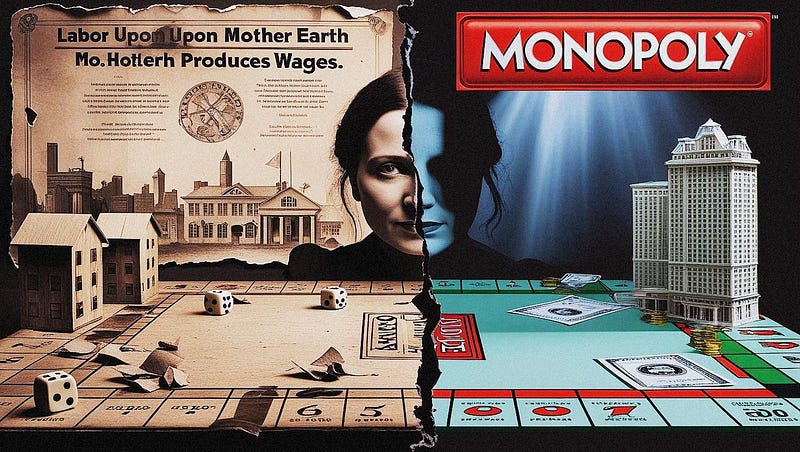
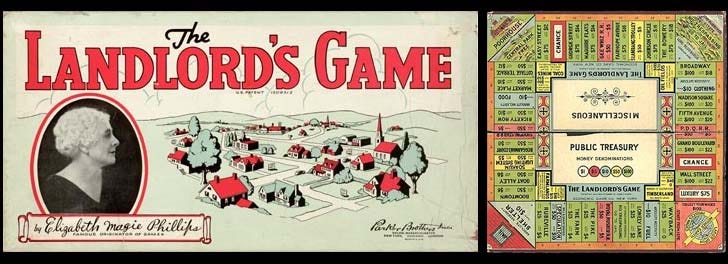
Monopoly’s origins reveal a profound ideological contradiction. The game emerged not as a celebration of capitalism, but as a protest against it. Elizabeth Magie, a stenographer and follower of economist Henry George, designed The Landlord’s Game in 1903 to demonstrate how property monopolies exploit communities. Her board featured two sets of rules: one where collective wealth creation benefited all players, and another where ruthless acquisition led to solitary domination. This duality reflected Magie’s belief that land ownership inherently bred inequality. The game spread quietly through academic circles and Quaker communities, evolving with local landmarks like Atlantic City’s Boardwalk. When Charles Darrow commercialized a near-identical version during the Great Depression, Parker Brothers purchased it, erasing Magie’s subversive intent and rebranding Monopoly as a heroic capitalist saga. This historical revisionism foreshadowed the game’s psychological tensions — a critique of power repackaged as its celebration.
Beneath Monopoly’s colorful facade lie cognitive traps that distort economic reasoning. Players exhibit amplified loss aversion, experiencing the sting of rent payments far more intensely than equivalent gains. The Jail space exploits an illusion of safety, though statistically it prolongs inevitable ruin. Ownership breeds irrational attachment, with players overvaluing their properties and rejecting equitable trades. Most revealing is the dominance of house rules like Free Parking windfalls, which inject random capital and undermine strategy. These unwritten conventions transform Magie’s economic lesson into a lottery, favoring luck over skill and contradicting her original vision. The game’s mechanics thus serve as behavioral petri dishes, exposing how easily humans rationalize exploitation when framed as play.
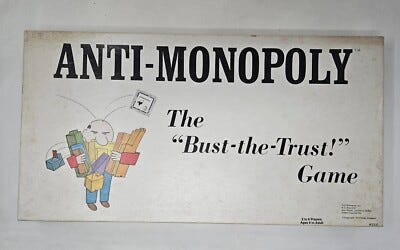
Competing interpretations of Monopoly reflect deeper cultural schisms. Anti-capitalist readings view it as an exposure of wealth concentration’s corrosive effects, where players inevitably morph into cutthroat landlords. Yet this overlooks individual ethical choices during gameplay. Pro-capitalist perspectives celebrate it as a training simulator for investment acumen, disregarding research showing dice rolls dictate most outcomes. Behavioral economists emphasize its demonstration of sunk-cost fallacies, though they often neglect the social dynamics of alliance and betrayal. Ralph Anspach’s 1973 Anti-Monopoly game reignited these debates, leading to legal battles that exposed Parker Brothers’ suppression of Magie’s legacy. Ultimately, Monopoly functions as procedural rhetoric: its rules silently naturalize exploitation, making systemic brutality feel inevitable rather than constructed.
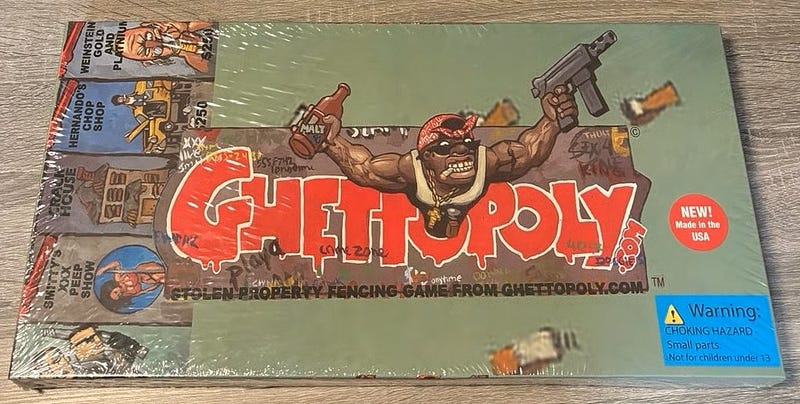
The game’s cultural footprint reveals unsettling psychological conditioning. Studies suggest children who regularly play exhibit reduced sharing behavior, internalizing property as a zero-sum conquest. Negotiation patterns expose societal biases, with male players initiating trades far more frequently while conceding less to female opponents. Monopoly’s Great Depression popularity points to its function as a crisis catharsis, offering illusions of control amid helplessness. Modern controversies like Ghettopoly — banned for racial stereotyping — underscore its potency as a mirror for societal tensions. The game’s endurance stems from this duality: it simultaneously critiques and indulges our appetite for domination.
Real-world applications prove Monopoly’s psychological resonance extends beyond recreation. Economists deploy it in inequality experiments, revealing how players randomly assigned “rich” tokens falsely attribute success to merit. Therapists adapt its mechanics to treat financial anxiety, allowing patients to rehearse debt scenarios safely. Artificial intelligence research exposes inherent biases when algorithms trained on Monopoly negotiate more aggressively against humans than peer AIs. Educational reformers have revived Magie’s cooperative rules, demonstrating that taxing rent to fund public goods reduces game duration while teaching collective prosperity. These adaptations underscore Monopoly’s uncomfortable truth: its mechanics feed competitive instincts so effectively that they overwhelm the anti-monopoly message embedded in its DNA.
Monopoly endures as a cultural paradox. What began as a radical critique became capitalism’s favorite board game through psychological seduction. Its rolling dice and colorful money obscure a foundational tension: Can a game simulate exploitation without glorifying it? Contemporary redesigns strive to restore Magie’s vision of shared abundance, yet the original’s global dominance suggests a darker revelation. As Anspach observed, Monopoly does not create monopolists; it reveals the dominator latent in human nature. The rattling of the dice cup and the crisp snap of paper money are the sounds of our contradictions at play.