The Queen of Shellfish: Unveiling the Delicate Majesty of Aequipecten opercularis
Introduction Tucked beneath the rolling tides of the North Atlantic and Mediterranean lies a shellfish as charming in name as it is in…
Introduction
Tucked beneath the rolling tides of the North Atlantic and Mediterranean lies a shellfish as charming in name as it is in flavor — the queen scallop. More than just a delicacy on European menus, Aequipecten opercularis is a creature of elegant symmetry and ecological importance. Smaller than its kingly cousin but no less regal, the queen scallop has earned its place not only on dinner plates but in conversations about sustainable seafood and marine biodiversity. As climate pressures reshape our oceans and palates, understanding this humble mollusk becomes more than an exercise in curiosity — it’s a culinary and conservation imperative.
Taxonomy
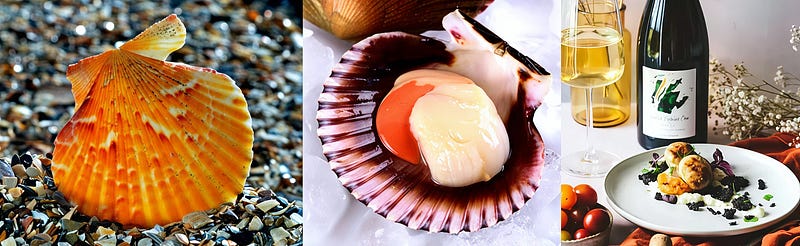
The queen scallop belongs to the family Pectinidae and bears the scientific name Aequipecten opercularis. Sometimes referred to as “Manx scallops” due to their prevalence around the Isle of Man, this species shares lineage with other fan-shaped bivalves but is distinct for its diminutive size and uniquely colored shell, often displaying pinks, purples, and oranges. While not known for subspecies in the strict taxonomic sense, local varieties are sometimes informally recognized by regional fishers and chefs for their slight differences in flavor and shell color. Among edible scallops, it is second in fame only to the larger king scallop (Pecten maximus), yet prized in its own right for tenderness and finesse.
Biology
A masterwork of marine design, the queen scallop measures up to 90 mm, or about 3.5 in, across its shell. It is a filter feeder, drawing plankton and microscopic algae through a specialized siphon system. Its life cycle spans roughly 3 to 5 years, maturing within 1 to 2 years. One of its most fascinating features is its mobility: unlike many bivalves, it can swim by rapidly clapping its shell halves together, using jet propulsion to evade predators like starfish and crabs. Dotting the edge of its mantle are dozens of tiny blue eyes — sensitive to light and movement — giving it a visual awareness rare among shellfish. It reproduces by releasing eggs and sperm into the water column in warmer months, typically when sea temperatures hover around 12°C or 53.6°F.
Ecology
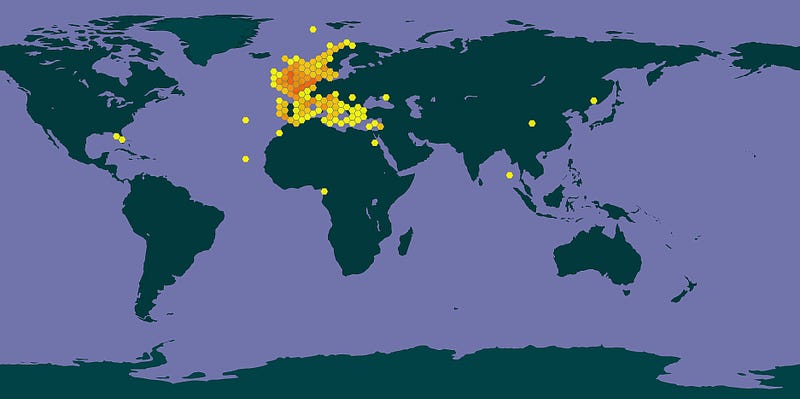
Queen scallops thrive in clean, shallow waters ranging from 20 m to 100 m deep, or 66 ft to 328 ft, favoring sandy or gravelly seabeds. They are most commonly found around the British Isles, from the Irish Sea to the North Sea and into the western Mediterranean. Their role in the marine food web is vital: by filtering seawater, they help regulate plankton populations and improve water clarity. However, they are vulnerable to the twin threats of overfishing and habitat degradation. Bottom trawling, in particular, poses a major ecological concern as it can destroy the seabed ecosystems where scallops breed and feed. In response, conservation efforts — especially in the Isle of Man — have led to the establishment of seasonal closures and no-take zones. These localized management strategies show promising signs of stock recovery, offering a rare example of sustainable fisheries policy that works.
Uses
Beyond their culinary prestige, queen scallops have economic significance in coastal communities throughout Europe. They are typically harvested via dredging or, increasingly, by hand-diving — a more sustainable method that preserves both the scallops and their habitat. While smaller than their kingly counterparts, they are often sold whole, with the coral (roe) intact, a feature appreciated by traditionalists. The shell, though less commercially exploited, is sometimes used in decorative crafts or crushed for calcium in animal feed. As sustainable seafood rises in market demand, Aequipecten opercularis has emerged as a model organism for ethical aquaculture and small-scale fishing.
Culinary Aspects
Sweet, delicate, and firm without being chewy, the queen scallop is a chef’s dream. Unlike larger scallops that can be overcooked in a blink, these petite morsels cook evenly and quickly, offering versatility across cuisines. In the Isle of Man, they’re famously served with bacon and creamy sauces, while in France and Spain, they often star in seafood paellas and marinière preparations. Their coral adds a buttery richness when included. Whether pan-seared in butter, grilled on the half-shell, or tossed into a pasta with garlic and white wine, the queen scallop delivers a flavor profile that is simultaneously briny and refined. A 100 g portion — about 3.5 oz — offers approximately 88 calories, 17 g of protein, and less than 1 g of fat, making it a lean source of high-quality seafood protein.
Wine Pairings
The light sweetness and saline notes of queen scallops beg for wines with crisp acidity and minerality. A Chablis, with its flinty backbone and citrus profile, makes a classic pairing, enhancing the scallop’s oceanic freshness. Albariño, from Spain’s coastal Rías Baixas, echoes the scallop’s maritime character with green apple and sea spray notes. For a more expressive pairing, consider a dry Riesling or a lightly oaked Chardonnay — something that lifts the flavors without overpowering their subtlety. Avoid bold reds or heavily oaked whites, as their weight and tannin clash with the scallop’s silkier nature.
Conclusion
The queen scallop is not simply a shellfish — it is a symbol of harmony between nature’s elegance and culinary artistry. Its biology fascinates, its habitat enriches, and its flavor elevates any dish graced by its presence. Yet this regal bivalve’s future is not guaranteed. Only through responsible fishing, thoughtful consumption, and marine stewardship can we ensure that its story continues. As you savor its delicate sweetness, let it remind you of the ocean’s fragile gifts and the role we all play in preserving them.