The Silent Sentinel of Coral Reefs: Understanding the Whitetip Reef Shark (Triaenodon obesus)
Introduction Among the world’s coral sentinels, the whitetip reef shark (Triaenodon obesus) is one of the most recognizable and…
Introduction
Among the world’s coral sentinels, the whitetip reef shark (Triaenodon obesus) is one of the most recognizable and misunderstood. Sleek, nocturnal, and perfectly adapted to reef life, this shark has patrolled tropical waters for millions of years. Its importance reaches beyond the biological — it’s an indicator of reef health, a quiet regulator of marine balance, and in some cultures, a delicacy whose preparation reflects centuries of coastal tradition. Understanding this species means looking closely at the intertwined worlds of marine ecology, human culture, and sustainability.
Taxonomy
The whitetip reef shark belongs to the family Carcharhinidae, order Carcharhiniformes, class Chondrichthyes, phylum Chordata. It is the sole member of its genus, Triaenodon. Its English name, “whitetip reef shark,” derives from the stark white markings on its dorsal and caudal fins. Vernacular names include “requin dormeur à pointes blanches” in French Polynesia (French), “tiburón de arrecife de puntas blancas” in Mexico (Spanish), “manō haole” in Hawaii (Hawaiian), and “hiu totol putih” in Indonesia (Indonesian). These names reflect regional familiarity with the species as both a natural presence and, historically, a source of protein. No recognized subspecies exist, though genetic variations appear across the Indo-Pacific.
Biology
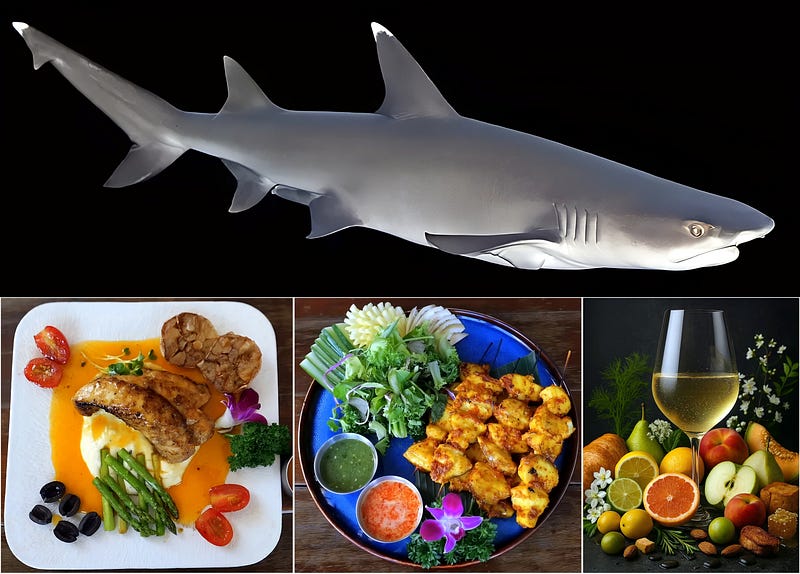
Reaching an average length of 5.2 ft (1.6 m) and a maximum of about 6 ft (1.83 m), Triaenodon obesus is built for the reef’s intricate terrain. Its slender body, short snout, and oval eyes distinguish it from pelagic relatives. The whitetip’s gills and spiracles allow it to rest motionless on the seafloor while maintaining respiration — an uncommon trait among sharks. Sexual maturity occurs at roughly 4.3 ft (1.3 m) for males and 4.6 ft (1.4 m) for females. Gestation lasts around 12 months, producing litters of one to five pups. With a lifespan exceeding 25 years, it exemplifies a K-selected strategy: low reproductive output offset by longevity and niche specialization.

The species’ dentition — small, serrated, and numerous — allows it to extract prey from reef crevices, including eels, octopuses, and bony fishes. Unlike fast-swimming hunters, the whitetip’s slow, deliberate movements conserve energy, a necessity in resource-variable coral systems.
Ecology
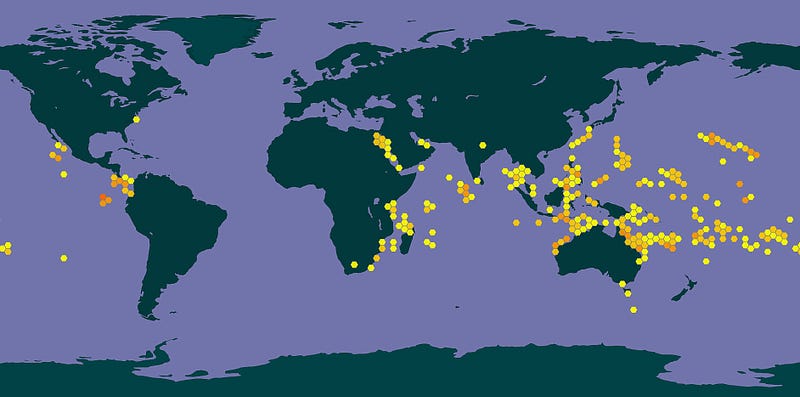
Distributed across the Indo-Pacific from the Red Sea to the Central Pacific, the whitetip reef shark favors coral slopes and lagoons between 26°F and 86°F (−3°C to 30°C). It is primarily nocturnal, hunting within restricted home ranges that it defends against competitors. This site fidelity makes populations highly susceptible to localized depletion. As a top mesopredator, the species controls populations of mid-level carnivores, indirectly supporting coral resilience and algal balance.
Coral degradation, overfishing, and fin trade exploitation threaten populations. Although the species is protected in several marine parks, unregulated bycatch remains a major issue. Classified as “Near Threatened” by the IUCN, its decline signals broader ecosystem stress. Sustainable ecotourism — particularly in regions like the Maldives and Palau — offers an alternative economic value far exceeding consumptive use.
Uses
The flesh of Triaenodon obesus has historically been consumed in Pacific and Southeast Asian coastal communities. Edible parts include the fillet and liver. The meat, low in fat and firm in texture, requires thorough processing due to the urea content that can impart ammonia-like odor. Traditional methods involve soaking in saltwater or vinegar for 12 hours (0.5 days) before boiling or drying. Typical dishes include shark curry in Sri Lanka, dried shark jerky in the Philippines, and smoked preparations in the Maldives. Yield averages 45 kg (99 lb) of edible meat per mature specimen. Nutritionally, the flesh provides about 130 kcal per 100 g (3.5 oz), high in protein (21 g) and low in carbohydrates. It contains trace minerals such as selenium and phosphorus, but also poses a risk of methylmercury accumulation.
The liver, rich in squalene oil, has been used for medicinal and cosmetic purposes. Squalene concentrations range from 30% to 60% of liver oil by volume, extracted via cold pressing. Historically used in traditional ointments and lighting oil, today it finds cosmetic application in moisturizers and serums. Regulatory restrictions now limit commercial harvesting due to sustainability and bioaccumulation concerns.
Byproducts include cartilage for glucosamine supplements and dried fins for traditional soups, though finning practices have drawn global criticism. Modern conservation frameworks, including CITES Appendix II listing, regulate international trade. In the context of renewable marine resources, the species’ low reproductive rate makes it an unsuitable candidate for large-scale harvest.
From an ecological services perspective, each whitetip reef shark contributes to approximately 0.6 metric tons of carbon sequestration over its lifespan by maintaining trophic balance within reef ecosystems. In restoration contexts, protecting these sharks helps sustain coral vitality, indirectly benefiting coastal carbon sinks and fisheries productivity.
Culinary Aspects
Properly processed, whitetip reef shark meat presents a mild, slightly sweet flavor profile akin to monkfish or swordfish. The texture is firm and meaty with moderate flake, suitable for grilling, stewing, or drying. When prepared as curry, the meat absorbs spice blends effectively, balancing the umami depth of turmeric, chili, and tamarind. Its aroma, once neutralized of ammonia, is faintly oceanic. Chemesthetic qualities include mild salinity and heat absorption from spice-based marinades.
Mouthfeel is dense, yielding under pressure but not fibrous. The finish is clean with a short aftertaste, particularly when paired with acidic accompaniments like lime or tamarind. In coastal Indonesia and the Maldives, marinated shark kebabs grilled over coconut husk embers highlight its best attributes — smoky, lightly charred, and texturally satisfying.
Nutritionally, its high protein content supports muscle development, while omega-3 fatty acids, though lower than in pelagic species, contribute to cardiovascular benefits. However, consumption should remain occasional due to mercury risk. Culinary revival movements in the Pacific increasingly replace whitetip shark meat with sustainable alternatives such as mahi-mahi or grouper to reduce ecological pressure.
Wine Pairings
When prepared as curry or kebab, the savory and spiced notes pair best with off-dry white wines offering tropical fruit and acidity. A well-balanced Albariño from Rías Baixas (Spain) complements coconut and chili sauces, its crisp minerality cutting through the richness. For grilled preparations, a Grüner Veltliner from Austria provides peppery freshness and a lean texture match. A lesser-known yet striking choice is Assyrtiko from Santorini, whose saline minerality mirrors the shark’s oceanic essence. In Japanese-inspired dishes using soy and ginger, a Koshu from Yamanashi delivers subtle citrus and umami resonance. For dried or smoked shark, a light-bodied Listán Blanco from the Canary Islands harmonizes with smoky and briny notes, achieving a rare sensory balance.
Conclusion
The whitetip reef shark embodies both the fragility and endurance of coral ecosystems. It thrives only where reefs thrive, making its conservation inseparable from marine sustainability. Once a common sight across Indo-Pacific shallows, it now stands as a measure of ecological integrity — a silent gauge of humanity’s relationship with the sea. Protecting it is not merely about species survival; it is about preserving the biological and cultural continuity of the world’s coral realms.