The Snow Goose: A Migratory Marvel Bridging Wilderness, Cuisine, and Conservation
Introduction: Few birds capture the imagination like the snow goose (Anser caerulescens), whose immense, swirling flocks can turn the sky…
Introduction:
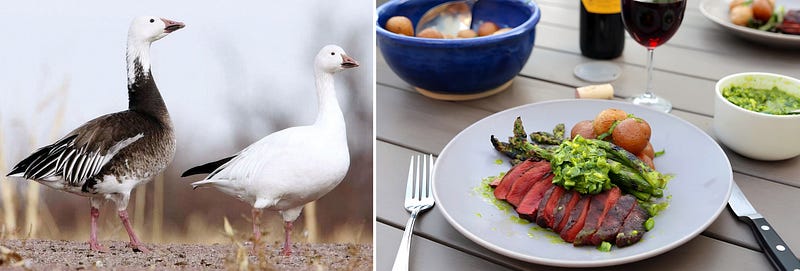
Few birds capture the imagination like the snow goose (Anser caerulescens), whose immense, swirling flocks can turn the sky into a living cloud. These elegant waterfowl, known for their resilience and adaptability, undertake epic migrations from Arctic tundra to southern wetlands, embodying the delicate balance between wilderness and human stewardship. Revered by naturalists for their ecological significance and by chefs for their culinary potential, snow geese present a narrative of interconnection: how the survival of one species shapes ecosystems and human culture alike.
Taxonomy:
The snow goose belongs to the family Anatidae, a diverse group that includes ducks, geese, and swans. Its scientific name, Anser caerulescens, reflects the species’ characteristic “blue morph,” one of two distinct color forms found alongside the more common white morph.
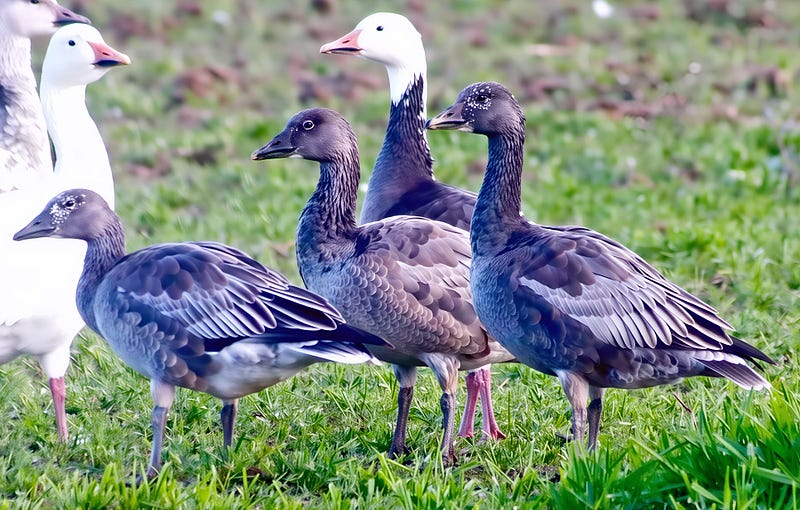
Within the species are two recognized subspecies: the greater snow goose (Anser caerulescens atlanticus) and the lesser snow goose (Anser caerulescens caerulescens). The greater snow goose, larger and predominantly eastern in its migratory routes, is a key focus of conservation efforts, while the smaller, more numerous lesser snow goose ranges widely across North America. Both subspecies share a suite of traits that make them highly recognizable and culturally significant.
Biology:
Snow geese are medium-sized geese weighing approximately 4.5–6.6 lb (2–3 kg) with wingspans reaching 53–65 in (135–165 cm). They exhibit remarkable plumage dimorphism: the white morph is pure white with black wingtips, while the blue morph displays a slate-blue body with a white head. Adapted to a harsh Arctic breeding season, snow geese feed primarily on roots, grasses, and agricultural grains, using their strong, serrated bills to pull plants from frozen soil. They are monogamous and often form life-long pair bonds, breeding in colonies that can number in the thousands. These colonies, located in the tundra of Canada, Greenland, and Alaska, must complete the cycle of nesting, raising young, and molting before autumn’s chill prompts their legendary migrations of up to 3,000 mi (4,828 km).

Ecology:
Snow geese play a pivotal role in the ecosystems they inhabit. Their foraging behavior aerates soil and influences plant communities, yet their growing populations — estimated at over 15 million individuals — have raised concerns of habitat degradation, particularly in Arctic nesting areas. Overgrazing by dense flocks can damage fragile tundra vegetation, leading to cascading ecological effects. At the same time, snow geese serve as prey for Arctic foxes and birds of prey and are integral to migratory flyways across the Americas. Conservation efforts now aim to balance population growth with habitat sustainability, using regulated hunting and habitat restoration to protect both the species and the landscapes it depends on.
Uses:
Economically, snow geese hold a unique position. They support traditional subsistence hunting in northern communities and are a valued game bird throughout North America. Hunting seasons are carefully managed to control population growth and reduce pressure on Arctic habitats. This balance has transformed the snow goose into a model of sustainable use: a species that connects conservation policy with cultural practices. For eco-tourism, their mass migrations draw birdwatchers from across the globe, providing seasonal economic boosts to rural regions along major flyways.
Culinary Aspects:
For centuries, snow geese have been a staple of traditional cuisine, valued for their lean, dark meat and distinctive flavor. Their diet of wild grains and grasses imparts a complexity often compared to grass-fed beef. When roasted whole, the meat remains moist and flavorful, though it requires careful cooking to avoid toughness. Modern chefs have embraced snow goose confit, seared breast served medium rare at 140°F (60°C), and slow braises with root vegetables and herbs. Rendered fat, prized for its depth of flavor, is used for roasting potatoes or enriching sauces. With nutritional benefits including high protein and lower fat content compared to domestic poultry, snow geese represent a health-conscious alternative when harvested sustainably.
Wine Pairings:
The robust, earthy flavors of snow goose call for wines with structure and complexity. A pinot noir from Oregon or Burgundy, with its bright acidity and red fruit notes, complements the lean richness of roasted goose. For more robust preparations, such as braises with wild mushrooms, a full-bodied syrah or cabernet franc enhances the dish’s depth. White wine lovers might opt for an aged chardonnay, whose subtle oak and buttery texture create harmony with goose fat–infused sauces. These pairings elevate the snow goose from a rustic tradition to a gourmet centerpiece.
Conclusion:
The snow goose is more than a spectacle in the sky. It is a species at the crossroads of conservation, culinary heritage, and economic sustainability. Its migrations connect hemispheres, while its presence in our diets and landscapes underscores the interconnectedness of human and natural systems. As stewards of the environments snow geese depend upon, we are called to balance appreciation with action — ensuring that future generations can witness the living cloud of wings passing overhead.