The Spice That Roars: Ajowan’s Botanical Brilliance and Bold Culinary Fire
Introduction In the quiet corner of a spice rack or the backroom of a bustling Indian kitchen lies a tiny seed that rarely seeks the…
Introduction
In the quiet corner of a spice rack or the backroom of a bustling Indian kitchen lies a tiny seed that rarely seeks the spotlight, but always leaves an impression — Ajowan, or Trachyspermum ammi. With its explosive flavor, ancient medicinal roots, and increasingly important role in sustainable agriculture, Ajowan is more than a culinary footnote. It is a botanical marvel, an ecological ally, and a cultural cornerstone in cuisines stretching from Persia to Punjab. As global foodies, conservationists, and biologists look toward resilient, flavorful crops with heritage and health in their veins, Ajowan is striding out of obscurity and demanding a proper introduction.
Taxonomy
Ajowan belongs to the Apiaceae family — the same charismatic clan that gave us carrots, celery, and coriander. Its genus, Trachyspermum, is primarily found across warm and semi-arid regions of Asia. The most notable and widely cultivated species is Trachyspermum ammi, though it’s often confused with its botanical cousins due to the seed’s uncanny resemblance to caraway and cumin. Common names for Ajowan reflect its globe-spanning presence: “Omam” in Tamil, “Ajwain” in Hindi, “Yavani” in Sanskrit, and “Bishop’s weed” in English, though the latter is often applied to other unrelated plants. Botanists may bicker over taxonomy, but cooks and herbalists have always known exactly what they’re dealing with — a potent, peppery panacea masquerading as a spice.
Biology
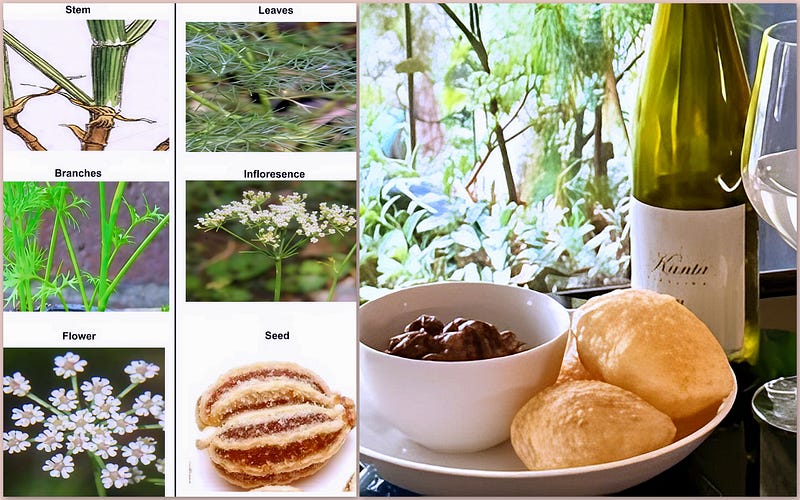
Ajowan is a hardy annual herb that favors tough conditions over pampered gardens. It grows up to two feet tall, sprouting feathery leaves and delicate white umbels of tiny flowers that charm bees and butterflies alike. Its seeds — technically schizocarps — are ridged, oval, and grayish-brown, exhaling a nose-tingling aroma that hints at thyme, caraway, and a hint of bitterness. That scent? It comes from thymol, the compound that gives both Ajowan and thyme their antiseptic, almost medicinal bite. Ajowan thrives in sandy, alkaline soils and can tolerate drought, making it a prime candidate for arid-climate agriculture where water is increasingly precious. Its lifecycle is swift — seed to harvest in three months — mirroring its flavor: brief, bold, and unforgettable.
Ecology
Native to the eastern Mediterranean and Southwest Asia, Ajowan now flourishes in India, Iran, Egypt, and Pakistan. Its ability to grow in marginal soils with minimal irrigation makes it a darling of regenerative agriculture, especially in regions battling desertification. Unlike water-thirsty monocrops, Ajowan doesn’t demand chemical coddling. It attracts pollinators, deters pests, and enriches the soil with minimal intervention. Small-scale farmers, particularly in Rajasthan and Gujarat, rely on Ajowan as a cash crop that respects the land. It’s not just a sustainable plant — it’s an ecological partner, perfectly evolved for tomorrow’s agricultural challenges.
Uses
Economically, Ajowan seeds are valued in both domestic and export markets for their culinary, medicinal, and industrial applications. Thymol, its principal essential oil, is extracted for use in antiseptics, soaps, and herbal remedies. In traditional medicine — Ayurveda, Unani, and Siddha alike — Ajowan is hailed as a digestive, a decongestant, and an antifungal. Think of it as nature’s pharmacy wrapped in a spice jar. From a market perspective, Ajowan enjoys stable demand, particularly in the Middle East and South Asia, where it is considered both a spice and a sacred offering. With the growing global appetite for herbal wellness and clean-label remedies, Ajowan stands to gain a foothold in modern nutraceuticals and organic farming systems alike.
Culinary Aspects
Ajowan is the culinary equivalent of a rebel poet — brash, unapologetic, and unforgettable. Its pungency can overwhelm if mishandled, but when tempered — either dry-roasted or bloomed in ghee — it sings in harmony with lentils, legumes, and fried doughs. In Indian cuisine, Ajowan is the backbone of paratha dough, pakoras, and papadums. In Persian stews and North African breads, it adds depth and heat without the fuss of chilies. The flavor is sharp, warming, and medicinal — a kiss from the apothecary’s tongue. It aids digestion, settles gas, and lifts the flavor of otherwise starchy or bland dishes with a single pinch. Used sparingly, it can transform; used boldly, it can dominate.
Wine Pairings
Pairing wine with Ajowan-laced dishes requires tact, not bravado. Its thyme-like notes and biting heat call for wines with acidity and herbal resonance. A crisp Grüner Veltliner, with its white pepper notes, dances well with Ajowan-seasoned lentils. Dry Rieslings — especially those from the Mosel Valley — tame Ajowan’s bitterness while complementing its intensity. For heavier dishes, like Ajowan-flecked naan or fried snacks, a chilled rosé or a light-bodied Pinot Noir balances the oil while letting the spice shine. Avoid overly oaked whites or tannic reds — they’ll clash with Ajowan’s assertiveness and muddy the culinary message.
Conclusion
Ajowan isn’t a spice for the faint of heart. It doesn’t whisper like basil or linger like saffron — it makes its case immediately, unmistakably. Yet in its boldness lies balance: between medicine and flavor, past and future, resilience and refinement. As chefs search for new yet ancient flavors, and as farmers lean into crops that nurture both land and community, Ajowan reminds us that the fiercest ingredients often come from the most humble places. A seed no larger than a flea, but with the power to scent a kitchen, soothe a belly, and sustain a field — that is the magic of Trachyspermum ammi. And it deserves its place at the global table.