The Sting and the Sustenance: How Nettle (Urtica dioica) Weaves Itself into Our Ecosystems and…
Introduction
The Sting and the Sustenance: How Nettle (Urtica dioica) Weaves Itself into Our Ecosystems and Kitchens
Introduction
Few plants have earned such a dual reputation for irritation and nourishment as the stinging nettle, Urtica dioica. Known for the unmistakable tingle of its microscopic hairs, this hardy perennial thrives where other plants falter, forging a quiet alliance with human history. In folklore, nettles symbolize both hardship and healing, an apt metaphor for a species that can sting your skin yet sustain your body. Beyond its sting, nettle offers a remarkable combination of ecological utility, culinary versatility, and untapped economic value.
Taxonomy
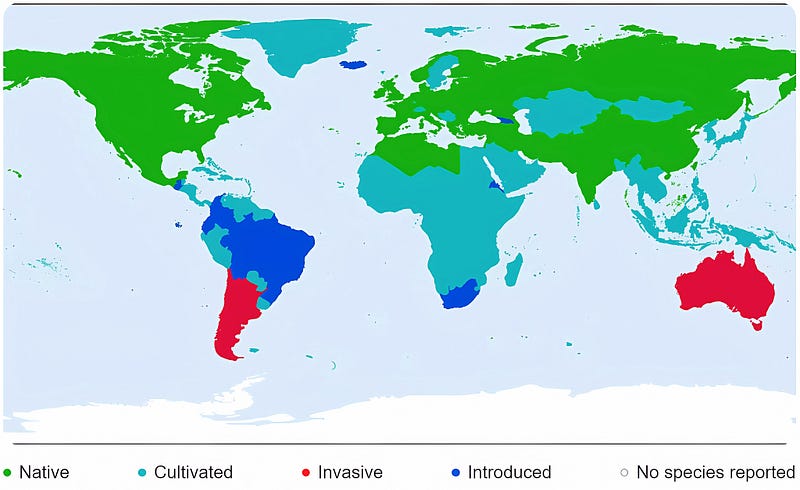
Urtica dioica belongs to the family Urticaceae, a small but significant group of flowering plants. The species is divided into multiple subspecies, including Urtica dioica subsp. dioica, native to Europe and Asia, and Urtica dioica subsp. gracilis, more common in North America. The plant is known by various names depending on region and tradition: stinging nettle, common nettle, and occasionally burn-weed or devil’s leaf. While nearly all nettle species are technically edible when properly prepared, Urtica dioica stands out for its widespread use as a culinary green.
Biology
Nettles grow as herbaceous perennials, capable of reaching heights of 3 to 7 feet (0.9 to 2.1 m) under ideal conditions. Their heart-shaped, serrated leaves are covered in fine hairs called trichomes, each one a tiny hypodermic needle filled with irritants such as histamine and formic acid. This adaptation deters herbivores, yet these defenses are easily neutralized by cooking or drying. Nettle’s roots form rhizomatous networks that allow the plant to spread quickly, ensuring its survival in disturbed soils and forest edges.
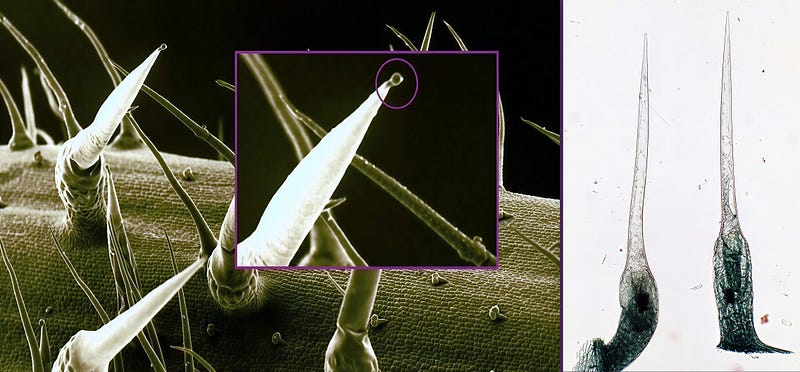
Flowering occurs in late spring and early summer when inconspicuous green blossoms appear. These wind-pollinated flowers produce countless seeds, further expanding the plant’s territory. Once cut or harvested, nettle regenerates rapidly, making it a renewable resource for foragers and farmers alike.
Ecology
Nettle’s ecological role is more profound than many realize. The plant thrives in nitrogen-rich soils and acts as a bioindicator for fertile ground. Its dense stands provide habitat for a variety of insects, including butterflies such as the red admiral and small tortoiseshell, whose larvae feed exclusively on nettle leaves. Birds also benefit from its protective thickets, nesting within its prickly framework.
In ecosystems threatened by erosion, nettle’s extensive root systems stabilize soil. When cultivated sustainably, nettle contributes to biodiversity and soil regeneration without the need for chemical fertilizers or pesticides. Its presence often signals a healthy, functioning environment.
Uses
Beyond its ecological significance, nettle has long been a staple in traditional medicine. Ancient cultures brewed nettle teas to treat ailments ranging from joint pain to seasonal allergies. Modern studies confirm that nettle contains vitamins A and C, calcium, iron, magnesium, and protein in surprising abundance. Once dried or steeped, its sting is neutralized, leaving behind a nutritious, mineral-rich tonic.
Nettle fiber, similar in quality to flax, has been used for centuries to create textiles and ropes. With renewed interest in sustainable materials, there is potential for nettle-based fabrics to reclaim a place in modern markets. Its high yields and rapid regrowth make it an attractive candidate for low-impact agriculture.
Culinary Aspects
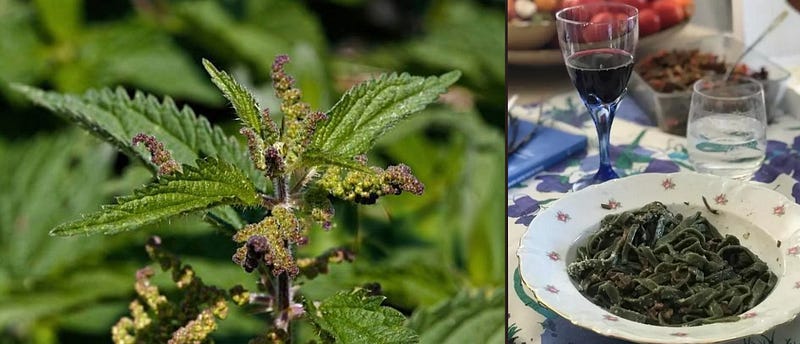
When cooked, nettle loses its sting and reveals a flavor reminiscent of spinach, though earthier and more herbaceous. Young shoots, harvested in early spring when the leaves measure about 2 inches (5 cm) in length, are especially prized for their tenderness. Nettles can be sautéed in olive oil, folded into pasta dough, blended into soups, or dried to make vibrant teas.
In European culinary traditions, nettle soup remains a seasonal delicacy. In Italy, nettle risotto pairs its deep green flavor with creamy arborio rice. In Nordic countries, it often replaces spinach in pies and tarts. Its versatility, paired with its dense nutritional profile, makes nettle a plant worth rediscovering in modern kitchens.
Wine Pairings
Nettle’s subtle earthiness and slightly grassy flavor pair beautifully with crisp, high-acid wines. A dry Sauvignon Blanc, particularly from New Zealand, highlights nettle’s green notes without overwhelming its delicacy. Alternatively, a lightly oaked Chardonnay complements nettle’s texture when incorporated into creamy dishes. For nettle soups or simple sautéed preparations, a Grüner Veltliner from Austria provides a balanced herbal counterpoint.
Conclusion
Urtica dioica is more than a plant with a sting. It is a resilient survivor, a nutrient powerhouse, and an ally in ecological restoration. By recognizing its value — from supporting pollinators to gracing our plates — we can reframe nettle not as a nuisance but as a cornerstone of sustainable living. Next time you brush past a patch of nettles, consider that their sting is also a signal: nature often guards its greatest treasures with a little pain.