The Strategic Importance of the Panama Canal to China
Introduction A ribbon of water only 51 miles long, the Panama Canal is far more than a maritime shortcut. It is a geopolitical hinge — an…
Introduction
A ribbon of water only 51 miles long, the Panama Canal is far more than a maritime shortcut. It is a geopolitical hinge — an artery through which trade, influence, and ambition flow between oceans. For China, the world’s largest exporter and a nation intent on knitting the globe into its Belt and Road Initiative, this historic canal is not just a channel for ships but a symbol of presence in a region long dominated by U.S. power. Yet the question lingers: Is China’s interest in the Panama Canal a masterstroke of strategy or an overstated footnote in a much larger global narrative?
Economic Significance: A Shortcut With Global Reach
The Panama Canal drastically shortens shipping routes, reducing costs and time for vessels carrying Chinese goods to the Americas and Europe. A voyage from Shanghai to New York shrinks from nearly 16,000 miles via Cape Horn to about 10,000 miles through Panama. With the 2016 expansion allowing “New Panamax” ships, the canal can now accommodate vessels that mirror China’s massive manufacturing capacity.
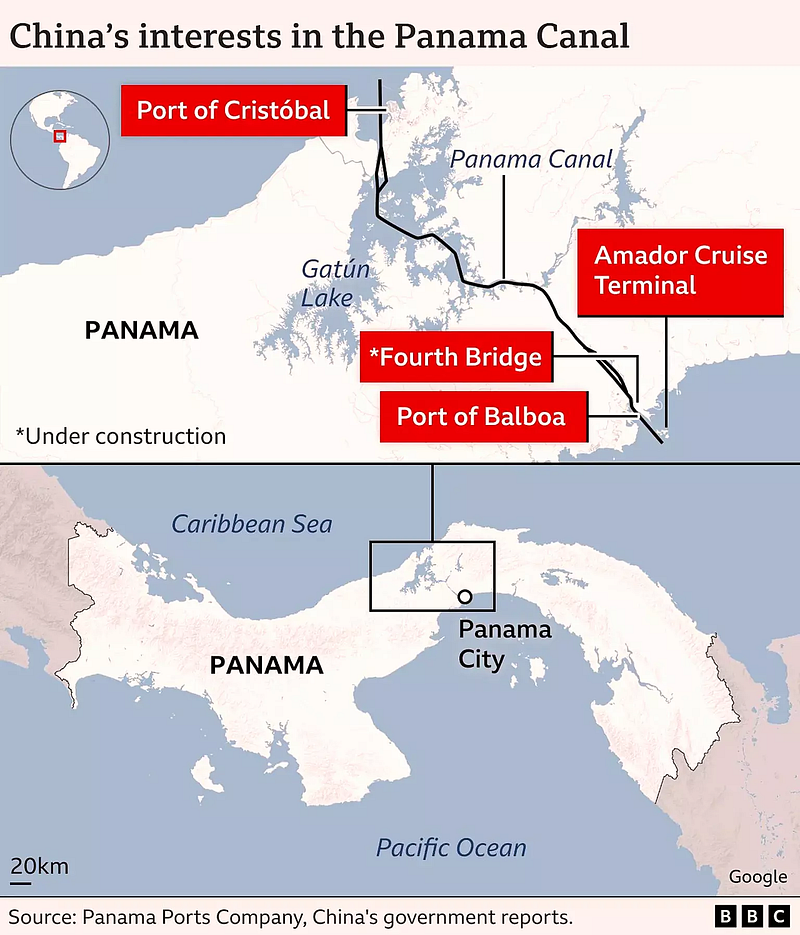
China’s commercial presence is tangible. It is the second-largest user of the canal after the United States, accounting for over one-fifth of its cargo traffic. Chinese conglomerates operate both the Balboa and Cristóbal ports, flanking the canal like sentinels on either side. These positions streamline logistics and anchor Chinese trade interests firmly in the hemisphere.
Strategic Interests: A Foothold, Not a Fortress
While some observers — most vocally former U.S. President Donald Trump — claim China “runs” the canal, the reality is more nuanced. The waterway remains under Panamanian control. Yet Beijing’s strategy is not military occupation; it is influence through infrastructure. Investments in bridges, terminals, and logistics hubs weave China into Panama’s economic fabric.
Through the Belt and Road Initiative, China views the canal as part of a wider Maritime Silk Road, linking Asia with Latin America’s resource wealth and consumer markets. This is a long game: securing trade corridors, cultivating soft power through Confucius Institutes, and embedding itself in the regional economy without firing a shot.
International Relations: A Delicate Balance of Power
Panama’s 2017 diplomatic pivot from Taiwan to Beijing marked a decisive moment, signaling China’s diplomatic reach into the U.S.’s traditional sphere. For Washington, this was a wake‑up call, prompting renewed attention to Latin American partnerships. For Panama, Chinese investments offered opportunities for growth — new jobs, modern infrastructure, and expanded trade.
Yet influence is a double-edged sword. China’s rising presence draws scrutiny from U.S. officials wary of any erosion of American primacy in the hemisphere. The result is a delicate balancing act, with Panama caught between two economic titans whose interests converge — and occasionally collide — on its soil.
Challenges and Opportunities: The Uncharted Waters Ahead
China’s engagement is not without risks. Political instability in Panama could unsettle investments, while climate‑driven droughts already threaten canal operations. Competition from the Suez Canal and emerging Arctic routes also challenge Panama’s primacy.
Still, opportunities abound. Chinese companies’ expertise in large-scale infrastructure can help Panama adapt to environmental pressures and expand port capacity. Collaborative investments in water conservation or renewable energy could transform these challenges into new footholds for sustainable growth — benefiting both China and the region.
Conclusion
The Panama Canal is more than steel gates and flowing water; it is a test of strategy, patience, and vision. For China, it is both a vital artery in global trade and a carefully cultivated foothold in a region rich with opportunity yet fraught with geopolitical sensitivities. Whether this presence becomes a triumph of long-term strategy or a minor chapter in China’s global story depends on how deftly Beijing navigates the currents of international relations, environmental change, and regional politics.
As ships glide silently through the canal, they carry more than cargo — they carry the weight of shifting global power.