To Rebuild Approval, Trump and GOP Must Trade Chaos for Competence and Deliver on Economy and…
Stability as the Prerequisite for Sustaining the Trump Trajectory
To Rebuild Approval, Trump and GOP Must Trade Chaos for Competence and Deliver on Economy and Border
Stability as the Prerequisite for Sustaining the Trump Trajectory
The political enterprise built around Trump’s 2016 insurgency and solidified through his subsequent governance has reached an inflection point. The movement’s long-term viability now hinges less on ideological distinctiveness and more on its ability to demonstrate operational stability, managerial discipline, and institutional reliability. Trump’s overarching vision — reindustrialization, strategic nationalism, border integrity, economic sovereignty, and a revival of the middle class — retains substantial resonance across the electorate. But resonance alone is no longer sufficient. To maintain momentum and solidify public confidence, both Trump and the Republican Party must transition from disruptive insurgency to controlled, credible stewardship.
The electorate is not rejecting the substance of the Trump agenda. Surveys consistently show continued public alignment with its central policy pillars. What voters increasingly question is execution: whether the movement can reduce volatility, stabilize governance, and deliver consistent institutional performance. The next phase of political durability depends on answering that question affirmatively. The challenge is not ideological positioning, but rather an operational posture. To preserve and project the Trump vision into the next administration and beyond, the GOP must present a unified, disciplined, low-friction leadership model that signals maturity, seriousness, and predictability.
Modern voters are exhausted. They no longer reward perpetual confrontation, reactive communication, or internal fragmentation. They reward leaders and parties that can lower the temperature, restore calm, and demonstrate competence on a large scale. For Trumpism to endure as a governing project rather than a cyclical personality-driven wave, the movement must project confidence not through conflict, but through stability. The pathway is straightforward: suppress volatility, centralize message discipline, deliver measurable wins, and institutionalize a temperament that reassures rather than agitates.
If Trump and the GOP can execute this pivot — from turbulence to order, from improvisation to implementation — they retain the capacity not only to consolidate current gains but to expand support into the political middle. If they fail, they risk approval stagnation and erosion of the very coalition required to sustain the Trump vision in 2028 and beyond.
This stabilization framework is therefore not cosmetic. It is structural. It is the operational precondition for translating Trump’s agenda into a durable governing legacy.
The Strategic Imperative: Conflict Reduction and Predictability Restoration
A modern presidency facing approval drag must end unnecessary confrontations and reorient around operational delivery. Public exhaustion with perpetual conflict produces predictable approval decay among independents and suburban moderates. Each new feud with celebrities, governors, companies, or officials generates marginal losses in persuadable segments and resets stabilization timelines. Leaders regain altitude only when they stop developing their own headwinds. The strategic shift from performative combat to disciplined governance is therefore foundational. Conflict that does not secure a policy win, shift a structural variable, or contribute to operational leverage becomes a liability. The first organizational task is to shut down turbulence.
The Behavioral Pivot: The High-Discipline Executive Persona
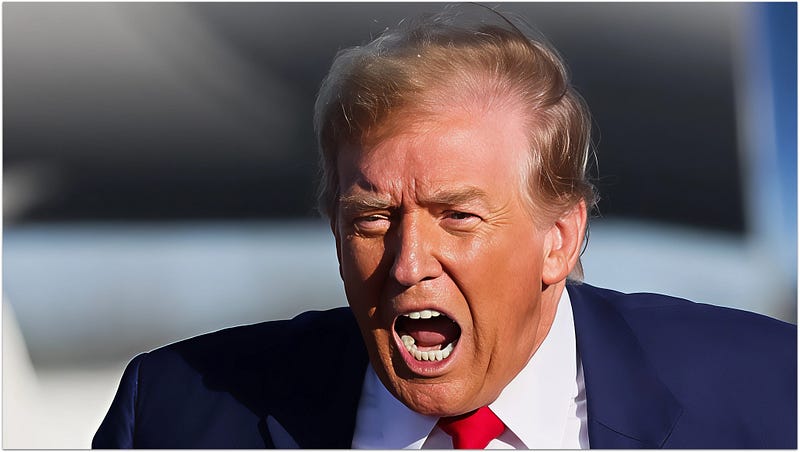
Periods when Trump adopted a measured, controlled, scripted posture routinely produced immediate polling benefits—calm, disciplined presentation functions as a psychological safety signal to voters who are averse to volatility. Executives in crisis environments regain legitimacy by projecting emotional regulation. An elevated, quiet, and teleprompter-guided tone moderates risk perception, lowers social temperature, and widens the aperture to persuade the persuadables. This posture cannot be episodic; it must be institutionalized as a sustained operating rhythm. Surrogates, not principals, should own aggressive message vectors. The leader must own stability.
Operational Deliverables: Border Control and Cost-of-Living Relief
Approval recovery requires visible, measurable wins that are directly tied to the public’s pain points. The border and household economics are the two highest-salience drivers. As the incumbent, Trump would be held responsible for border outcomes regardless of the predecessor. Only empirical improvements in crossings, processing backlogs, and operational tempo shift perceptions of competence. Similarly, grocery prices, gas prices, and rent have a significantly greater influence on everyday sentiment than macroeconomic charts. Cost-of-living relief necessitates aggressive interventions in supply chains, ports, trucking capacity, retail pricing, and energy throughput. When households experience financial relief, approval rates increase. Without this, approval remains structurally capped.
Institutional Coordination: Ending Legislative Volatility
Approval decay accelerates when governance appears chaotic. Shutdowns, threats of shutdowns, intra-party warfare, and public procedural dysfunction all punish incumbents. Stabilizing congressional operations requires negotiated discipline, predictable budget cycles, and the relocation of partisan conflict into closed-door processes. Predictability is itself a political asset. The more predictable the governing environment becomes, the more elasticity approval gains.
Delegated Competence: The Governance Backbone
A president built for emotional mobilization must counterbalance that volatility by empowering a visible, credible governing team. A Cabinet and senior staff who consistently project discipline, technical skill, and seriousness function as stabilizers. When the principal focuses on vision and the team executes operational reliability, they moderate and recalibrate their risk assessments. Public trust increases when the governing machine appears modern, competent, and adult.
Succession Architecture: Preparing a Stability-Framed 2028 Heir
Incumbent approval is influenced by the public’s perception of the successor pipeline. If the next-in-line candidate appears erratic or extreme, voters tend to penalize the incumbent. Elevating JD Vance or a chosen successor as a calm, responsible, technocratic steward lowers risk perception across the entire political brand. Assigning high-credibility policy responsibilities and scripting rhetoric around economic growth and stability reframes succession as safe, not volatile.
Legal Noise Reduction: De-Amplifying Melodrama
Public fatigue with legal drama can lead to diffuse erosion of approval, even among sympathetic supporters. The institutional solution is silence. Litigation moves to lawyers. Commentary moves to surrogates. The principal focuses entirely on governing outputs. This reframing shifts the psychological and media environment from chaos to competence.
The Six-Month Stability Mandate
Every modern leader who recovered politically did so by delivering a defined period of no drama. Reagan. Clinton. Obama. The mechanism is universal: consistent calm, scheduled governance, zero impulsive firings, no theatrics, and economic focus. A six-month block of stability produces a structural approval lift because it changes baseline expectations about risk and temperament.
Reframing Strength: Protection Over Combat
Strength that is framed as combat narrows the base. Strength that is framed as protection expands it. Voters reward leaders who shield families, borders, jobs, and economic security. They do not reward leaders who appear perpetually embroiled in conflict. The strategic narrative must shift toward stewardship, continuity, and safety.
Unifying Principle: Competence Over Chaos
All strategic guidance ultimately boils down to a single pivot: the leader must transition from chaos to competence. This is not ideological advice; it is structural. In modern overloaded societies, stability and reliability are the currency of legitimacy.
The Stabilization–Legitimacy–Expansion Curve
The entire stabilization model operates in four macro phases. Stabilization halts volatility through message discipline, reduced bandwidth, and behavioral control. Legitimacy reconstruction follows, grounded in policy execution, alliance-building, and competence signaling. Expansion occurs when persuadables reengage under lowered emotional temperature. Narrative domination arrives last, achieved through tonal consistency, thematic discipline, and behavioral predictability.
The Ninety-Day Reset Protocol
The ninety-day model used in crisis governments, corporate turnarounds, and military command resets begins with volatility suppression, which involves reducing unscheduled engagements, strict message gating, surrogate discipline, and eliminating reactive communication. Competence signaling follows, anchored by visible wins and professional briefings. The third phase re-targets moderates through calm authority, predictable cadence, and economic messaging. The outcome is a measurable stabilization of sentiment.
The Messaging Reset Architecture
Modern voters operate under cognitive overload, so messaging must simplify complexity, mitigate antagonism, and alleviate emotional strain. A single unifying national thesis replaces message sprawl—tone shifts from reactive to technical. Cadence becomes predictable. Institutional framing emphasizes execution, implementation, and coordination. The leader becomes a steward, not a performer.
The Six- to Eighteen-Month Approval-Recovery Roadmap
Approval recovery follows staged institutional logic. The first quarter stops the decline through discipline and clarity. The next quarter rebuilds trust through execution and alliance-making. The following six months broaden reach to suburban moderates through predictability and economic relief. The final half-year consolidates authority through message compression, stability contrasts, and neutral communication.
Systemic Risks and Known Failure Modes
Tone drift, message bandwidth creep, volatile or undisciplined surrogates, reactive media cycles, and fragmented internal coordination are the primary factors that hinder stabilization momentum. Recovery collapses immediately when the leader reverts to emotional reactivity.
Boardroom-Level Synthesis
Stability precedes trust. Trust precedes legitimacy. Legitimacy precedes support. Communications only succeed when emotional turbulence is suppressed. Approval is a confidence metric rooted in temperament, predictability, and competence, not ideological alignment or emotional spectacle. Leaders who project volatility lose institutional altitude regardless of policy achievements. Leaders who project steadiness become the public’s safe harbor.
Executive-End Conclusion
Modern publics tend to prioritize safety, sobriety, and restraint: the strategic environment rewards continuity, calm execution, and operational seriousness. The leadership playbook that consistently works across nations, corporations, and crisis commands is built on five imperatives: shut down volatility, signal competence relentlessly, deliver measurable wins, target persuadables with stability-centric messaging, and dominate narrative space through consistency, not volume. The path forward is clear: trade conflict for competence, chaos for calm, grievance for stewardship. This is how any high-stakes leader reconstructs legitimacy in a fatigued, risk-averse era.