Vladimir Putin: The Ideological and Personal Worldview — A Geopolitical Mind Forged in History and…
The Ideological Framework: The Pillars of “Putinism”
Vladimir Putin: The Ideological and Personal Worldview — A Geopolitical Mind Forged in History and Resentment
The Ideological Framework: The Pillars of “Putinism”
The intellectual and political contributions of Vladimir Putin are best understood not through a singular, formalized philosophy, but as a dynamic and adaptive system known as “Putinism.” This ideology is a synthesis of disparate intellectual sources, drawing heavily from the Russian imperial past, the Soviet era, and even elements of the twentieth-century radical right.1 Its central tenet is imperial-nationalist statism, an idea that elevates a strong, centralized state as the paramount guarantor of Russian greatness and exceptionalism.1 This statism is posited as a necessary condition for Russians to “be Russians,” a concept rooted in exceptionalism and traditional values.1 Another fundamental pillar is a potent anti-Westernism, which, in combination with a sense of Russian exceptionalism, fosters a messianic belief that Russia is a great power and a distinct “civilization state” destined to guard a Russo-centric polyculturalism against what it perceives as Western materialism and individualism.1
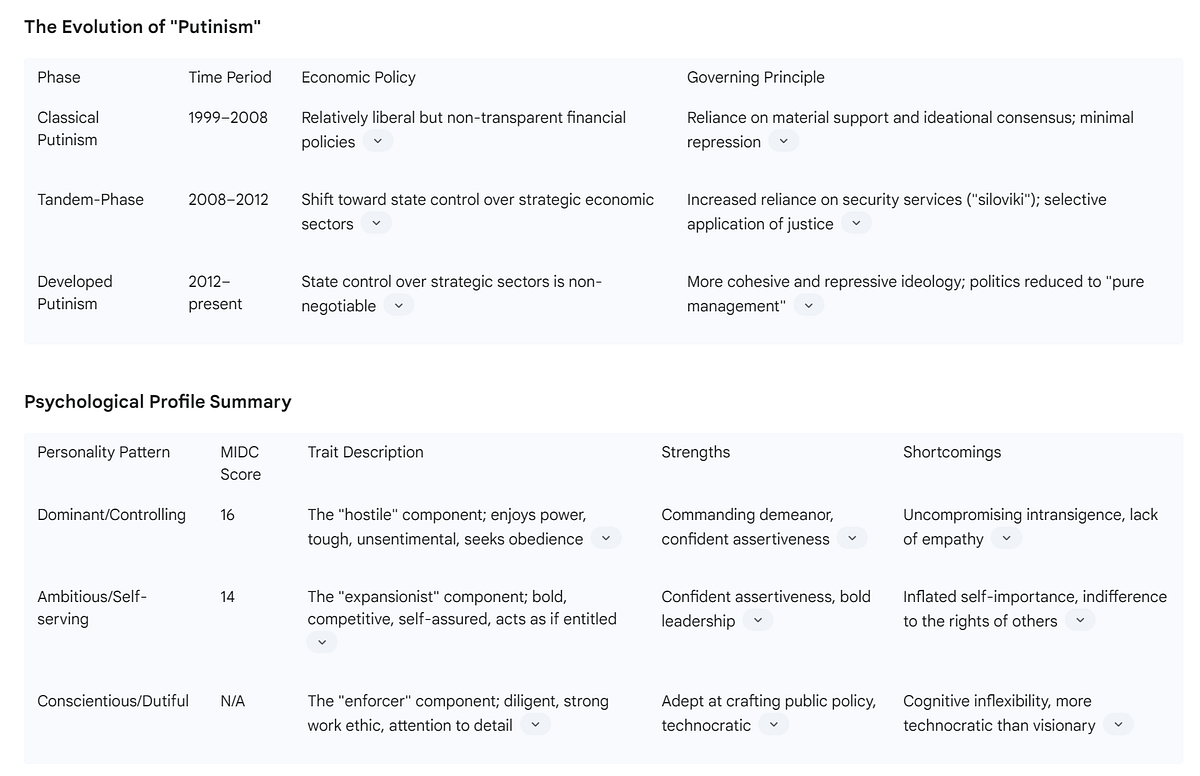
This ideological framework functions as a sophisticated mechanism of governance, reducing the complexities of politics to a form of “pure management” entrusted to a select few in power, effectively insulating the system from interference by the general population.2 The regime’s authority rests on a tripartite system of control: the provision of material well-being, the generation of ideational consensus through state-sanctioned narratives, and the selective use of repression.3 This is not a static system. It has evolved through distinct phases, including an early period of “Classical Putinism” and a later, more consolidated phase of “Developed Putinism”.2 While initially less repressive, the regime has since moved toward a more cohesive and assertive ideology, with state control over “strategic” economic sectors becoming increasingly central.3 A key characteristic of this system is the selective application of justice, famously summarized by the maxim, “Everything is for the friends, the law is for the enemies”.2
The longevity and resilience of this ideological system derive from its inherent flexibility. Unlike rigid political doctrines codified in philosophical texts, Putinism is often absorbed through a pervasive cultural milieu of signs, symbols, and popular narratives.1 This malleability allows the regime to adapt its messaging to shifting domestic and international conditions without betraying a core set of principles. The absence of a rigid, immutable doctrine is not a flaw but a deliberate design that facilitates pragmatic and opportunistic policy shifts. The transition from an initially more liberal economic approach to one centered on state control demonstrates this adaptability, allowing the system to sustain itself through various political and economic cycles.4 The lack of a strong, alternative pro-Western identity within Russia further solidifies the entrenchment of this state-sanctioned worldview, leaving little room for a challenge to the established narrative.1
Intellectual Currents and Philosophical Influences
Vladimir Putin’s worldview is fortified by a carefully curated set of intellectual influences that provide a pseudo-academic and historical foundation for his political actions. He has publicly embraced the ideas of figures such as Lev Gumilyov and Ivan Ilyin, whose philosophies offer powerful, ready-made narratives that legitimize Russia’s exceptionalist and anti-Western trajectory.
A central philosophical pillar is the work of Lev Gumilyov, a historian whose ideas about “passionarity” and Eurasianism have been explicitly endorsed by Putin.2 Gumilyov’s theory of ethnogenesis posits that societies, or “ethnies,” follow a predictable cycle of development and decline fueled by a mysterious “biocosmic energy” he called passionarity.5 Putin has directly applied this theory to Russia, stating his belief that the nation “has not yet attained its highest point” and possesses an “infinite genetic code”.2 This framework elevates Russia’s historical struggle from a geopolitical rivalry to a civilizational and almost biological destiny. Gumilyov’s broader thesis of a shared Russo-Turkic history and a single Eurasian people provides a rationale for Russia’s multi-nationality and its neo-imperial ambitions, positioning it as a unique “country-civilization” distinct from Europe and Asia.7
Equally significant is the influence of Ivan Ilyin, a White émigré philosopher whose works Putin has referenced as a source of inspiration.9 Ilyin was a staunch critic of Western-style democracy, advocating instead for a patriarchal and autocratic model of governance for Russia, a system where a “national vozhd” or dictator is not subject to popular criticism.10 This philosophy provides a spiritual and historical justification for a highly centralized state, portraying liberal democracy as a fatal weakness of the West.10 Ilyin’s belief that Russia is a land that came to its people, not one they conquered, and his view of a constant defense against “invading hordes” directly aligns with Putin’s “besieged fortress” narrative.9 The adoption of these specific thinkers is a strategic choice to construct a coherent, non-Western intellectual tradition that provides a “scientific” and “spiritual” rationale for his authoritarian and expansionist policies. This deliberate selection links the domestic need for a centralized, top-down system to an international strategy of confrontation with the West. The fact that Ilyin was sympathetic to fascism while opposing communism provides a nuanced context for Putin’s ideological project, situating it within a broader, radical-right framework rather than a simple return to Soviet or Tsarist ideas.10
The Doctrine of “Historical Unity” and Its Manifestations
Vladimir Putin’s intellectual contributions are most explicitly manifested in his 2021 essay, “On the Historical Unity of Russians and Ukrainians,” a document that serves as a core ideological blueprint for his foreign policy. The essay’s central argument is that Russians and Ukrainians are fundamentally “one people,” sharing a single historical and spiritual space.12 He posits that the current division between the two nations is a shared tragedy resulting from both past mistakes and the “divide and rule” strategy deliberately employed by external powers to undermine their unity.12
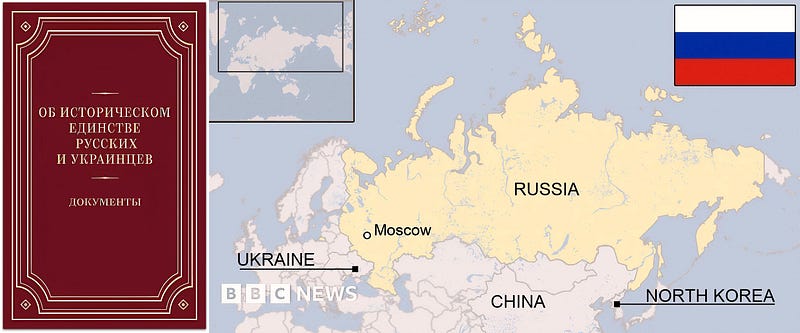
To support this claim, Putin presents a selective historical narrative that frames the history of the region as a natural cycle of fragmentation and reunification with Moscow as its preordained center.12 He cites the shared heritage of Ancient Rus, a state united by a common language and the Orthodox faith after the baptism of Rus.12 The essay criticizes the Polish-Lithuanian Commonwealth for ousting Orthodoxy and promoting Polonization and Latinization, a process he views as alien to the region’s true identity.12 He openly questions the legitimacy of modern Ukraine’s borders, claiming they were a territorial “gift” from Bolshevik Russia and framing contemporary Ukraine as an “anti-Russia project” driven by a Western plot and “followers of Bandera”.12
This historical narrative is not merely an academic exercise; it is a political weapon. Foreign policy experts have described the essay as “one step short of a declaration of war” and a “key guide” to understanding the attitudes that shape Putin’s actions.14 The essay is a form of historical revisionism that provides the ideological basis for a foreign policy of neo-imperialism. By arguing that Russians and Ukrainians are a single people, he denies the political agency and sovereign right of the Ukrainian nation to self-determination.14 This worldview, where a nation’s identity is an immutable, historically-defined condition dictated by the “big brother” state, is what makes the war with Ukraine, from his perspective, “absolutely justified”.9 This is a foundational theme that permeates his entire worldview, framing Russia as a “besieged fortress” locked in a “civilizational war between Russia and the West”.9
A Civilizational War: The Grand Strategic Narrative
Vladimir Putin’s political philosophy extends beyond regional conflicts to a grand strategic narrative about the global order. He consistently frames the post-Cold War era not as a triumph of democracy, but as the period when the so-called “victors” of the Cold War, led by the United States, attempted to impose a unipolar “diktat” on the world.15 This “unilateral diktat,” he argues, has led to a degradation of global institutions, the erosion of collective security, and a rise in chaos and instability.15 In his view, the West has created a “game” for global power that is “dangerous, bloody and, I would say, dirty,” one that denies the sovereignty of other nations and tramples upon their unique identities.16
He articulates a vision of a new, multipolar world where power is no longer concentrated in a single hegemonic center but is distributed among multiple “country-civilizations”.8 This vision is fundamentally anti-Western, portraying the United States as the “archetypal nemesis” that seeks to impose its democratic norms and values on the world.8 He argues that a “truly democratic” international order accepts “diverse forms of government,” including his own brand of authoritarianism, and allows each nation to choose its own path.19 He frames the conflict in Ukraine as a “civilizational war between Russia and the West,” a pivotal struggle that must dismantle the existing global order so that a new one, based on principles that “advantage Russia,” can emerge.9 This is a long-term ideological belief, not merely a pragmatic response to Western actions. It reveals a fundamental philosophical clash where he believes the Western system cannot be adapted or reformed; it must be “dismantled and replaced” entirely.19
Core Beliefs: History, Orthodoxy, and the Russian Soul
Underpinning Vladimir Putin’s strategic narratives are a set of deeply held personal beliefs and values that form the core of his identity. A defining feature of his worldview is a profound sense of historical determinism, rooted in the belief that Russia has been a “besieged fortress” for a thousand years, constantly surrounded by enemies from both East and West.9 This narrative frames all of Russia’s foreign policy as a defensive struggle, an idea that is so ingrained that he sees his vision and political choices as unequivocally “the right ones” for the country’s good, believing himself to be a “slave on the galleys” working to secure Russia’s rightful place in history.9 His self-perception as a historical figure on par with Peter the Great adds a personal, almost messianic dimension to this belief system.9
This historical narrative is inextricably linked to the symbiotic relationship between the Russian state and the Russian Orthodox Church.2 Putin has cast himself as the “true defender of Christians throughout the world, the leader of the Third Rome,” a position that leverages faith for political and ideological ends.20 This alliance is a crucial component of his project to define a unique Russian civilization in opposition to what he portrays as the morally decadent West.20 In return for its political support, the Church has been handsomely rewarded with a state-backed building program and lucrative business operations.20 The Church, in turn, has become an integral part of the state’s propaganda apparatus, openly promoting the concept of a “Russian World” (Russkiy Mir), which merges nationalism with a religious sense of a “sacral land”.22 The Church’s compliance with the Kremlin’s agenda is so complete that its leadership has framed military deaths as a “holy act” and has made the word “peace” undesirable in its rhetoric when it contradicts the state’s political objectives.22 This fusion of political nationalism and religious traditionalism is not a mere alliance of convenience but a fundamental aspect of Putin’s project to define a unique Russian civilization and rally domestic support, all while providing a narrative that resonates with conservative and religious audiences internationally.21
The Psychology of a Leader: An Expansionist Hostile Enforcer
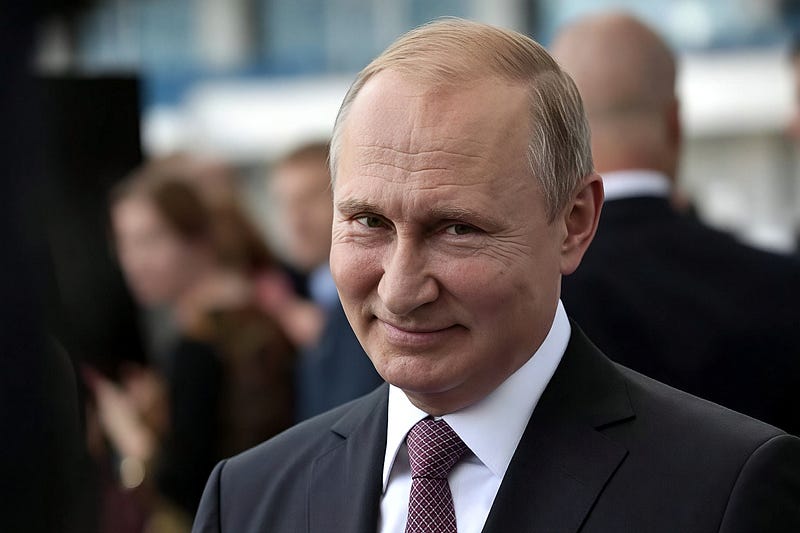
A crucial layer of insight into Vladimir Putin’s decision-making processes can be gleaned from a synthesis of psychological studies, which have characterized his composite personality as an “expansionist hostile enforcer”.23 Based on a psychological profile using the Millon Inventory of Diagnostic Criteria, his primary personality patterns were found to be Dominant/Controlling (a measure of aggression), Ambitious/Self-serving (a measure of narcissism), and Conscientious/Dutiful.23
This combination of traits results in a leader with a commanding demeanor and confident assertiveness, who is tough and unsentimental, and who finds a sense of purpose in directing others and evoking obedience.23 However, this profile also reveals significant shortcomings, including an uncompromising intransigence, a lack of empathy and congeniality, and a cognitive inflexibility that can make him resistant to caution or objective reality.23 His leadership style is described as that of a “deliberative high-dominance introvert,” who prefers to operate through behind-the-scenes control and “backstage making of key decisions” rather than through public, interpersonal engagement.2
An examination of his decision-making reveals a high tolerance for economic loss in pursuit of what he perceives as a greater political or strategic gain.26 He seems to prioritize the preservation of Russia’s prestige and his own domestic standing over financial costs or international standing.26 His willingness to risk immense economic fallout and international isolation for what he sees as a justified war is not an irrational act but a direct consequence of a deep-seated desire to avoid a more profound loss: the humiliation of a perceived strategic defeat.26 The psychological profile suggests that his actions are not random but are deeply rooted in a desire to project an image of unyielding strength and avoid perceived vulnerability, which is seen as the ultimate red line. This explains why his rhetoric often becomes aggressive in the face of perceived slights or challenges to his authority, viewing them not as diplomatic issues but as personal and existential ones.9
Conclusions
Vladimir Putin’s intellectual and personal worldview is a complex and deeply integrated system, not a collection of isolated beliefs. His ideology, “Putinism,” is a malleable yet potent force that strategically blends imperial-nationalist statism, Orthodox traditionalism, and anti-Western sentiment to provide a foundation for a highly centralized, authoritarian state. This system is underpinned by a carefully selected intellectual canon, including the philosophies of Lev Gumilyov and Ivan Ilyin, which provide a quasi-scientific and spiritual justification for Russia’s exceptionalism and its messianic role as a “civilization state.”
The core of his political project is a historical narrative that serves as a direct political weapon, as demonstrated by his essay “On the Historical Unity of Russians and Ukrainians.” This document’s central function is to deny the sovereignty of neighboring states and justify Russia’s neo-imperial ambitions, framing conflict as a “civilizational war” against the West. Finally, an analysis of his psychological profile as an “expansionist hostile enforcer” reveals that his seemingly irrational decisions are rooted in a deep-seated need to project strength and avoid humiliation. This fusion of ideology, history, and psychology suggests that Putin’s foreign policy is not merely a pragmatic response to external events but is driven by a profound and unyielding belief in the necessity of dismantling the existing global order and replacing it with one that allows Russia to exercise its power without constraint. This understanding is critical for any analysis of Russian foreign policy, as it suggests that a dialogue based on the existing international framework is unlikely to succeed without a fundamental shift in the philosophical tenets that guide the Kremlin.
Works cited
- The Ideology of Putinism: Is It Sustainable? — CSIS, accessed August 27, 2025, https://www.csis.org/analysis/ideology-putinism-it-sustainable
- Putinism — Wikipedia, accessed August 27, 2025, https://en.wikipedia.org/wiki/Putinism
- Ideology and Meaning-Making under the Putin Regime: Introduction, accessed August 27, 2025, https://www.sup.org/books/politics/ideology-and-meaning-making-under-putin-regime/excerpt/introduction
- Russia Country Report 2024 — BTI Transformation Index, accessed August 27, 2025, https://bti-project.org/en/reports/country-report/RUS
- The intellectual origins of Putin’s invasion — UnHerd, accessed August 27, 2025, https://unherd.com/2022/03/the-brains-behind-the-russian-invasion/
- Who is Putin’s favorite philosopher? | In Translation — Al Arabiya, accessed August 27, 2025, https://english.alarabiya.net/in-translation/2021/02/17/Who-is-Putin-s-favorite-philosopher-
- A Russian Intellectual Fortified the Notion of a Eurasian Civilization — New Lines Magazine, accessed August 27, 2025, https://newlinesmag.com/essays/a-russian-intellectual-fortified-the-notion-of-a-eurasian-civilization/
- Putin’s Eurasianist Vision — Foreign Policy Association, accessed August 27, 2025, https://fpa.org/putins-eurasianist-vision/
- Putin’s Warped Idea of Russian History — Foreign Policy Research Institute, accessed August 27, 2025, https://www.fpri.org/article/2024/02/putins-warped-idea-of-russian-history/
- Ivan Ilyin: A Fashionable Fascist — Riddle Russia, accessed August 27, 2025, https://ridl.io/ivan-ilyin-a-fashionable-fascist/
- Ivan Ilyin — Wikipedia, accessed August 27, 2025, https://en.wikipedia.org/wiki/Ivan_Ilyin
- Article by Vladimir Putin ”On the Historical Unity of Russians and …, accessed August 27, 2025, https://www.prlib.ru/en/article-vladimir-putin-historical-unity-russians-and-ukrainians
- On the Historical Unity of Russians and Ukrainians: Vladimir Putin’s Essay, accessed August 27, 2025, https://policycommons.net/artifacts/2265580/putin-essay/3025250/
- On the Historical Unity of Russians and Ukrainians — Wikipedia, accessed August 27, 2025, https://en.wikipedia.org/wiki/On_the_Historical_Unity_of_Russians_and_Ukrainians
- 2014 Valdai speech of Vladimir Putin — Wikipedia, accessed August 27, 2025, https://en.wikipedia.org/wiki/2014_Valdai_speech_of_Vladimir_Putin
- President Vladimir Putin’s Speech at the Valdai International …, accessed August 27, 2025, https://mumbai.mid.ru/en/press-centre/news/mr_vladimir_putin_s_speech_at_valdai_international_discussion_club_meeting/
- Full text of Putin speech and answers at Valdai Discussion Club — Mirage News, accessed August 27, 2025, https://www.miragenews.com/full-text-of-putin-speech-and-answers-at-valdai-884161/
- Vladimir Putin: Eurasia is a self-sufficient complex entity with enormous resources, accessed August 27, 2025, https://pacsto.org/events/vladimir-putin-evraziya-predstavlyaet-soboy-samodostatochnyy-kompleks
- Putin’s Revolution and War at a “Historical Crossroads” — German Marshall Fund, accessed August 27, 2025, https://www.gmfus.org/news/putins-revolution-and-war-historical-crossroads
- Putin’s Spiritual Destiny — Religion and Global Society — LSE Blogs, accessed August 27, 2025, https://blogs.lse.ac.uk/religionglobalsociety/2022/02/putins-spiritual-destiny/
- Russian propaganda finds sympathetic ears among U.S. religious right | PBS News, accessed August 27, 2025, https://www.pbs.org/newshour/show/russian-propaganda-finds-sympathetic-ears-among-u-s-religious-right
- From pulpit to propaganda machine: tracing the Russian Orthodox Church’s role in Putin’s war | Reuters Institute for the Study of Journalism, accessed August 27, 2025, https://reutersinstitute.politics.ox.ac.uk/pulpit-propaganda-machine-tracing-russian-orthodox-churchs-role-putins-war
- The Political Personality of Russian Federation President Vladimir …, accessed August 27, 2025, https://digitalcommons.csbsju.edu/cgi/viewcontent.cgi?article=1106&context=psychology_pubs
- The Post-Expansionist Personality Profile of Russian President Vladimir Putin, accessed August 27, 2025, https://digitalcommons.csbsju.edu/psychology_pubs/142/
- The Political Personality of Russian Federation President Vladimir Putin, accessed August 27, 2025, https://digitalcommons.csbsju.edu/psychology_pubs/104/
- The psychology behind the Kremlin’s war in Ukraine | Feature from King’s College London, accessed August 27, 2025, https://www.kcl.ac.uk/whats-the-psychology-behind-putins-decision-to-invade
- Vladimir Putin — Wikipedia, accessed August 27, 2025, https://en.wikipedia.org/wiki/Vladimir_Putin