Whispers of Poison in the Tides: The Secret Life of Gambierdiscus toxicus
There are stories in the sea that shimmer with beauty and menace, threads of life that weave through coral gardens and break the surface…
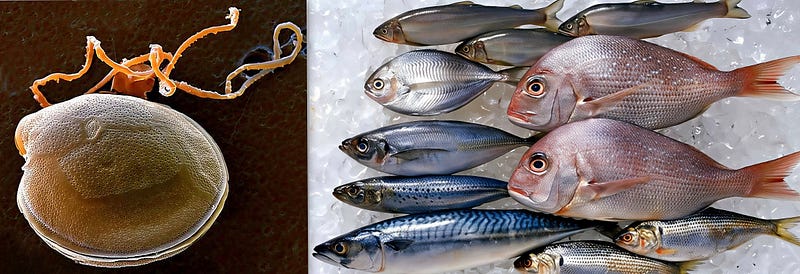
There are stories in the sea that shimmer with beauty and menace, threads of life that weave through coral gardens and break the surface with a mystery that chefs, biologists, and sustainability advocates all watch with cautious fascination. Gambierdiscus toxicus is one such story. This microscopic dinoflagellate is not just another marine alga; it is the silent architect behind one of the most notorious foodborne illnesses of tropical waters. To understand it is to wade into a world where biology meets danger, where culinary tradition meets scientific caution, and where sustainability demands respect for the unseen.
The Taxonomy of a Silent Architect
Gambierdiscus toxicus belongs to the Kingdom Protista, Phylum Dinoflagellata, Class Dinophyceae, Order Gonyaulacales, Family Goniodomataceae. It is a benthic dinoflagellate, a single-celled marine organism that clings to coral rubble and macroalgae. There are no edible varieties of Gambierdiscus, for it is not harvested but feared, its common association being with the word ciguatera — a term that strikes apprehension into coastal fishing communities. Unlike the vibrant seaweeds served in salads or dried for soups, this species exists in the shadows of culinary lore, a danger rather than a dish.
Biology: A Microscopic Menace
Under the microscope, Gambierdiscus toxicus appears as a flattened oval, armored with cellulose plates that give it a jewel-like sheen. Measuring roughly 50 micrometers across, which is about 0.002 inches, it drifts over reefs like a thin, living veneer. It reproduces by simple binary fission, splitting to form identical daughter cells, and can bloom under certain environmental conditions, especially when waters warm and nutrient levels shift. Its most defining trait, however, is the production of ciguatoxins — complex polyether toxins that accumulate in the flesh of reef fish, moving silently up the food chain and waiting for an unsuspecting human palate.
Ecology: Dwelling Among Coral Ruins
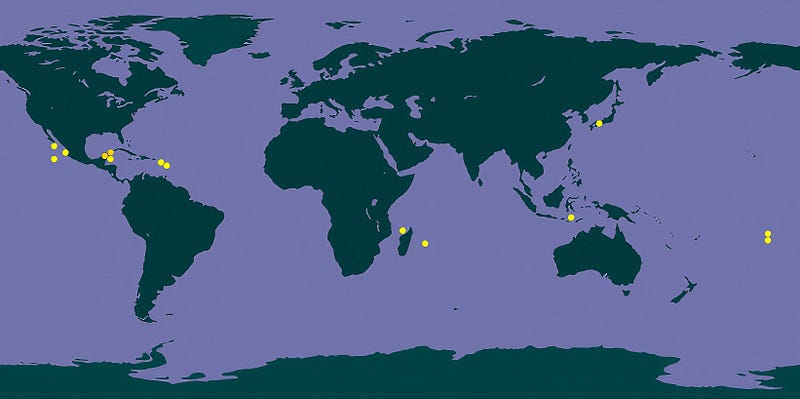
Gambierdiscus toxicus thrives in tropical and subtropical waters, clinging to macroalgae that grow over damaged coral reefs. It is not a free-floating wanderer like many plankton, but a benthic organism, tied to the benthos, the ocean floor. Its ecological role is double-edged. On one hand, it is part of the intricate web that sustains reef life. On the other hand, its proliferation is often linked to reef degradation and warming seas. Conservationists see its presence as a warning sign, a red flag that the reef’s balance has shifted. Sustainability efforts now focus on reef restoration, curbing overfishing, and monitoring algal growth to limit its spread.
Uses: A Market Defined by Absence
Unlike kelp or nori, Gambierdiscus toxicus has no marketable uses in food, cosmetics, or pharmaceuticals. Its economic relevance lies in the opposite direction, as it drives cautionary measures that shape fishing economies in regions like the Caribbean and the Pacific. Entire reef fish markets must sometimes close temporarily when ciguatera outbreaks flare. The cost of testing, monitoring, and educating communities is a hidden tax that this microorganism levies, a reminder that nature’s smallest players can sway the fortunes of entire coastal villages.
Culinary Aspects: The Taste You Never Want to Know
In culinary circles, Gambierdiscus toxicus is not celebrated but dreaded. The toxins it produces do not cook out, freeze out, or degrade easily, meaning a perfectly grilled fillet of barracuda or grouper, caught from a reef hosting this dinoflagellate, can become a deadly meal. Those who have tasted ciguatoxic fish describe a burning metallic sensation, followed by neurological symptoms like temperature reversal, where cold feels hot and hot feels cold. This is no subtle flavor profile to pair with wine; this is the sea’s dark warning wrapped in a morsel.
Wine Pairings: A Bitter Irony
There are no wines to pair with Gambierdiscus toxicus, only lessons. One might say that the only proper pairing is knowledge — vigilant monitoring paired with careful sourcing. Imagine a glass of chilled Sauvignon Blanc at 50 degrees Fahrenheit, which is about 10 degrees Celsius, waiting beside a plate of reef fish that has been tested and deemed safe. The pairing is not with the toxin but with the absence of it, a celebration of caution turned into art.
Conclusion: A Call for Respect and Vigilance
Gambierdiscus toxicus reminds us that the ocean’s bounty comes with invisible threads of risk and responsibility. To honor the sea is to study its smallest citizens, to restore reefs and support sustainable fisheries, and to remember that even the tiniest cell can command a global market’s attention. In the face of climate change and reef destruction, the lesson is clear: respect the currents, respect the unseen, and let science guide the hand that feeds the world.