Whispers of the Night: The Enigmatic World of Nightjars
Introduction
Introduction
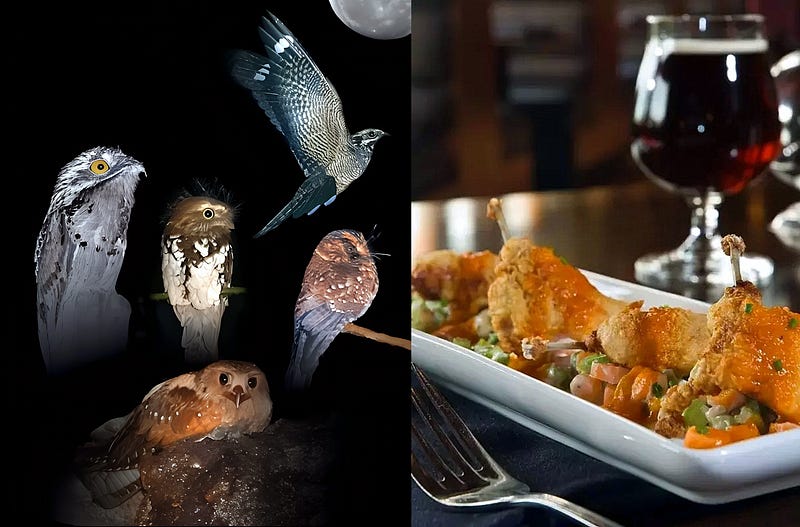
The nightjar is a bird steeped in mystery, cloaked in dusk, and seldom seen except by those who wander under fading light. Belonging to the genus Caprimulgus and related genera within the family Caprimulgidae, nightjars have fascinated humans for centuries with their ghostly calls and cryptic camouflage. Farmers once feared them as “goatsuckers,” believing these wide-mouthed creatures crept into barns to steal milk. In truth, nightjars are guardians of balance, weaving themselves into the fabric of nocturnal ecosystems with their silent wings and insect-hunting prowess.
To know the nightjar is to step into the realm of twilight and listen to the pulse of the natural world after sundown.
Taxonomy
Nightjars belong to the order Caprimulgiformes, family Caprimulgidae, and the primary genus Caprimulgus, which alone contains more than 30 species. Closely related genera, such as Chordeiles (nighthawks) and Eurostopodus, expand their diversity across continents. Their common names vary wildly: goatsucker, poorwill, nighthawk, whip-poor-will, and pauraque, each echoing folklore as much as ornithology. Unlike game birds such as pheasants or grouse, nightjars have never been widely domesticated or bred for food, though in some rural traditions, they were hunted and consumed.
Biology
Few birds are as masterfully designed for concealment as the nightjar. Their plumage, mottled with browns, grays, and rust, mirrors the texture of leaf litter, tree bark, or stony ground. A typical nightjar measures about 10–12 in (25–30 cm) in length, with long, pointed wings spanning 20–24 in (50–60 cm). The most striking feature is their disproportionately wide mouth, framed by delicate whisker-like bristles. This adaptation allows them to sweep flying insects — moths, beetles, mosquitoes — from the air like living nets.
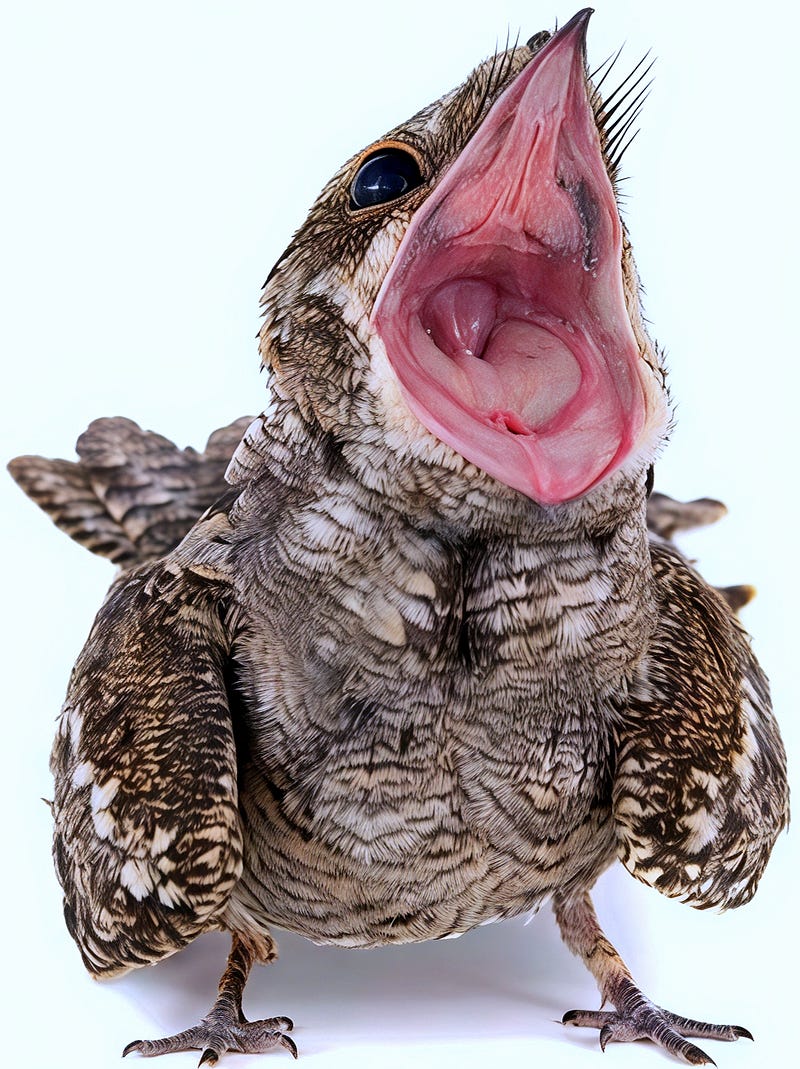
Nightjars are crepuscular and nocturnal, most active at dawn and dusk. Their flight is buoyant and erratic, resembling that of a giant moth. Breeding cycles are tied to insect abundance, and females typically lay two eggs directly on the ground — no nest, just trust in camouflage. Some species, like the common poorwill, have been documented entering torpor, lowering body temperature in cold seasons, a rare trait among birds.
Ecology
Nightjars inhabit every continent except Antarctica, thriving in savannas, deserts, grasslands, and open woodlands. Their ecological role is insect control, and a single bird may consume hundreds of insects in a single night. They are critical allies to farmers, keeping agricultural pests in check without pesticides.

Yet their reliance on insects and open habitats makes them vulnerable. Declines are reported in Europe and North America, where agricultural intensification, pesticide use, and light pollution disrupt their hunting grounds. For instance, the European nightjar (Caprimulgus europaeus) is considered of conservation concern in some regions. Protecting their ecosystems aligns sustainability with biodiversity, ensuring natural pest control endures.
Uses
Historically, nightjars held symbolic rather than economic value. They appear in folklore as omens of death or guardians of the night. Today, they serve ecotourism and cultural heritage more than direct utility. Birdwatchers travel great distances to hear the eerie refrain of the whip-poor-will or the booming wing-clap of a nighthawk. Economically, their role in controlling insect populations indirectly supports agriculture by reducing crop losses. Sustainability advocates increasingly highlight them as natural pest managers, a role more valuable than any attempt to harvest them as food.
Culinary Aspects
Unlike quail or pigeons, nightjars have never achieved widespread recognition as food. Their nocturnal habits, small size, and cryptic behavior make them difficult to hunt in significant numbers. In some indigenous traditions, however, nightjars were occasionally roasted, with flesh described as lean and gamy, similar to small grouse. Nutritional analysis is scarce, but like most wild birds, their meat would have been high in protein and low in fat.
Modern conservation concerns make culinary exploitation inappropriate, but the cultural history remains part of their story: creatures feared as “milk thieves” were paradoxically sometimes placed at the dinner table.
Wine Pairings
Were one to imagine pairing wines with a dish of roasted nightjar — as some 19th-century rural hunters might have done — the lean, earthy flavors would match best with rustic, medium-bodied reds. A Côtes du Rhône or Chianti, with its herbal and peppery notes, would harmonize with the gaminess. Alternatively, a dry rosé would echo the lightness of their flesh while keeping the mood in step with summer evenings, when these birds sing most vividly.
Of course, today such pairings are purely speculative and best reserved for creative culinary thought experiments rather than practice. Instead, one might pour those wines on a twilight walk, listening for the nightjar’s song.
Conclusion
Nightjars remind us that not all wonders of the natural world reveal themselves in daylight. Their calls, whether the whip-poor-will’s lament or the churr of a European nightjar, connect us to deep human histories of myth, fear, and awe. They are ecological sentinels, quietly protecting us from swarms of insects, yet they ask for little in return beyond the preservation of darkness, space, and habitat.
To safeguard nightjars is to safeguard the poetry of night itself.