Whispers on the Wind: The Grace and Legacy of the Mourning Dove
The soft, plaintive coo of the Mourning Dove drifts through dawn like a hymn from another century, a sound that has woven itself into human…
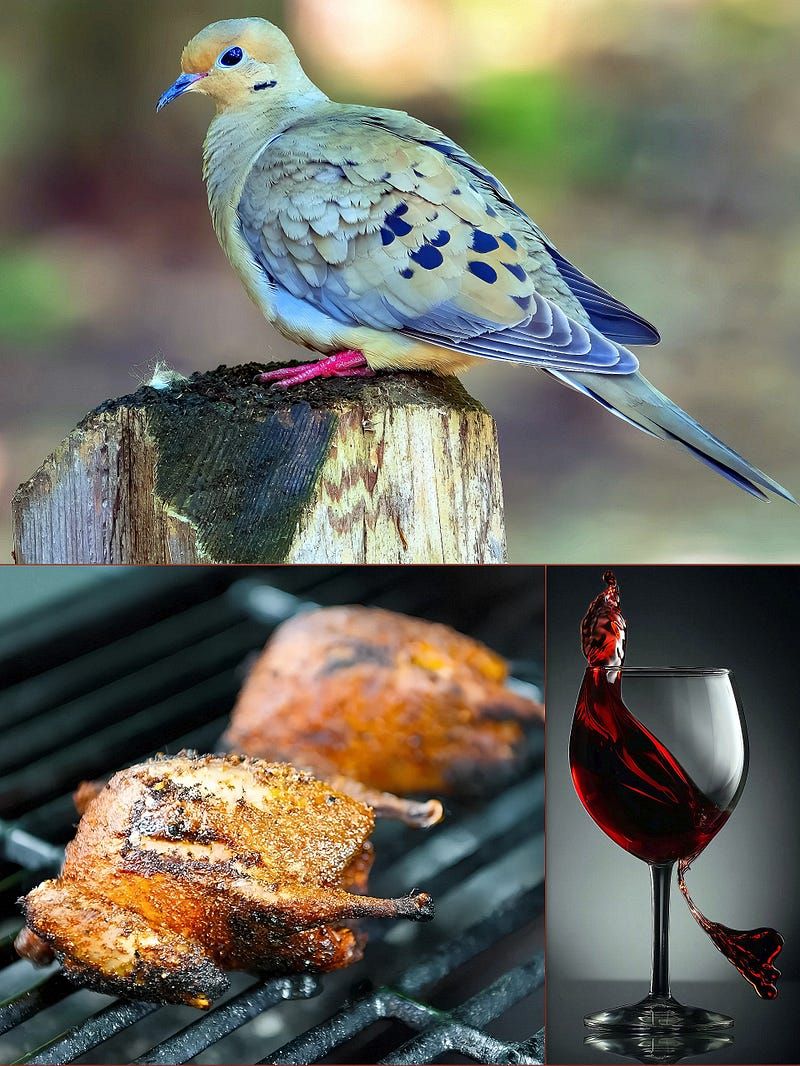
The soft, plaintive coo of the Mourning Dove drifts through dawn like a hymn from another century, a sound that has woven itself into human memory across continents and centuries. Zenaida macroura, a bird as common as it is poetic, is more than a familiar silhouette on a telephone wire. It is a symbol of adaptability, an ecological ally, and, in certain traditions, a cherished game bird whose delicate flavor has inspired cooks and hunters alike. To truly understand this species is to witness how biology, culture, and sustainability converge in a single beating heart with wings.
Taxonomy
The Mourning Dove belongs to the family Columbidae, a lineage that includes doves and pigeons the world over. Its scientific name, Zenaida macroura, honors Zenaide Laetitia Julie Bonaparte, a 19th-century ornithology patron. Across North America, there are several recognized subspecies, each with subtle plumage variations and regional nuances. They go by names that feel almost folkloric: Carolina Dove, Rain Dove, and Turtle Dove. Though there are no distinct “edible varieties,” hunters distinguish between younger and older birds, the former often prized for their tender texture.
Biology
Sleek-bodied and long-tailed, the Mourning Dove averages about 12 inches in length, or roughly 30 centimeters, and typically weighs around 4.5 ounces, which is about 128 grams. Its feathers wear soft earth tones — smoky grays, muted browns, and a wash of rose across the breast that seems kissed by twilight. Adapted for swift flight, they can reach speeds of 55 miles per hour, equivalent to nearly 88 kilometers per hour, a survival strategy against predators. They breed prolifically, with pairs raising to six broods a year. Their nests, often nothing more than a frail platform of twigs, cradle two white eggs, each the size of a small coin, about 1.1 inches long or 2.8 centimeters.
Ecology
Found from southern Canada to Central America, Mourning Doves thrive in open woodlands, grasslands, agricultural fields, and even urban parks. They are seed-eaters, scattering across harvested fields to forage, playing a vital role in controlling invasive weeds and dispersing native plant seeds. While their population remains robust — estimated at over 350 million in North America — sustainable hunting practices and habitat conservation programs ensure that this abundance endures. In many regions, hunting seasons are strictly managed, balancing cultural traditions with ecological responsibility.

Uses
Beyond their ecological contributions, Mourning Doves are an integral part of North American hunting culture. Each autumn, millions of hunters take to the fields, their harvest regulated by daily bag limits and migratory bird treaties. The species supports local economies through licenses, equipment sales, and agritourism. Feathers have been used historically in small-scale crafts and ceremonial regalia. Importantly, Mourning Dove management serves as a model of how economic activity can coexist with healthy wildlife populations when guided by science and restraint.
Culinary Aspects
To those who have tasted it, the Mourning Dove offers a culinary experience that is subtle yet memorable. The meat is dark and lean, with a flavor reminiscent of mild duck but with a whisper of wildness that speaks of open fields and sunlit skies. Traditional preparations often involve quick searing to retain moisture, wrapping the breasts — each about 1 ounce, or roughly 28 grams — in bacon and grilling over wood smoke. In the American South, they are marinated in buttermilk and herbs, then flash-fried, their tenderness melting on the tongue. Nutritionally, dove meat is high in protein and low in fat, a sustainable game choice for those who honor what they harvest.
Wine Pairings
The gentle richness of Mourning Dove pairs beautifully with a medium-bodied Pinot Noir, whose notes of cherry and earth mirror the bird’s subtle complexity. For those who favor white wine, a lightly oaked Chardonnay brings out the smoky sweetness of grilled dove without overwhelming it. A Spanish Garnacha, with its hints of spice and berry, provides another inspired match, elevating the dish to something truly celebratory.
Conclusion
To listen to the Mourning Dove is to hear the quiet rhythm of a landscape in balance. This humble bird bridges worlds — the scientific and the culinary, the ecological and the cultural — reminding us that sustainability is not a distant ideal but a daily practice. Whether admired on a fencepost at sunrise or honored at the table with a glass of wine, the Mourning Dove invites us to respect what is wild, to savor what is given, and to ensure that the whispers on the wind will continue long after our voices have faded.