Wings Across Continents: The Enduring Legacy of the Mallard (Anas platyrhynchos)
Introduction Few birds embody adaptability and global presence like the mallard, Anas platyrhynchos. Whether skimming over a misty wetland…
Introduction
Few birds embody adaptability and global presence like the mallard, Anas platyrhynchos. Whether skimming over a misty wetland in Scotland, foraging in a Japanese rice paddy, or nesting near an urban park pond in New York City, the mallard thrives in settings as diverse as human civilization itself. Known for its iridescent green-headed drakes and mottled brown hens, the mallard is more than a common duck; it is a biological keystone, cultural icon, and, for some, a staple food source. Its story intertwines ancient migration routes, human influence, and ongoing questions of sustainability.
Taxonomy
The mallard belongs to the family Anatidae, which includes ducks, geese, and swans. Scientifically named Anas platyrhynchos, its name translates from Greek as “broad-billed duck,” a nod to its distinctive flat bill. Numerous subspecies exist, including Anas platyrhynchos conboschas in North America and Anas platyrhynchos platyrhynchos across Eurasia. The species has been domesticated extensively, giving rise to breeds like the Pekin duck and Rouen, both prized in culinary traditions. Despite domestication, wild and feral mallards often hybridize with domestic breeds, a phenomenon shaping the genetic diversity of waterfowl populations worldwide.
Biology
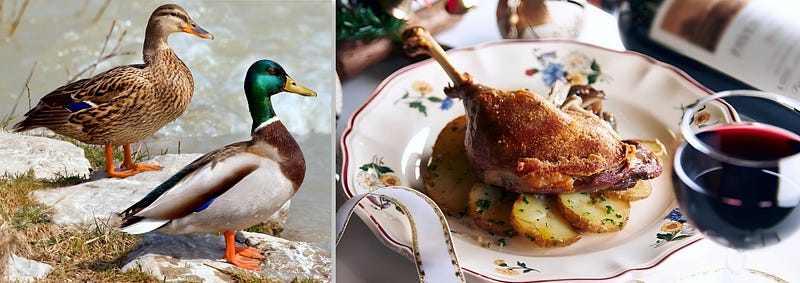
Mallards are medium-sized dabbling ducks, with males averaging 1.2 kg (2.6 lb) and females slightly lighter. They measure about 50–65 cm (20–26 in) in length with a wingspan of 81–98 cm (32–39 in). Males are unmistakable with their emerald-green heads, white neck ring, and chestnut breast, while females wear mottled tan plumage for camouflage. Mallards live for 5–10 years in the wild, though some have been recorded at 15 years. Their lifecycle follows a seasonal rhythm: courtship in late winter, nesting in spring, and fledging in early summer. Ducklings are precocial, meaning they can swim and feed themselves within hours of hatching, a critical adaptation against predation.
Ecology
The mallard’s range is unparalleled, spanning North America, Europe, Asia, and parts of Africa. Its preference for wetlands, lakes, and slow-flowing rivers does not preclude city parks, agricultural fields, or coastal marshes. As dabblers, they feed mainly at the water’s surface, consuming seeds, aquatic plants, invertebrates, and grains. This omnivorous diet contributes to nutrient cycling in ecosystems. However, their adaptability has ecological consequences. Mallard populations can displace less flexible native duck species, and hybridization threatens the genetic integrity of rare ducks like the Hawaiian duck (Anas wyvilliana). Conservationists emphasize habitat restoration and monitoring of introduced populations as part of sustainable wetland management.

Uses
Historically, mallards have been central to subsistence hunting and the development of domestic duck breeds. Today, they support recreational hunting industries worth billions annually, especially in North America and Europe. Their feathers and down have commercial value, though largely surpassed by other domestic waterfowl. Market sustainability hinges on regulated hunting seasons, habitat preservation, and disease control. Modern wildlife agencies have found a balance that maintains healthy mallard numbers while supporting the cultural heritage of waterfowling.
Culinary Aspects
Mallard meat is darker and richer than that of domesticated ducks, with a flavor profile shaped by a wild diet. A typical mallard breast weighs around 170 g (6 oz) and is best prepared medium-rare to retain moisture. In French cuisine, wild mallard is roasted and paired with fruit reductions, while in East Asian kitchens, it may be smoked or braised with aromatic spices. The fat content is lower than that of domestic ducks, making the meat lean yet robust. Nutritionally, mallard is a good source of protein, iron, and B vitamins, providing approximately 25 g (0.9 oz) of protein per 100 g (3.5 oz) serving. Ethical sourcing through licensed hunting ensures sustainability and aligns with growing interest in wild, traceable foods.
Wine Pairings
The rich, earthy flavor of mallard harmonizes beautifully with full-bodied red wines. A classic pairing is a Burgundy Pinot Noir, whose subtle cherry notes complement roasted duck. For those who prefer New World wines, a California Zinfandel or Australian Shiraz balances the bird’s gamey undertones with fruit-forward intensity. White wine enthusiasts might opt for a slightly oaked Chardonnay, offering enough structure to match the depth of the dish. Serving pan-seared mallard breast with a glass of Pinot Noir can transform a meal into a sensory event.
Conclusion
The mallard’s resilience is both admirable and instructive. It adapts effortlessly to human-altered landscapes, yet this very success sometimes strains fragile ecosystems. As climate change and habitat loss intensify, understanding the mallard’s biology and ecological role becomes essential. Whether admired in the wild, pursued by hunters, or savored on the table, the mallard reminds us that sustainability is not a static concept but a dynamic relationship between humans and nature. By fostering balanced stewardship, we ensure that the iridescent flash of a mallard in flight continues to grace wetlands and waterways for generations to come.