Wings Across Continents: The Wild Grace and Hidden Bounty of the Canada Goose
Introduction There is a moment, just before dawn on a chilly autumn morning, when the sky seems to hold its breath. Then comes the sound —…
Introduction
There is a moment, just before dawn on a chilly autumn morning, when the sky seems to hold its breath. Then comes the sound — a chorus of honks rising from the mist-laden fields — and the sight follows: a sweeping V‑formation of Canada geese carving across the horizon. For generations, these birds have been both admired and maligned, their migrations inspiring poetry while their grazing habits frustrate farmers. Yet the Canada goose is far more than a familiar silhouette over northern lakes. It is a creature steeped in biological intrigue, a resilient participant in human history, and — often overlooked — a bird whose meat and down have sustained and warmed communities. To understand this species is to glimpse a story of adaptation, ecology, and cultural connection that bridges the wild and the domestic.
Taxonomy
The Canada goose, Branta canadensis, belongs to the Anatidae family and is the largest of the black‑necked geese. Within this species, ornithologists recognize several subspecies, ranging from the hefty Giant Canada goose, common across the Midwest, to the smaller Cackling goose, which was once considered a mere variant but is now its distinct species. Locally, they are known simply as Canada geese, wild geese, or, in some rural regions, “honkers,” a nod to their distinctive call. While most varieties are not specifically bred as livestock, certain regions historically regarded the larger subspecies as fair game for the table.
Biology
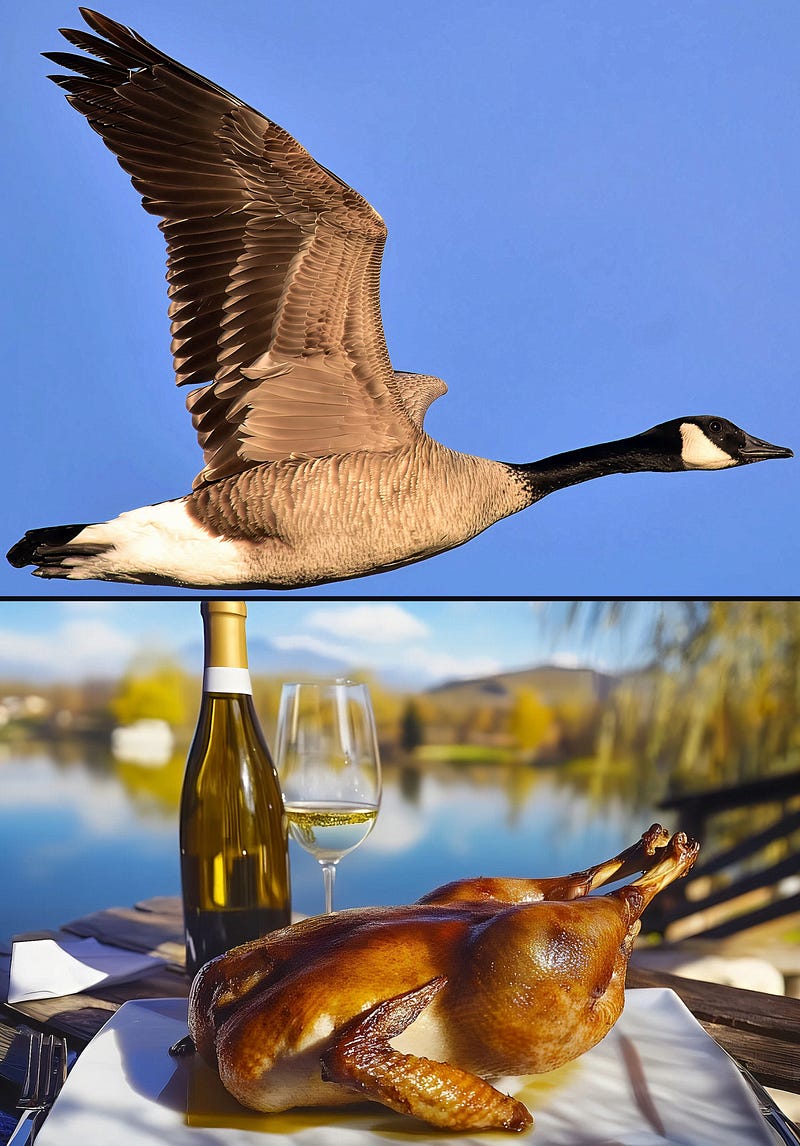
At close range, the Canada goose is striking: a sleek black head and neck with a crisp white chinstrap, a chest clad in soft brown and gray feathers, and long, sturdy legs built for both land and water. These birds are monogamous, often pairing for life, and their annual cycle is a lesson in precision. They nest in spring, raising goslings with vigilant care, and as seasons turn, their migratory instincts guide them over thousands of miles. Few birds exhibit such navigational prowess; they read the Earth’s magnetic field, orient by stars, and pass this wisdom down through generations. Their long, broad wings are not only tools for flight but also symbols of endurance, capable of carrying them through storms and over mountains.
Ecology
Canada geese are emblematic of the northern wilderness, yet they have adapted to human‑shaped landscapes with astonishing ease. They thrive in wetlands, grasslands, and increasingly in urban parks and golf courses, grazing on short grass and aquatic plants. Their droves aerate soil but can also overgraze, which brings them into conflict with farmers. Conservation efforts in the twentieth century brought their numbers back from alarming declines, and now wildlife managers grapple with the challenge of balancing robust populations with sustainable habitats. Their droppings fertilize fields, their down once lined the jackets of trappers, and their presence signals the seasonal pulse of the land itself.

Uses
Beyond their ecological presence, Canada geese have played quiet roles in regional economies. Their feathers were historically valued for insulation in bedding and clothing. In some areas, regulated hunting provides meat that is both sustainable and local, a counterpoint to industrial poultry. Properly managed, these harvests help control overpopulated flocks while keeping traditions alive. Today, eco‑tourism adds another dimension: birders travel to wetlands in the hopes of witnessing the grandeur of a migrating flock, contributing to local communities that protect these birds’ stopover habitats.
Culinary Aspects
To those willing to venture beyond supermarket fare, the Canada goose offers a surprising culinary experience. Its meat, darker and leaner than domestic goose, carries the flavor of wild forage — rich, earthy, and slightly gamey. Indigenous peoples long prized these birds, roasting them over open fires or smoking them for preservation. Modern chefs suggest marinating breasts to tenderize, slow‑roasting legs with aromatic herbs, or pairing the meat with seasonal berries that mirror the birds’ diets. Nutritionally, wild goose is high in protein and iron, offering sustenance that feels both primal and gourmet.
Wine Pairings
The robust taste of Canada goose demands a wine that can stand shoulder to shoulder with it. A full‑bodied Pinot Noir, with its notes of cherry and earth, harmonizes beautifully with the deep flavor of roasted goose. For those inclined toward whites, a well‑oaked Chardonnay complements the richness while cutting through the natural oils. A Syrah or Grenache, bold and peppery, turns a simple meal into a celebration, evoking the campfires and harvest feasts of old.
Conclusion
The Canada goose is far more than a passing silhouette against the evening sky. It is a symbol of resilience, a participant in human history, and a reminder that wild nature and human culture are entwined in ways both obvious and subtle. To appreciate these birds is to honor the landscapes they traverse and the stories they carry on their wings. As you next hear their honks echo through the crisp air, consider not just their beauty in flight, but the centuries of connection, sustenance, and adaptation they represent. In their migration lies a lesson for us all: to journey boldly, to adapt gracefully, and to cherish the land that carries us.