Wings of the Endless: The Albatross and the Weight of the Wind
Introduction Far out beyond the reaches of coastal memory, where the Pacific yawns wide and the Southern Ocean writhes in tempest, the…
Introduction
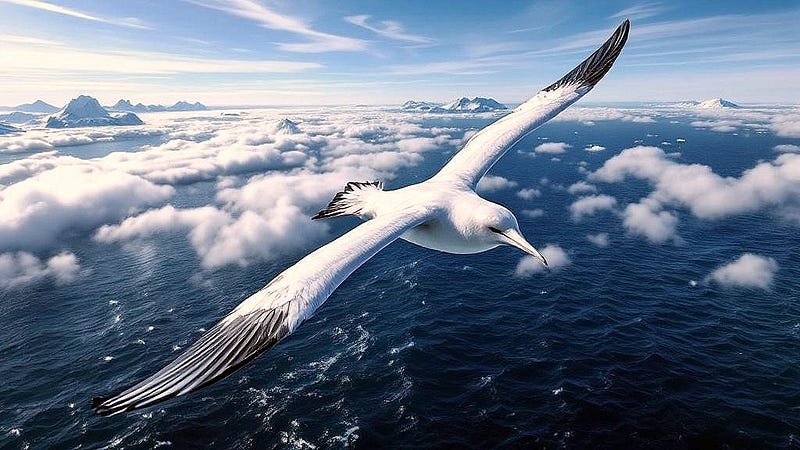
Far out beyond the reaches of coastal memory, where the Pacific yawns wide and the Southern Ocean writhes in tempest, the albatross glides in sovereign silence. A symbol of freedom, superstition, and ecological mystery, the albatross is one of Earth’s most mythic seabirds — revered by mariners and mourned by conservationists. With wingspans stretching longer than a man is tall and lives that span half a century or more, these giants of the sky are born to the sea wind, living lives measured in oceanic loops and solitary sojourns. Yet behind their effortless grace lies a tale entangled in environmental peril, cultural taboo, and ecological reverence.
Taxonomy
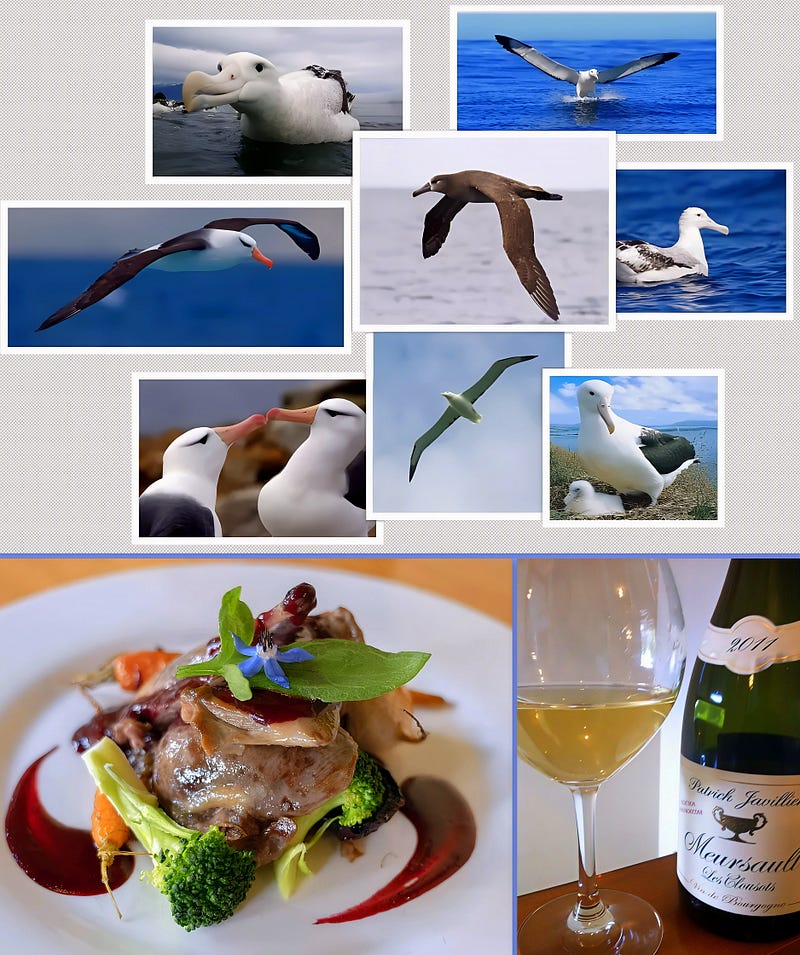
The albatross belongs to the family Diomedeidae, a lineage of seabirds within the order Procellariiformes, shared with petrels and shearwaters. Among the most notable genera is Diomedea, which includes the great albatrosses — species such as the wandering albatross (Diomedea exulans), the Antipodean albatross (Diomedea antipodensis), and the Amsterdam albatross (Diomedea amsterdamensis). With wingspans reaching up to 11 ft or approximately 3.4 meters, the wandering albatross lays claim to the largest wingspan of any living bird.
Smaller but no less charismatic species include the black-footed albatross (Phoebastria nigripes) and the shy albatross (Thalassarche cauta). While some Pacific Island cultures once consumed albatross, they are not commonly considered edible today due to conservation ethics and international protections.
Biology
The albatross is built for endurance. Its long, narrow wings employ dynamic soaring — a technique that allows the bird to ride wind gradients with minimal effort, conserving energy while flying up to 500 miles or roughly 805 kilometers per day. Adult albatrosses may weigh between 15 and 26 lb (6.8 to 11.8 kg), depending on species and sex.
Their plumage is stark in contrast: white mantled with ink-brushed wings, or slate-gray with underbellies that mirror storm clouds. These birds nest only once every one to two years, investing heavily in a single chick, which fledges after an astonishing incubation period of around 80 days. Once airborne, the fledgling may not touch land again for up to five years.
Ecology
Albatrosses roam the open oceans of the Southern Hemisphere, circling the subantarctic islands of New Zealand, the Falklands, South Georgia, and the isolated Midway Atoll. They play a vital ecological role as scavengers and predators, feeding primarily on squid, fish, and krill, often at depths of 16 to 33 ft (5 to 10 meters). Some species can dive deeper when necessary, as far as 40 ft or 12 meters.
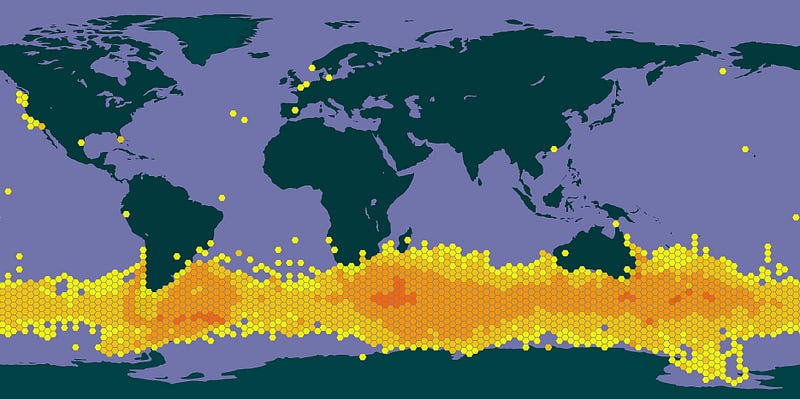
However, the modern albatross faces threats on all fronts: longline fishing, plastic ingestion, and habitat degradation. Over 75% of albatross species are threatened with extinction. The International Union for Conservation of Nature (IUCN) classifies several — including the Tristan albatross and waved albatross — as critically endangered.
Sustainability efforts, such as bird-safe hooks and international treaties like the Agreement on the Conservation of Albatrosses and Petrels (ACAP), aim to reduce bycatch and promote marine stewardship.
Uses
Historically, albatross bones were carved into tools or ceremonial objects by Indigenous cultures across Polynesia and the Pacific Rim. Victorian-era sailors sometimes used albatross feet as tobacco pouches and their long bones to craft pipes. These exploitative uses faded as cultural values shifted toward conservation and ecological reverence.
Today, the economic value of the albatross lies not in its body but in its symbolism — used in maritime literature, ecotourism, and environmental education. Albatross sanctuaries now draw scientists and nature lovers alike, their presence a marker of wild seas still untamed.
Culinary Aspects
There are no contemporary culinary traditions involving albatross that align with sustainability or ethical practices. Historical accounts — chiefly from 19th-century sailors — describe the meat as stringy, oily, and strongly fishy. Cooked over fire or stewed with hardtack, the bird was a last resort, not a delicacy. The fat reportedly rendered a foul, briny broth. As a result, the albatross remains a symbol of survival rather than sustenance.
In modern gastronomy, its closest culinary analogues might be fatty seabirds like cormorants or fulmars — rarely eaten and generally avoided for taste and conservation reasons alike.
Wine Pairings
Given that the albatross itself is not ethically consumed, one can imagine a symbolic pairing instead. If one were to translate the bird’s austere grace into a tasting experience, it might evoke a white Burgundy — specifically a Meursault — aged in oak, with saline minerality echoing the ocean’s breath. Alternatively, a cool-climate Pinot Noir from New Zealand might match the bird’s Southern roots: light yet profound, subtle yet persistent.
If pairing wines with storytelling, not meat, is the aim, the albatross asks for wines with long finishes and haunting complexity — wines that stay with you like a shadow in the sails.
Conclusion
The albatross is not just a bird but a metaphor — a living emblem of both boundless freedom and the burdens we bear. It reminds us how easily majesty can become martyrdom when human negligence poisons even the purest winds. As climate change and overfishing continue to haunt the high seas, the fate of the albatross stands as a litmus test for our ability to coexist with the sublime.
To preserve the albatross is to honor not just a species but an ethos: the power of the untamed, the sacredness of distance, and the enduring beauty of wild places still beyond the reach of roads.