Advieh: The Soul of Persian Cuisine and the Poetry of Spice
Introduction In every cuisine, there exists a seasoning that transcends mere flavor — one that carries history, emotion, and identity in…
Introduction
In every cuisine, there exists a seasoning that transcends mere flavor — one that carries history, emotion, and identity in its aromatic folds. For Persian cooking, that essence is Advieh. Pronounced ad-vee-eh, this delicately balanced blend of spices forms the emotional and culinary heart of Iranian kitchens, infusing rice, stews, and meats with subtle, evocative notes of tradition. More than a seasoning, Advieh is a cultural expression — an edible poem passed down through generations.
But what exactly is Advieh? And why does it deserve attention in a world of spice blends and flavor trends? This article explores the history, variations, uses, and symbolic depth of Advieh, revealing why this ancient blend continues to stir both pots and souls.
The Essence of Advieh: What It Is and Why It Matters
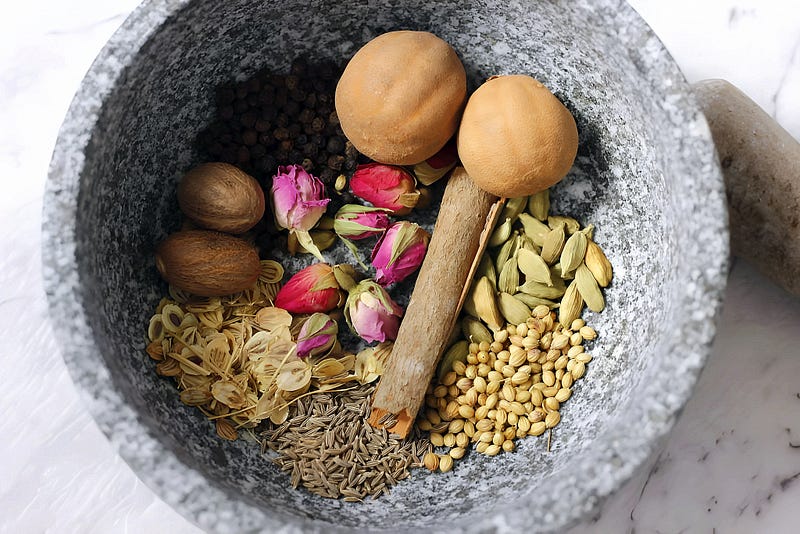
Advieh is not a single recipe but a philosophy of flavor. It is a Persian spice mix typically made from a combination of rose petals, cinnamon, cardamom, cumin, coriander, dried lime, nutmeg, and sometimes turmeric or cloves. While blends vary by region and household, the unifying thread is balance — not heat, not pungency, but warmth and complexity.
Unlike spice blends in Indian or Mexican cuisines, which may assert themselves forcefully, Advieh whispers. It adds elegance to food, not aggression. It coaxes out the inner sweetness of a stew, the perfume of a pilaf, the dignity of a roasted lamb shank.
This subtlety is central to Iranian culinary philosophy: every dish must be harmonious, a sensory equilibrium in aroma, color, texture, and taste.
A Heritage in Every Handful: History and Cultural Roots
The origins of Advieh stretch back over two millennia, rooted in the Persian Empire’s rich legacy of trade and cultural exchange. Iran, sitting at the crossroads of the Silk Road, absorbed spices from India, the Levant, Africa, and beyond. Yet, Persian cooks curated these influences into their refined canon.
In classical Persian literature, food and fragrance are often intertwined — spices appear in poetry as metaphors for beauty, virtue, and love. To sprinkle Advieh into a pot is, in many ways, to honor this poetic heritage.
The word Advieh itself simply means “spice” in Persian, but its role is far more nuanced. It serves as a marker of regional identity: Advieh-e Polo (for rice), Advieh-e Khoresh (for stews), or Advieh-e Ash (for thick soups) may differ drastically between Shiraz, Yazd, or Tehran. Even neighboring families might guard their blend like a secret talisman.
Anatomy of a Blend: What Goes into Advieh
Though flexible, most Advieh blends share a constellation of core ingredients:
- Dried Rose Petals: For fragrance and a touch of sweetness
- Cinnamon: Warmth and complexity
- Cardamom: A floral spice with depth
- Cumin: Earthy undertones
- Turmeric: Subtle bitterness and color
- Nutmeg or Mace: A whisper of heat and sweetness
- Dried Lime or Lemon Zest: For tart contrast
- Cloves or Coriander Seeds (optional): Resinous depth
Each spice is chosen not only for flavor but for balance — aromatically, emotionally, and nutritionally. In traditional Persian medicine (Unani), these spices were believed to have specific “temperaments” — hot, cold, dry, wet — and were combined to promote equilibrium in the body.
Cooking with Advieh: Uses and Techniques
Advieh is most commonly used in:
- Polo (Rice): Sprinkled between layers of parboiled basmati rice before the final steaming stage. This infuses the dish with a perfumed elegance.
- Khoresh (Stews): Mixed in during the final simmer to round out the dish with depth and warmth.
- Kebab Marinades: Combined with yogurt, garlic, and lemon juice to flavor lamb or chicken.
- Ash (Hearty Soups): Added for subtle aromatic complexity.
Advieh should never be overcooked; its flavors are delicate and meant to be coaxed, not blasted. A half teaspoon may be all you need to transform a dish from mundane to memorable.
Beyond the Kitchen: Advieh as Ritual and Memory
In many Iranian households, the scent of Advieh is memory itself. It signals Nowruz (Persian New Year), weddings, Friday dinners, or the comforting embrace of a mother’s kitchen. The act of grinding and mixing the spices — often done at home with a mortar and pestle — is meditative, intentional, almost sacred.
Elders teach children not just how to cook with Advieh, but how to understand it. A little more cardamom for joy. A touch of dried lime for sorrow. In this way, Advieh becomes more than a culinary tool — it is a language of care and emotional transmission.
Global Relevance: Advieh in the Modern Kitchen
In today’s global food scene, where bold and brash often dominate, Advieh offers a lesson in restraint. It invites us to rediscover flavor as a layered conversation, not a shout.
For chefs and home cooks alike, Advieh provides a bridge between the ancient and the modern, the East and the West. It’s an invitation to slow down, to smell the spices, to remember that elegance in food lies not in excess but in harmony.
Advieh is also increasingly available online and in specialty stores, making it accessible to a global audience curious about Persian cuisine.
Conclusion: A Pinch of History, a World of Flavor
Advieh is not just a spice mix — it is an aromatic biography of a civilization. In its fragrance lies the memory of ancient bazaars, the poetry of Hafez, the hands of countless mothers, and the geometry of Persian hospitality. It teaches us that the soul of food is not always fire or fat — it is intention, memory, and grace.
So the next time you stir a pot or steam a bowl of rice, consider reaching for Advieh — not to overwhelm, but to whisper. Not to transform a dish, but to reveal its essence.
Let the aroma lead you to a forgotten memory or a discovery. Let it remind you that sometimes, the quietest notes are the most profound.