Alex Jones: The Architect of Modern Conspiracy Culture
Alex Jones is a controversial media figure whose intellectual contributions and personal beliefs have significantly influenced contemporary…
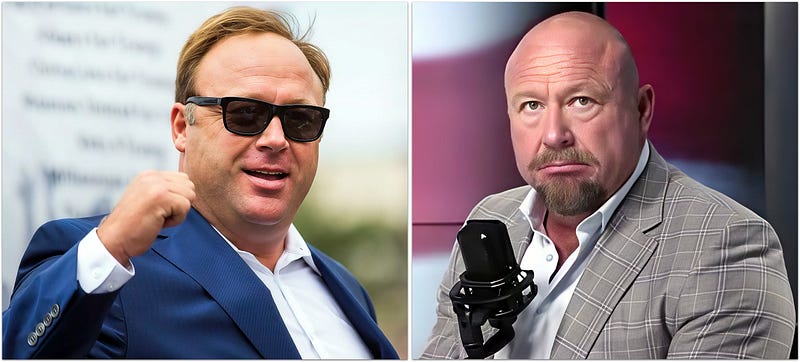
Alex Jones is a controversial media figure whose intellectual contributions and personal beliefs have significantly influenced contemporary conspiracy culture. Through his platform InfoWars, Jones has propagated a range of theories that challenge mainstream narratives, blending political commentary with sensationalist claims. His work spans various domains, including media, psychology, philosophy, and politics, creating a complex tapestry of ideas that resonate with a substantial audience. Jones’s legacy is marked by his ability to tap into deep-seated fears and suspicions about government and societal structures, though his methods and claims have often been criticized as harmful and deceptive.
Writings and Major Works
Alex Jones’s primary medium is his radio show, The Alex Jones Show, and the accompanying InfoWars website, which he founded in 1999. Initially a mail-order outlet for conspiracy-oriented videos, InfoWars evolved into a major platform for alternative news and conspiracy theories. Jones’s content is not presented in traditional scholarly writings but through daily broadcasts, articles, and videos that reach millions. Key themes in his work include government corruption, false flag operations, and the alleged existence of a New World Order orchestrated by global elites. His narratives often emphasize a battle between individual freedom and oppressive systemic forces, portraying himself as a truth-teller fighting against widespread deception. Jones’s contributions to media are characterized by his aggressive style and ability to leverage digital platforms to amplify his message, creating a loyal community of followers who consume his content and purchase products he endorses, such as dietary supplements and survival gear.
Central Arguments and Notable Theories
Jones is renowned for promoting numerous conspiracy theories that challenge official accounts of significant events. He has argued that the September 11 attacks were an inside job perpetrated by the U.S. government, claiming that the Bush administration concealed information to justify military actions. Similarly, he labeled the Sandy Hook Elementary School shooting a hoax involving crisis actors, intended to advance gun control policies. This theory caused immense pain to the victims’ families and led to numerous lawsuits against Jones. Other notable theories include the claim that the government uses weather weapons to manipulate natural disasters, that chemicals in water are turning frogs gay as part of a broader agenda to control human populations, and that high-profile figures like Hillary Clinton are involved in satanic rituals and child trafficking rings, such as the Pizzagate conspiracy. Jones often frames these theories as evidence of a broader pattern of governmental and elite manipulation, urging his audience to question official narratives and seek hidden truths.
Psychological Perspectives
The psychological dimensions of Alex Jones’s persona and influence are complex. Experts have suggested that his behavior, such as frequently removing his shirt during broadcasts, may be interpreted as a dominance display or exhibitionistic trait linked to narcissistic personality disorder. Some psychologists have described him as a malignant narcissist, combining narcissism, paranoia, antisocial tendencies, and sadism. Jones himself has claimed that a “form of psychosis” led him to believe events like Sandy Hook were staged, attributing this to a deep distrust of media and institutions. His approach leverages cognitive biases, such as pattern recognition and confirmation bias, which make conspiracy theories appealing to those feeling powerless or anxious. Jones’s rhetoric often creates a sense of community among his followers, who see themselves as skeptics resisting mainstream indoctrination, though this can lead to real-world consequences, as seen in incidents like the Comet Ping Pong shooting.
Philosophical Ideas and Principles
Philosophically, Jones positions himself as a defender of freedom and individualism against what he perceives as a collectivist and tyrannical New World Order. His ideas are rooted in a libertarian ethos that emphasizes personal liberty, limited government, and skepticism of authority. Jones often references historical and ideological touchstones, such as the John Birch Society’s conspiracy theories, particularly the book None Dare Call It Conspiracy, which argues that global bankers secretly control governments. His philosophy combines elements of populism and paranoia, portraying society as a battleground between ordinary people and manipulative elites. Jones’s worldview is inherently dualistic, framing issues in terms of good versus evil, freedom versus oppression, and truth versus deception. This Manichean perspective simplifies complex issues into easily digestible narratives, reinforcing his followers’ sense of purpose and identity.
Political Views and Ideologies
Politically, Alex Jones aligns with far-right ideologies, though he describes himself as a libertarian. He has been a vocal supporter of Donald Trump, praising him as a savior from the alleged criminal cabal controlling the government. Jones’s political discourse often includes anti-establishment rhetoric, criticizing both Democratic and Republican parties as part of a corrupt system. He has promoted racist and xenophobic ideas, such as the birther theory against Barack Obama, and has provided a platform for white nationalists and neo-Nazis. Jones’s influence on politics extends beyond his radio show; he was a speaker at the rally preceding the January 6 Capitol attack, reflecting his role in mobilizing fringe elements. His political arguments often focus on defending Second Amendment rights, opposing globalism, and advocating for nationalist policies, though these are frequently intertwined with conspiracy theories and misinformation.
Core Beliefs and Values
At the core of Alex Jones’s beliefs is a profound distrust of governmental and institutional authority. He values individual autonomy and sees himself as a warrior against deception, often claiming that his work is dedicated to exposing truths that mainstream media suppresses. Jones believes in the existence of a vast, coordinated conspiracy among elites to establish a globalist regime that suppresses personal freedoms. His values are centered on preparedness and self-reliance, as evidenced by the survivalist products he sells. Despite the controversial nature of his claims, Jones maintains that he intends to educate and protect the public from exploitation. However, his willingness to spread unverified and harmful information has led to significant legal and social repercussions, including billion-dollar defamation lawsuits and deplatforming from major social media sites. Jones’s legacy is a testament to the power of conspiracy theories in shaping public discourse, for better or worse.
Alex Jones’s impact on modern media and politics is undeniable, though deeply polarizing. His ability to blend entertainment with provocative rhetoric has created a unique niche that challenges conventional boundaries between news and performance. While his theories often lack empirical support, they resonate with audiences who feel marginalized or distrustful of mainstream sources. Jones’s work highlights the evolving nature of information dissemination in the digital age, where emotion and spectacle can sometimes overshadow fact and reason. As society grapples with issues of misinformation and ideological polarization, figures like Alex Jones serve as reminders of the enduring appeal of narratives that promise hidden truths and moral clarity.