
Behind Closed Doors: How Emotional Immaturity Shapes Dysfunctional Families and Wounds Children for…
Introduction There are homes where the dinner table feels warm, laughter echoes through the halls, and photographs on the wall tell the…
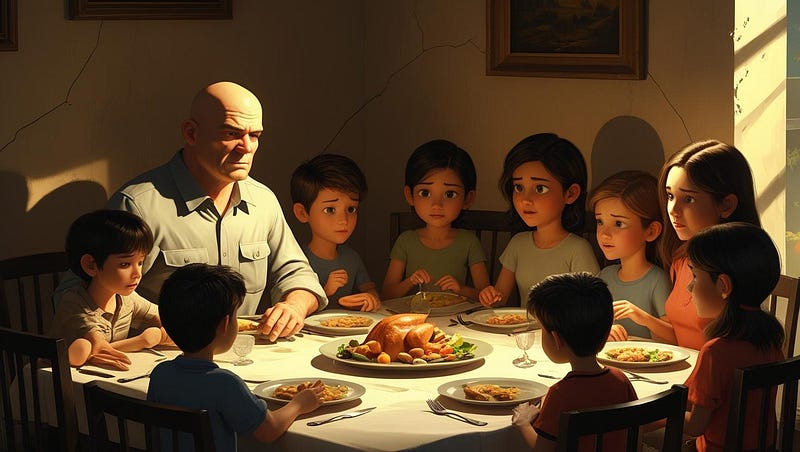
Behind Closed Doors: How Emotional Immaturity Shapes Dysfunctional Families and Wounds Children for Life
Introduction
There are homes where the dinner table feels warm, laughter echoes through the halls, and photographs on the wall tell the story of a close-knit family. Yet beneath this outward harmony, some households conceal an insidious dynamic — one built around emotional immaturity, blurred boundaries, and silent suffering. In these families, a parent’s unresolved pain and volatility quietly dictate the rhythm of everyone else’s lives. This article explores how such dysfunction takes root, why it persists across generations, and how individuals can begin the difficult but vital journey of breaking free.
The Core Dynamic: Emotional Immaturity at the Helm
In many dysfunctional households, one parent — often the father — remains emotionally stunted. He swings between charm and rage, demands loyalty yet offers little empathy, and clings to rigid, all-or-nothing thinking. His partner, often terrified of abandonment or conflict, learns to appease him. Over time, she loses herself, becoming the caretaker of his moods rather than an equal partner.
In this atmosphere, boundaries erode. Pleasing the unpredictable parent becomes the family’s unspoken mission. Every conversation, every choice, is filtered through the question: Will this keep him calm? The result is a web of enmeshment where individual needs vanish and everyone’s identity becomes intertwined with the parent’s emotional state.
How Children Are Caught in the Crossfire
Children in these families grow up in a constant state of emotional vigilance. They become experts at reading tone, anticipating outbursts, and sacrificing their own needs to maintain peace. Over time, they slip into distorted roles that stunt healthy development:
- The Parentified Child: Taking on caregiving duties, offering emotional support to parents, and losing their right to a carefree childhood.
- The Peacemaker: Constantly mediating arguments, silencing their own feelings to keep the household calm.
- The Scapegoat or Lost Child: Acting out or disappearing into the background, both strategies born of confusion and pain.
This chronic role confusion disrupts attachment and leaves lasting scars. As adults, these children often struggle with low self-worth, anxiety, and a haunting sense that they must earn love by suppressing their own needs.
Why Dysfunction Persists: A Systemic View
Family systems theory teaches us that a family operates as a single emotional unit. In these households, everyone’s anxiety becomes interconnected. When the emotionally immature parent erupts, others scramble to absorb the fallout. Over decades, this creates a cycle of trauma bonds — moments of tenderness are followed by cruelty, keeping family members both hopeful and trapped.
Psychodynamically, children internalize this chaos, carrying unconscious patterns into adulthood. They may choose partners who mirror their parents’ volatility or become overly compliant in relationships, repeating what feels familiar even when it hurts.
The Hidden Toll on Mental Health
Although no single diagnosis captures this family dynamic, the fallout is profound. The emotionally immature parent may meet criteria for a personality disorder, while the accommodating partner often exhibits traits of codependency or dependency disorders. Children, shaped by chronic neglect and relational trauma, frequently develop anxiety, depression, or symptoms consistent with complex PTSD.
Clinicians describe these homes as enmeshed families with chronic conflict — environments where no one feels truly safe or separate.
Finding a Path to Healing
Breaking free from these dynamics requires courage and time. Healing often begins with one simple, radical act: setting a boundary. Learning to say no — to refuse emotional manipulation, to claim personal space — is the cornerstone of recovery.
Therapy provides the tools to untangle decades of enmeshment. Trauma-informed approaches like EMDR help reframe painful memories, while family therapy can map unhealthy patterns and establish healthier roles. Support groups, from Codependents Anonymous to Adult Children of Narcissists, offer a lifeline of validation and shared wisdom.
Equally important is identity work — discovering who you are beyond your family’s demands. Hobbies, friendships, and personal goals become acts of defiance against a legacy of self-erasure.
Conclusion
No family is perfect, but some patterns run so deep they feel immovable. Yet the truth is this: even in the most tangled systems, change is possible. By seeking therapy, setting boundaries, and rediscovering a separate self, individuals can disrupt generations of dysfunction and build something new — a family culture where love is steady, boundaries are respected, and every member is free to grow.
The journey may be long, but every step away from chaos is a step toward freedom.