Beneath the Quiet Waves: The Subtle Majesty of the Ukkari-Kasago
Introduction In the layered tapestry of Japan’s coastal waters, the ukkari-kasago (Sebastiscus tertius) is a quiet but compelling presence…
Introduction
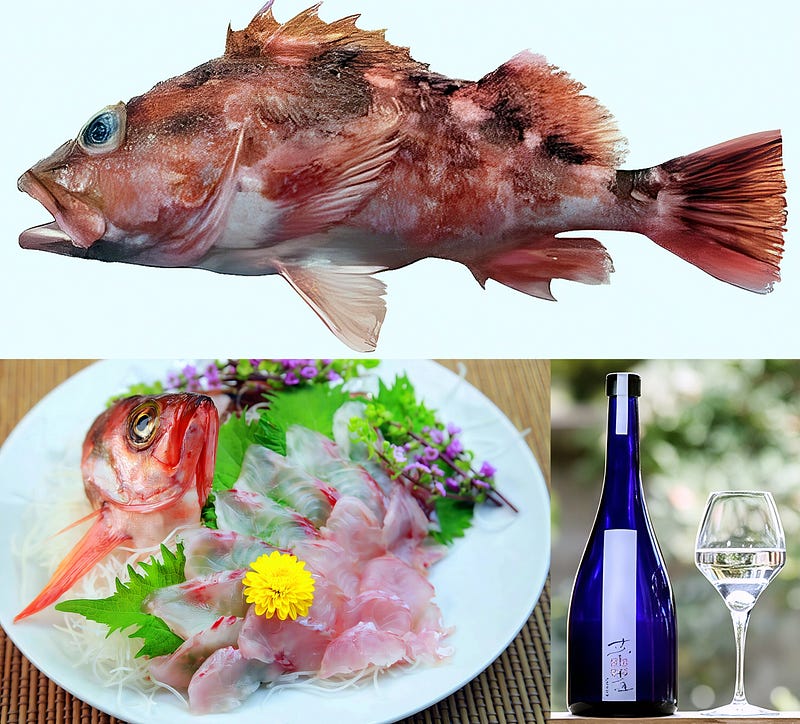
In the layered tapestry of Japan’s coastal waters, the ukkari-kasago (Sebastiscus tertius) is a quiet but compelling presence. Known in English as the brown rockfish or offshore rockfish, it is often overshadowed by flashier reef dwellers. Yet for those who fish, cook, or simply observe marine life with patient curiosity, this species reveals an understated elegance. Its life is written in the language of rocky ledges, slow ambushes, and a culinary heritage that binds the sea to the table.
Taxonomy
Sebastiscus tertius belongs to the family Scorpaenidae, the scorpionfishes, which are famed for their venomous spines and intricate camouflage. Within its genus, it stands apart from its relatives, Sebastiscus marmoratus and Sebastiscus albofasciatus, by its more subtle coloration and habitat preferences. In Japanese markets, the name ukkari-kasago distinguishes it from the more common kasago, alerting discerning buyers to its slightly different taste and seasonal availability. There are no recognized subspecies, but local populations can differ subtly in markings and size, particularly between the temperate waters of Honshu and the subtropical seas farther south.
Biology
An adult ukkari-kasago typically reaches a length of about 30 cm, equivalent to roughly 11.8 inches, with a stocky build designed for sudden bursts of motion rather than sustained swimming. Its body is mottled in earth tones that blend perfectly with rocky reef structures, from sandy browns to muted reds. Like its relatives, it is an ambush predator, feeding primarily on small crustaceans and fish, striking with the speed of a coiled spring. Venomous dorsal spines serve both as deterrent and defense, a biological insurance policy in an environment where larger predators always lurk. The species is ovoviviparous — females carry fertilized eggs internally until live young are released, a reproductive strategy that improves juvenile survival rates in predator-rich waters.
Ecology
The ukkari-kasago is a creature of rocky bottoms and offshore reefs, typically inhabiting depths between 30 m and 100 m, or approximately 98 ft to 328 ft. These zones offer abundant shelter and ambush points, but they also place the fish in the path of bottom trawls and set nets. As a mid-level predator, it plays a role in controlling crustacean populations and small forage fish, balancing the ecosystem. While not currently considered endangered, localized declines have been noted in heavily fished areas, a reminder that even species without global conservation alarms can suffer from habitat pressure and overharvesting.
Uses
Commercially, Sebastiscus tertius holds moderate economic value. It is caught both intentionally and as bycatch in trawl fisheries, with its firm, white flesh making it a favored choice in regional cuisine. For small-scale coastal fishers, it can be a dependable part of a diversified catch, providing steady income when larger, more migratory species are scarce. Sustainability hinges on limiting juvenile capture and maintaining healthy reef habitats — management measures such as seasonal closures and gear restrictions can help preserve stocks for future generations.
Culinary Aspects
The flavor of ukkari-kasago is mild yet distinct, with a delicate sweetness and clean finish that rewards simple preparation. In Japan, it is often simmered in soy-based broths, grilled whole over charcoal, or served as sashimi when impeccably fresh. The firm texture holds well in soups and nabe hot pots, absorbing the flavors of kelp, miso, and seasonal vegetables. A whole fish, cleaned and simmered with sake, soy sauce, and ginger, delivers an aroma that is both earthy and marine, evoking the rocky coves from which it came. Nutritionally, its flesh is lean, providing high-quality protein with low saturated fat, making it a heart-healthy choice.
Wine Pairings
The gentle flavors of ukkari-kasago invite wines that complement rather than overpower. A chilled Junmai Ginjo sake offers a floral, slightly fruity note that pairs beautifully with sashimi or lightly grilled fillets. For those who prefer grape-based wines, a crisp Sauvignon Blanc or a minerally Chablis can mirror the ocean’s freshness while cutting through the subtle oils in the fish. Even a sparkling Brut can work, its effervescence refreshing the palate between bites of delicate white flesh.
Conclusion
In an era when ocean giants and dazzling reef species dominate the spotlight, the ukkari-kasago reminds us that quiet beauty and culinary grace can be found in the overlooked corners of the sea. Its survival depends on balance — between harvest and habitat, between tradition and sustainability. For the fisherman, the chef, and the diner, this humble rockfish offers not just nourishment, but a connection to the rhythms of the Japanese coast. Protecting it is not simply about conserving a species; it is about safeguarding a way of life that values what the sea, in all its subtlety, has to give.