Beyond the Stage: How KISS Redefined the Music Industry and Shaped Extreme Metal
Executive Summary
Executive Summary
This report posits that the band KISS’s most enduring and significant influence on the music industry transcends their musical output. Their legacy is built on pioneering a holistic, multi-sensory brand model that seamlessly integrates a consistent visual identity, a groundbreaking theatrical stage show, and a revolutionary business approach centered on aggressive merchandising and brand protection. This unique blueprint became a foundational template for mainstream genres, such as glam metal. In a remarkable paradox, the same core principles were also covertly adopted and adapted by the most extreme and underground subgenres, including thrash and black metal, which leveraged KISS’s foundational tenets to build their own mythic worlds and cult-like followings.
1. The Genesis of a Phenomenon: KISS’s Foundational Blueprint
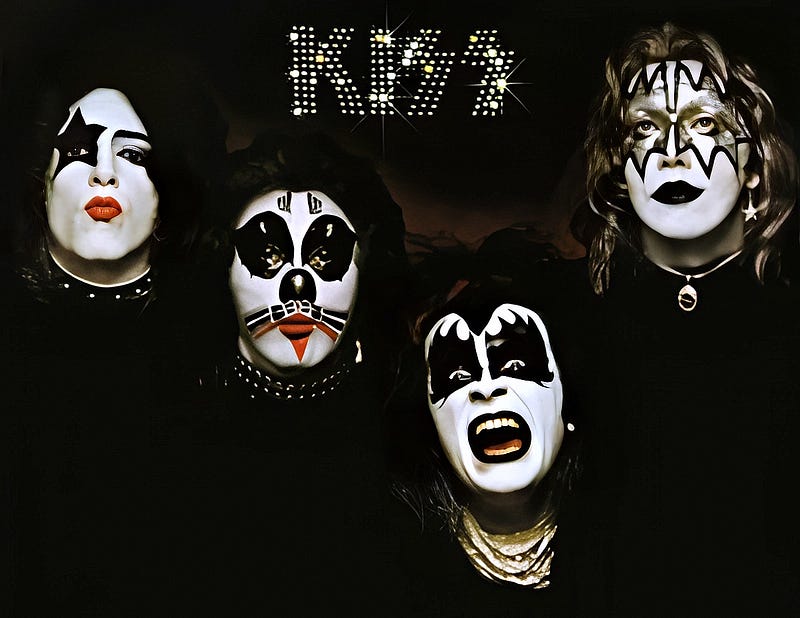
The story of KISS begins not with an explosion of sound but with a strategic evolution. The band was formed in 1973 by Gene Simmons and Paul Stanley, who had just disbanded their previous group, Wicked Lester.1 They soon recruited drummer Peter Criss and lead guitarist Ace Frehley, with the new group consciously pursuing a “much harder style of rock” than their prior band.2 Their self-titled debut album, released in 1974, featured what would later become classic tracks like “Strutter,” “Firehouse,” “Cold Gin,” and “Deuce”.3 However, this initial effort was not an instant commercial success, initially selling only 75,000 copies and quickly losing money for both the band and their label, Casablanca Records.2
This initial commercial indifference, despite the album’s undeniable “hell-fire energy” and strong musical foundation, proved to be a critical turning point.3 It demonstrated that the band’s eventual domination of the music world would require more than just songwriting prowess. The commercial failure of their early studio albums became the catalyst that forced the band to perfect and amplify their theatrical spectacle and marketing strategy. This pivot resulted in the live album
Alive!, which catapulted the group to fame in 1975, achieving platinum status where their studio efforts had stalled.5 This arc reveals that KISS’s enduring influence on the industry was not about a better sound, but about the creation of a superior system for delivering that sound to a mass audience.
1.2. The Birth of Theatrical Rock
The visual element of KISS was not an afterthought; it was present from the very beginning. The band began experimenting with makeup and outfits in early 1973, with their iconic character designs debuting in March of that year.2 Gene Simmons’s fire-breathing and signature stage moves were part of the very first official industry premiere on December 31, 1973, where he accidentally set his hair ablaze.2 Paul Stanley briefly tried a “Bandit” makeup design at the urging of their record label, before reverting to his now-famous “Starchild” persona.7 This rapid solidification of their image, just weeks after the classic lineup was complete, underscores the deliberate, strategic nature of their brand-building.2
This visual consistency, with all four members adopting distinct personas, was a major departure from other shock rock acts like Alice Cooper, where only the frontman wore makeup.8 The enduring nature of these personas, which have been used for over 50 years and are legally protected trademarks, highlights a deeper business acumen.7 The band understood that their visual characters were not just costumes but valuable intellectual property. The legal battles over the makeup and the decision to have subsequent band members adopt the original “Spaceman” and “Catman” personas demonstrate that the band’s owners, Gene Simmons and Paul Stanley, saw their brand as a separate, tradable asset from the individuals themselves.7 This pre-digital approach to brand management and asset protection was a radical innovation for a musical act and a blueprint for future entertainment franchises.
2. The Four Pillars of Influence: Beyond the Music
KISS’s legacy as industry pioneers was cemented by their mastery of non-musical elements, which became pillars of their success.
2.1. Visual and Theatrical Innovation
KISS is best known for their “shock rock-style live performances” that set a new benchmark for concert experiences.2 These extravaganzas featured a litany of special effects, including fire-breathing, blood-spitting, smoking guitars, shooting rockets, and an array of pyrotechnics.2 The spectacle was so overwhelming that it famously prompted rock critic Tony Kornheiser to quit his job, stating that the theatricality was “beyond” him and that it was impossible to “fairly evaluate the music, because it came in that package”.6
This quote is a powerful piece of evidence, as it illustrates that the live show was not merely an accessory to the music; it was the primary product. The fact that the band’s career was saved by a live album, Alive!, which achieved commercial success where their studio efforts failed, validates that the theatricality was their true competitive advantage.5 KISS transformed the standard concert into a fully immersive sensory experience, creating a cinematic, larger-than-life event that combined elements of performance art and rock and roll. This innovation set a new standard for live entertainment, compelling every major arena rock and metal tour that followed to “up their game” to meet new fan expectations.9
2.2. The Business of Rock: A Paradigm Shift
In addition to their live spectacle, KISS pioneered an unprecedented approach to merchandising and branding.5 They recognized that their brand was a product in itself, extending their identity far beyond music sales. This business model was built on a simple, consistent, and aggressively protected brand identity. Gene Simmons famously asserted the band’s willingness to “sue people all the time” to protect their unique style from being duplicated or mimicked.9
The scope of their merchandising is vast, ranging from expected items like makeup kits and board games to the infamous “Kiss Kasket,” a coffin adorned with the band’s logo and images.5 This audacious product, which even saw use in the funerals of Pantera members Dimebag Darrell and Vinnie Paul, serves as the ultimate proof of their business model.11 KISS built a “lifestyle” around their brand, providing fans with a complete universe to inhabit and products for every stage of their lives, from childhood to their final resting place.9 This blueprint for “total brand immersion,” once mocked by critics, has now become a standard for artists and franchises seeking to monetize their image and build a long-term, direct relationship with their audience, establishing KISS as not just musical artists but as business innovators.
3. Direct and Indirect Impact on Mainstream Rock
KISS’s influence can be directly traced to the development of hard rock and glam metal, serving as a crucial progenitor for these genres.
3.1. The Glam and Hard Rock Progenitor
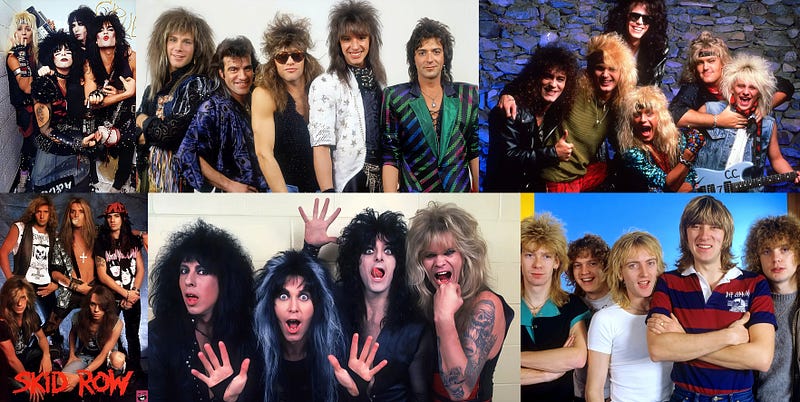
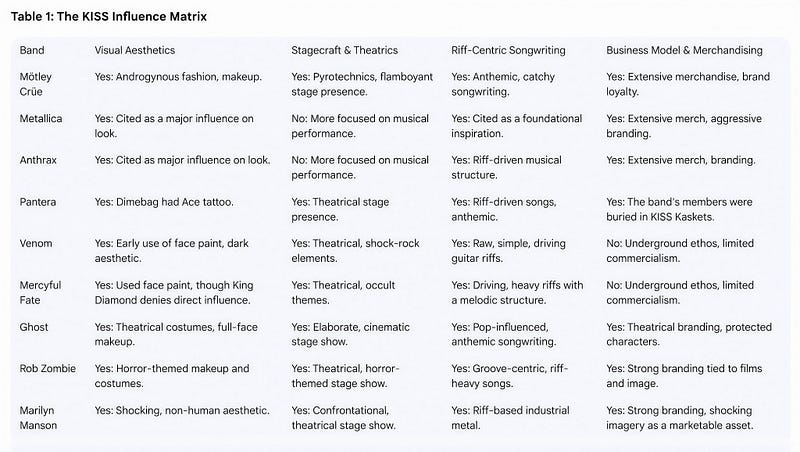
KISS is classified as a genre-blending act with elements of “Shock Rock, Hard Rock, Rock, Heavy Rock, and Metal”.14 Their early sound and aesthetic are a direct antecedent for the glam metal movement of the 1980s, which borrowed heavily from 1970s glam rock fashion and image.15 Bands like Mötley Crüe, Bon Jovi, Poison, and Skid Row are cited as direct followers.15 Mötley Crüe bassist Nikki Sixx has explicitly acknowledged KISS’s influence on their songwriting, while the visual parallels in makeup, flashy costumes, and anthemic rock are undeniable.17 The research highlights that KISS had a songwriting style that was “much more often imitated” than contemporaries like Van Halen.18 Songs like W.A.S.P.’s “L.O.V.E. Machine” and Def Leppard’s “Foolin’” are cited as clear examples of this musical lineage.18
By introducing hard rock to a wider audience through a polished visual presentation and catchy, radio-friendly songwriting, KISS provided a commercially palatable template for rebellion. While earlier bands like Black Sabbath had a darker, more menacing tone, KISS’s “cartoonish/fantasy” image made the genre more marketable and accessible.19 Glam metal acts took this formula and perfected it for mass consumption, making the rebellious image a mainstream, salable commodity.
3.2. Mentorship and Industry Impact
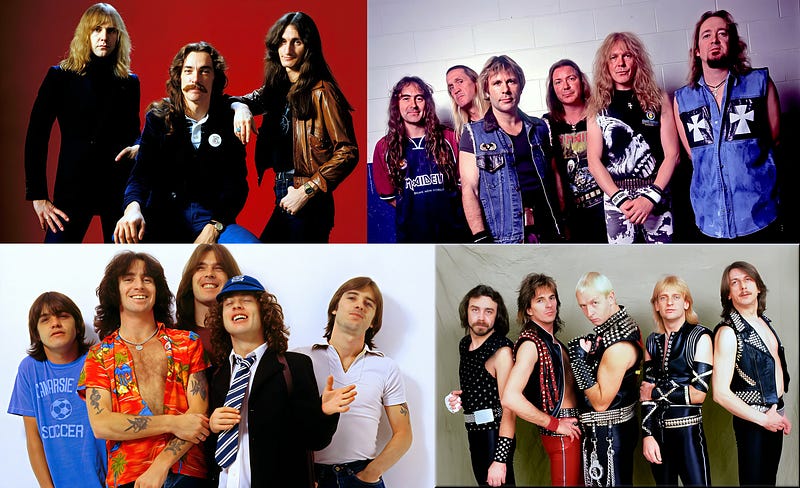
KISS’s influence was not limited to artistic inspiration; they actively shaped the careers of other bands through direct mentorship. Gene Simmons is credited with “basically launching” Van Halen’s career by getting them signed and on the road.18 The band also provided crucial early support to acts like Rush, Iron Maiden, AC/DC, and Judas Priest by taking them on tour as opening acts.17 This hands-on institutional influence is a powerful and often overlooked aspect of their legacy. They were not just a successful band but a force that helped cultivate the next generation of rock legends.
4. The Subversive Lineage: KISS’s Unacknowledged Impact on Extreme Metal
While KISS’s influence on mainstream rock is well-documented, their most profound and paradoxical impact may be on the extreme and underground metal genres that outwardly reject everything they represent.
4.1. The Visual Echo: From Shock Rock to Corpse Paint
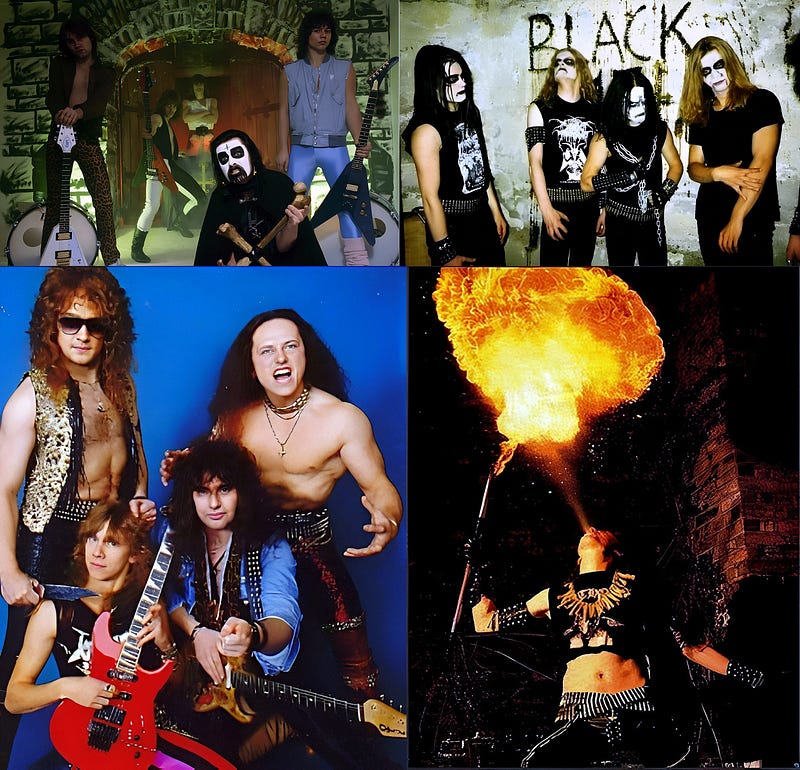
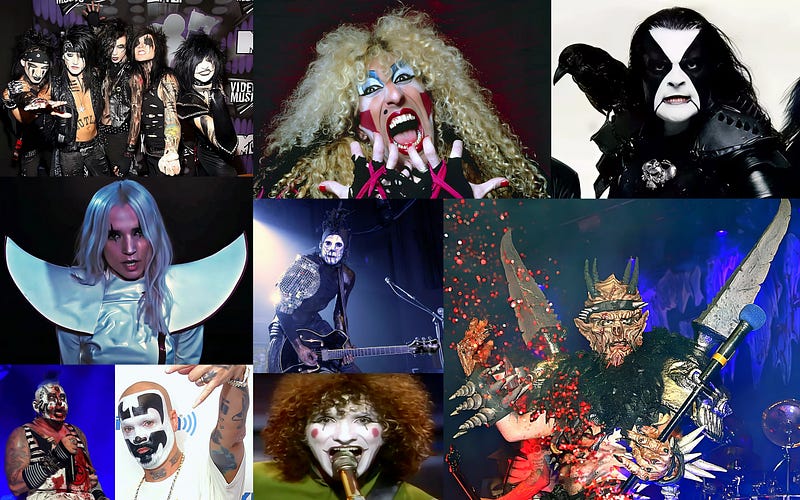
The visual lineage from KISS to black metal is stark, though often uncredited. A Wikipedia entry directly states, “The use of corpse paint in black metal was mainly influenced by the American 1970s rock band Kiss”.20 The online discussion on r/KISS argues that the band “largely pioneered the classic Metal aesthetic/image,” contrasting their 1974 look of “Black Leather, Metallic Armour… Skull/Skeletal Imagery, Full Face Makeup” with the “Standard… rock attire” of their peers.19 However, this connection presents a significant contradiction, as some artists deny the influence. King Diamond of Mercyful Fate, for instance, has stated, “I was never influenced by [Kiss]” and instead cites Peter Gabriel and Alice Cooper as his inspirations.21
This denial is not a refutation of the visual connection but rather a key to understanding the nature of the influence. Extreme metal, particularly black metal, defines itself in opposition to the mainstream and commercialism that KISS embodies.20 Acknowledging a direct link would be antithetical to their anti-establishment ethos. The influence was not a direct copy but a conceptual transmutation. KISS showed that a band could create a consistent, non-human persona using makeup and costume. Extreme metal acts like Venom and Bathory took this visual vocabulary and perverted it, stripping away the fun-loving, glam elements and replacing them with misanthropic, satanic, and violent themes.20 The motive behind the makeup shifted from creating a larger-than-life character to creating an inhuman, death-worshipping one, as one source notes about the black metal pioneer “Dead” of Mayhem, who “actually wanted to look like a corpse” and not “cool” like KISS.22 Thus, KISS’s most subversive influence was in providing the very language of visual expression that the underground would later twist and repurpose for its own anti-commercial, anti-societal purposes.
4.2. From Hard Rock Riffs to Thrash
The musical connection between KISS and thrash metal is less ambiguous, largely due to direct testimony from the artists themselves. Members of “the Big Four” of thrash — Metallica, Anthrax, Megadeth, and Pantera — are all explicitly cited as being “massive KISS fans”.13 Lars Ulrich of Metallica has mentioned listening to KISS while growing up, and Tom Morello of Rage Against the Machine learned to play guitar specifically so he could learn “Love Gun”.17 The deep loyalty of these musicians is perhaps best encapsulated by the fact that Dimebag Darrell of Pantera was buried in a KISS Kasket.11
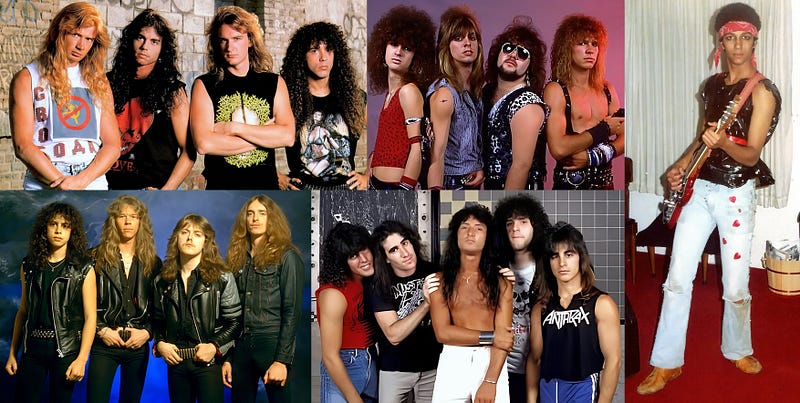
The raw, riff-heavy nature of early KISS tracks like “Deuce,” “Parasite,” and “100,000 Years” provided a crucial sonic foundation for a generation of young musicians.13 In the mid-1970s, before more extreme genres existed, KISS was seen as “harder and louder” than other popular rock bands.17 For aspiring artists, KISS provided a crucial entry point into hard, riff-based music, inspiring them to push the boundaries of heaviness and speed to create thrash metal. The influence was less about a direct sonic copy and more about a foundational inspiration to go heavier, louder, and faster.
4.3. The “Total Brand” in the Underground
The conceptual influence of KISS’s business model can also be seen in the rise of theatrical, modern metal acts. Bands like Ghost, Slipknot, and Marilyn Manson are all listed as being influenced by KISS.13 Rob Zombie explicitly credits KISS with shaping his artistic vision.24 These bands all adopted the KISS strategy of creating a cohesive, larger-than-life aesthetic to build a global, cult-like following. They leveraged masks, makeup, and detailed backstories to create a world for fans to inhabit, much like the “KISS Army”.5
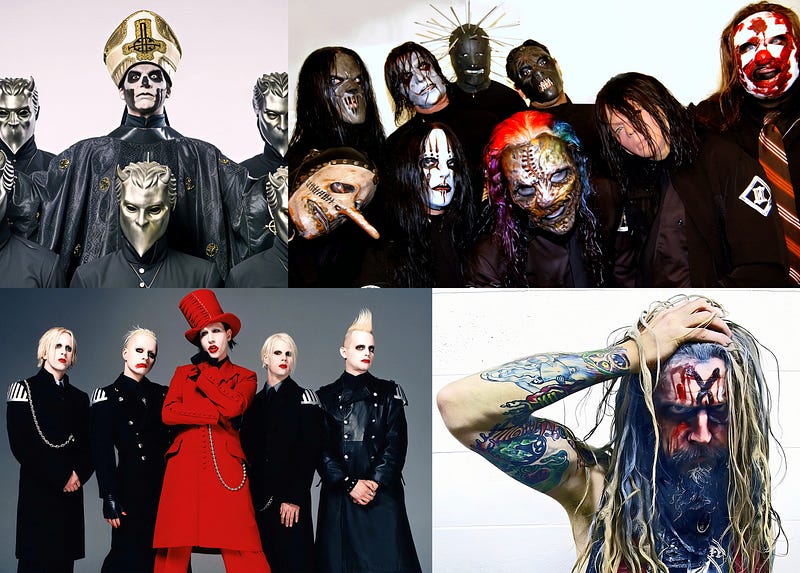
KISS demonstrated that a band could be more than just musicians; they could be characters in a mythic story, which allowed them to sell merchandise and create a lifestyle around their brand. This conceptual template was adopted by bands who built their own mythologies, using the visual and strategic playbook established by KISS to attract and retain fans.9 This proves that KISS’s business genius transcended genre and applied to even the most “anti-commercial” of acts, which used this playbook to achieve global success.
5. The Enduring Legacy: Reevaluation and Cultural Permanence
5.1. Critical Derision vs. Commercial Dominance
KISS’s career has been marked by a profound disconnect between critical opinion and commercial success. The band was often “lampooned as musically tasteless and talentless” by critics 9, yet they sold over 100 million albums worldwide and have earned 30 RIAA-certified gold records, more than any other American band.25 Their fanbase, known as the “KISS Army,” was intensely loyal, forming a cult-like following that prioritized the total experience over individual album releases.5 The band’s biggest driver was “decision simplicity” for the consumer, offering a clear, consistent, and endlessly consumable product that bypassed critical gatekeepers and went directly to the audience.26 This model of fan engagement, cultivated through relentless touring, consistent branding, and extensive merchandising, was a proto-version of modern, community-driven fandom. It is now a standard practice for artists seeking to build a long-term relationship with their audience, independent of traditional media and critics.
5.2. Recent Recognition and Reevaluation
Despite their history of critical derision, KISS has recently received a significant reevaluation from prestigious cultural institutions. They have been inducted into the Rock and Roll Hall of Fame, ranked among VH1’s “100 Greatest Artists of Hard Rock,” and the original lineup was even awarded a Kennedy Center Honor.27 The latter honor is particularly significant, as Paul Stanley acknowledged that the band “embodied the American ideal that all things are possible”.28 This recognition signals a cultural shift in how we define artistic influence. The traditional definition of “art” prioritized musical virtuosity and a more “authentic” aesthetic, which often excluded KISS. Their recent honors validate their mastery of theatrics, branding, and fan engagement as a powerful form of cultural expression, placing them in the same conversation as artists like Steven Spielberg and Tina Turner.28 This reevaluation affirms the report’s central thesis: KISS’s influence was a paradigm shift that redefined the relationship between artist, image, and audience, shaping both the mainstream and the most extreme corners of the music world for decades to come.
6. Conclusion
The analysis demonstrates that the band KISS’s influence on the music industry was not a mere footnote but a foundational force. While their raw, riff-driven sound laid a clear groundwork for subsequent hard rock and glam metal acts, their most profound legacy lies in their pioneering business model and theatrical innovation. By creating a fully realized and aggressively marketed “lifestyle brand” centered on consistent, trademarked personas, a revolutionary live show, and a direct relationship with their “KISS Army” fanbase, they developed a timeless blueprint for artist-audience engagement.
This report reveals the complex and often-denied lineage of this influence, extending even to the most extreme metal genres. The visual shock of Gene Simmons’s “Demon” persona and the band’s use of makeup provided the conceptual framework for black metal’s “corpse paint,” while their hard-hitting riffs inspired the sonic architects of thrash metal. The strategic genius of building a cohesive, mythic universe to foster a global following was also adopted by a new generation of theatrical acts. Ultimately, the story of KISS is a case study in how cultural significance can be achieved by transcending traditional metrics. They were a band that critics derided, but a generation of musicians, from the mainstream to the most subversive underground, openly or secretly idolized, proving that their true genius was not just in making music, but in creating a universe.
Works cited
- en.wikipedia.org, accessed August 23, 2025, https://en.wikipedia.org/wiki/Kiss_(band)#:~:text=Kiss%20was%20formed%20in%201973,the%20bands%20Lips%20and%20Chelsea.
- Kiss (band) — Wikipedia, accessed August 23, 2025, https://en.wikipedia.org/wiki/Kiss_(band)
- KISS — KISS (Self-Titled) [Album Review] — Subjective Sounds, accessed August 23, 2025, https://www.subjectivesounds.com/musicblog/kiss-self-titled-debut-album-review
- KISS — Recollections of the Hottest Band In The Land, Album #1 | classicrockmusicblog.com, accessed August 23, 2025, https://classicrockmusicblog.com/music-review/kiss/
- KISS (music) | EBSCO Research Starters, accessed August 23, 2025, https://www.ebsco.com/research-starters/music/kiss-music
- Kiss’ 50 Most Important Concerts — Ultimate Classic Rock, accessed August 23, 2025, https://ultimateclassicrock.com/kiss-most-important-concerts/
- Brief History of KISS Makeup and Who Owns the Trademark — Ultimate Guitar, accessed August 23, 2025, https://www.ultimate-guitar.com/articles/features/brief_history_of_kiss_makeup_and_who_owns_the_trademark-157321
- Undiscovered Kisstory- Alternative Make Up Designs — MetalTalk, accessed August 23, 2025, https://www.metaltalk.net/chris_dale_undiscovered_kisstory_alternative_makeup.php
- Makeup, money and merchandising: The strategic branding and …, accessed August 23, 2025, https://hstalks.com/article/9313/makeup-money-and-merchandising-the-strategic-brand/
- Makeup, money and merchandising: The strategic branding and marketing of KISS, accessed August 23, 2025, https://ideas.repec.org/a/aza/jbs000/y2025v14i1p15-29.html
- Kiss Kasket — Wikipedia, accessed August 23, 2025, https://en.wikipedia.org/wiki/Kiss_Kasket
- Dead Serious: When KISS Unveiled the KISS Kasket — Mental Floss, accessed August 23, 2025, https://www.mentalfloss.com/posts/kiss-kasket-history
- Metal : r/KISS — Reddit, accessed August 23, 2025, https://www.reddit.com/r/KISS/comments/1077l8x/metal/
- What genre is KISS — Reddit, accessed August 23, 2025, https://www.reddit.com/r/KISS/comments/1j7ffkb/what_genre_is_kiss/
- Glam metal — Wikipedia, accessed August 23, 2025, https://en.wikipedia.org/wiki/Glam_metal
- Inspired by Kiss — Playlist — Apple Music, accessed August 23, 2025, https://music.apple.com/us/playlist/inspired-by-kiss/pl.739a698553024b788f32f3d9532d98e7
- Which bands did Kiss inspired and why? : r/KISS — Reddit, accessed August 23, 2025, https://www.reddit.com/r/KISS/comments/10wcuwo/which_bands_did_kiss_inspired_and_why/
- Who influenced 80s hard rock and metal more, KISS or Van Halen …, accessed August 23, 2025, https://www.quora.com/Who-influenced-80s-hard-rock-and-metal-more-KISS-or-Van-Halen
- KISS arguably did far more to develop the Metal image/aesthetic …, accessed August 23, 2025, https://www.reddit.com/r/KISS/comments/1mjq38j/kiss_arguably_did_far_more_to_develop_the_metal/
- Black metal — Wikipedia, accessed August 23, 2025, https://en.wikipedia.org/wiki/Black_metal
- King Diamond Describes His Response to Gene Simmons’ Lawsuit Threats, Shares Thoughts on Influencing Metallica | Ultimate Guitar, accessed August 23, 2025, https://www.ultimate-guitar.com/news/general_music_news/king_diamond_describes_his_response_to_gene_simmons_lawsuit_threats_shares_thoughts_on_influencing_metallica.html
- Corpse paint — Wikipedia, accessed August 23, 2025, https://en.wikipedia.org/wiki/Corpse_paint
- KISS’ Influence on Rock Bands of 80s & 90s #kiss #classicrock #rockandroll — YouTube, accessed August 23, 2025, https://m.youtube.com/shorts/2HnPLG08pC8
- Big Kid Dreaming: A Conversation with Rob Zombie, Part 1 — American Songwriter, accessed August 23, 2025, https://americansongwriter.com/rob-zombie-discusses-song-creation/
- KISS’s Best Song: The Ultimate Analysis of Their Greatest Hits Based on Fan Polls, Critics, and Sales — WRIF Rocks Detroit, accessed August 23, 2025, https://wrif.com/2025/07/11/kisss-best-song-the-ultimate-analysis-of-their-greatest-hits-based-on-fan-polls-critics-and-sales/
- The KISS Principle: From Innovation to Communication — the Emerging Enterprise Center, accessed August 23, 2025, https://blog.eecincubator.com/kiss-principle-innovation-communication/
- Paul Stanley Details the Frustration Surrounding Unrealistic Expectations of New KISS Albums — American Songwriter, accessed August 23, 2025, https://americansongwriter.com/paul-stanley-details-the-frustration-surrounding-unrealistic-expectations-of-new-kiss-albums/
- Kiss ‘deeply honored’ by Kennedy Center distinction after previously slamming Trump as ‘abhorrent’ — Entertainment Weekly, accessed August 23, 2025, https://ew.com/kiss-honored-kennedy-center-after-slamming-trump-11791601