Breathing Water and Air: The Curious Life and Culinary Legacy of the Air-sac Catfish
Introduction In the still waters of Southeast Asia, where rice paddies shimmer under the tropical sun and rivers snake through fertile…
Introduction
In the still waters of Southeast Asia, where rice paddies shimmer under the tropical sun and rivers snake through fertile floodplains, an unlikely survivor has thrived for centuries — Heteropneustes kemratensis, more widely known as the air-sac catfish. At first glance, it may resemble any ordinary freshwater catfish, but beneath its modest appearance lies a suite of evolutionary innovations and cultural significance that render it one of the most intriguing aquatic species in the world.
This isn’t merely a fish that swims. It breathes air like a mammal, endures droughts like a desert lizard, and graces dinner tables from Bangkok to village homes in Isaan. Its biology reads like speculative fiction, and its role in sustainable aquaculture makes it a beacon in an age where environmental resilience is more valuable than ever. For those drawn to biology, culinary heritage, or sustainability, the air-sac catfish offers a tale as rich as the broth in which it’s often stewed.
Taxonomy
The air-sac catfish belongs to the family Heteropneustidae and the genus Heteropneustes, with Heteropneustes kemratensis being a recognized species primarily found in northern Thailand and Laos. This genus is distinct from other catfishes due to a critical anatomical feature: a pair of long, thin air sacs extending from the gills, functioning almost like primitive lungs. While its relatives, such as Heteropneustes fossilis, are more widespread and well-known, H. kemratensis is a regional specialty — an edible variety appreciated for its tenacity, flavor, and adaptability.
Biology
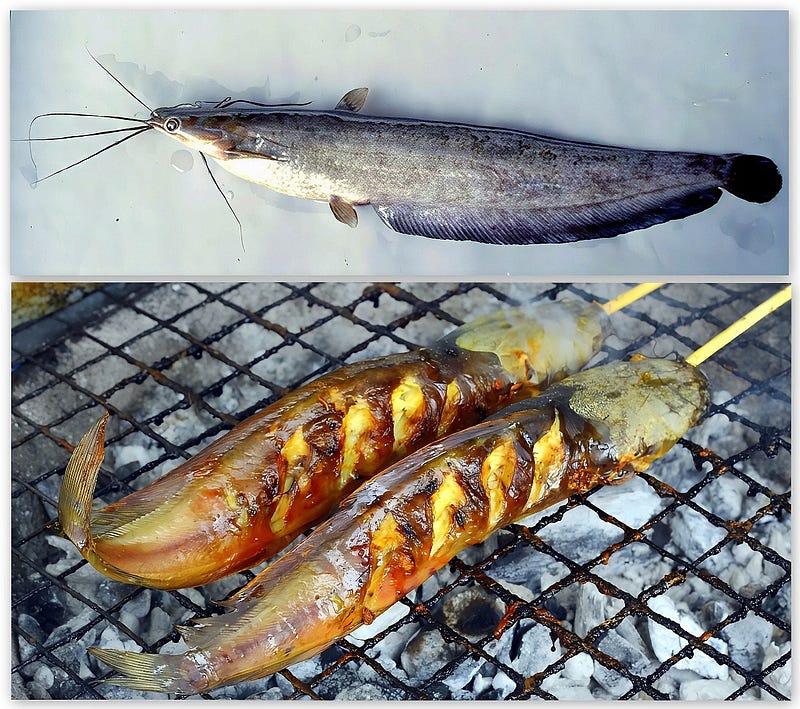
One of the marvels of Heteropneustes kemratensis is its ability to breathe atmospheric oxygen using its elongated air sacs, allowing it to survive in stagnant, oxygen-depleted water where most fish would suffocate. This adaptation not only gives the species a competitive edge in crowded aquaculture ponds and seasonal wetlands but also offers a rare glimpse into the evolutionary transition from water to land-based respiration. The fish has a slender, elongated body cloaked in smooth, scaleless skin, with sharp pectoral spines used defensively when threatened.
Reproduction occurs just before or during the rainy season, when water levels rise and vegetation flourishes. The species lays adhesive eggs, which cling to submerged plants or the muddy substrate. Fry mature rapidly, reaching market size in mere months — a trait that makes the fish a darling of local farmers seeking fast turnover and minimal input.
Ecology
H. kemratensis is typically found in shallow freshwater environments such as rice fields, irrigation canals, swamps, and slow-moving rivers. Its ability to gulp air directly enables it to thrive in environments heavily impacted by eutrophication or seasonal drought — landscapes that other species abandon. This trait not only underscores its ecological resilience but also positions it as an important species for food security in regions grappling with climate instability.
Though not classified as endangered, localized overfishing, habitat degradation, and water pollution threaten certain populations. However, its ease of cultivation and prolific breeding habits make it ideal for sustainable aquaculture, particularly in low-tech rural settings.
Uses
Economically, Heteropneustes kemratensis plays a vital role in regional food systems. In Thai and Laotian markets, it is often sold live, wriggling in shallow plastic tubs or bundled into net bags for transport. Its hardy nature means it can survive long journeys without refrigeration, reducing waste and spoilage.
The fish is also used in traditional medicine, believed by some to enhance male vitality or alleviate certain respiratory conditions — a nod to its unusual respiratory system. Moreover, its low-cost upkeep, high protein yield, and minimal environmental footprint have made it a model organism in rural aquaculture projects seeking to empower smallholder farmers and reduce reliance on imported feedstock species like tilapia.
Culinary Aspects
For all its biological eccentricity, the air-sac catfish is best known for how it tastes — firm yet flaky, with a mild flavor that readily absorbs marinades and spices. In northeastern Thai cuisine, it’s often grilled over charcoal and slathered in a pungent paste of fermented fish sauce and chili, served with sticky rice and green papaya salad. In Isaan homes, it may find its way into tom saap, a sour-spicy soup laced with lemongrass and galangal. The fish’s bones are soft and mostly edible, and its rich collagen content makes it a favorite for slow-cooked dishes where the broth is prized as much as the meat.
Its culinary appeal isn’t limited to rural tables. Urban chefs experimenting with hyperlocal and sustainable menus have begun to explore the air-sac catfish as a versatile, eco-conscious protein. Its adaptability to diverse cooking methods — grilling, steaming, deep-frying — makes it a canvas for flavor without compromising on nutrition.
Wine Pairings
While Southeast Asian cuisine isn’t traditionally served with wine, a thoughtful pairing elevates the dish to new heights. A lightly chilled dry Riesling complements the herbaceous and spicy flavor profile of grilled H. kemratensis, cutting through the fat while enhancing its umami depth. For stewed or braised preparations with fermented elements, a Gewürztraminer with floral and lychee notes softens the dish’s intensity without overpowering its earthiness. For bolder dishes with chili-forward heat, a sparkling rosé delivers both contrast and relief, turning a rustic meal into an elegant experience.
Conclusion
The story of Heteropneustes kemratensis is one of survival — through drought, heat, pollution, and shifting agricultural landscapes. It is a living emblem of biological ingenuity and cultural endurance, its air sacs a metaphor for adaptation in a suffocating world. As global conversations about food sovereignty, ecological resilience, and culinary heritage continue to evolve, this humble fish demands a seat at the table.
In the end, the air-sac catfish teaches us that greatness often swims just beneath the surface — silent, overlooked, but always breathing.