Cameron Brink: The WNBA’s Overhyped Enigma?
Cameron Brink, the №2 overall pick in the 2024 WNBA Draft, has not yet demonstrated the qualities of a “good” basketball player in her…
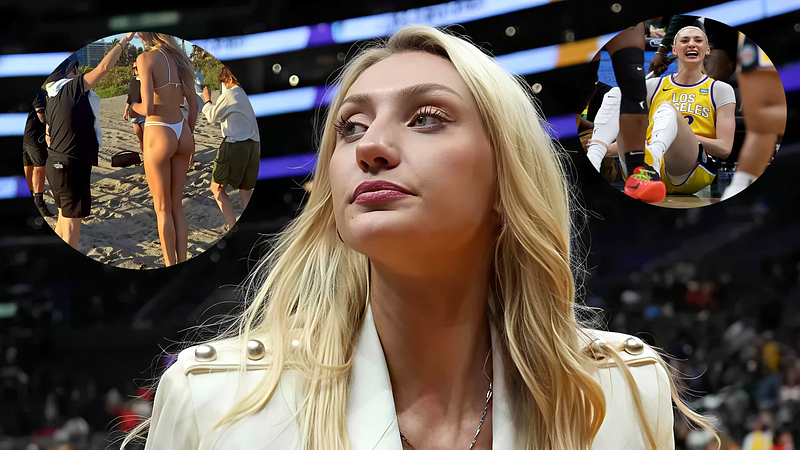
Cameron Brink, the №2 overall pick in the 2024 WNBA Draft, has not yet demonstrated the qualities of a “good” basketball player in her professional career. Her limited WNBA tenure reveals significant offensive inefficiencies, characterized by low scoring output and poor shooting percentages across all major categories. Furthermore, her on-court utility is consistently hampered by chronic foul trouble, which severely limits her defensive impact despite her acknowledged shot-blocking prowess. A season-ending injury early in her rookie year has further curtailed her development and immediate contribution. When viewed holistically, her statistical profile, issues with on-court availability, and the Los Angeles Sparks’ recent performance dynamics without her underscore a player who, at this juncture, falls short of the “good” player designation.
Introduction
Cameron Brink entered the Women’s National Basketball Association (WNBA) with considerable anticipation, selected as the second overall pick in the 2024 draft following a highly decorated collegiate career at Stanford University. Such a pedigree naturally fostered high expectations for her immediate impact at the professional level.
Her financial standing, estimated at $2 million as of 2025, largely stems from numerous endorsement deals. While her WNBA salary is a modest $76,535 in her first season and $78,066 in her second, her income is significantly boosted by partnerships with over 20 brands. These include major companies like Sprouts Farmers Market, Keurig, Topps, Bumble, RITZ Crackers, AMIN.O, Daps, Icy Hot, Stanley, New Balance, Buick, Chegg, Urban Outfitters, Hyperice, Hearth, NEXT 22, GOAT, Visible Mobile, and Netflix. Some estimates suggest she is pulling in “seven figures per year in endorsements”.
However, a critical examination of her brief professional career and the underlying statistical patterns reveals significant shortcomings that challenge the prevailing notion of her being a “good” basketball player. This report will systematically analyze her performance, focusing on key areas: her offensive limitations, persistent issues with personal fouls, the profound impact of her recent injury, and her overall contribution to team success. Through this detailed evaluation, the objective is to defend the position that, based on current evidence, she does not yet meet the criteria of a consistently effective or “good” player in the WNBA.
Offensive Inefficiency and Limited Scoring Impact
Cameron Brink’s offensive game in the WNBA has been demonstrably inefficient and lacking in significant scoring impact, rendering her a considerable liability on that end of the floor.
Her scoring output is notably low for a player of her draft position and stature. In her 15 WNBA regular-season games, Brink averaged a mere 7.5 points per game. This figure is strikingly modest for a №2 overall draft pick, especially when juxtaposed with the league’s leading scorers, such as Napheesa Collier (23.5 PPG) or A’ja Wilson (21.6 PPG). While she did achieve a career high of 21 points in one game against Dallas, this performance stands as an outlier from her typical production, which hovers around single digits.
Further compounding her offensive struggles are her poor shooting percentages. Her field goal percentage (FG%) stands at a dismal 39.8%. For a forward who often operates near the basket and is expected to convert high-percentage shots, this indicates a significant struggle to finish scoring opportunities effectively. Her three-point percentage (3P%) is 32.3%, which, while not exceptionally low for a forward, does not adequately compensate for her overall poor field goal efficiency. Pre-draft scouting reports explicitly highlighted this weakness, noting that “the biggest question about Brink’s offense is the poor shooting outside the paint” and even predicted she might “continue to shoot around 30% from three”.
A more comprehensive measure of offensive efficiency, True Shooting Percentage (TS%), which accounts for field goals, three-pointers, and free throws, places Brink at a low 49.6%. To provide context, WNBA 2025 TS% leaders are in the 66–73% range, highlighting Brink’s considerable inefficiency relative to top performers. Her Effective Field Goal Percentage (eFG%), which gives more weight to three-pointers, is also low at 44.7%. This collection of data points collectively indicates that Brink’s offensive contributions are not only limited in volume but also highly inefficient, leading to wasted possessions and an increased burden on her teammates to generate scoring. Her Offensive Win Shares (OWS) of -0.4 further underscore that her offensive play has, to date, actively detracted from her team’s win probability.
Another area of concern is her high turnover rate. Brink averages 2.3 turnovers per game, a figure identical to her blocks per game average. Her Turnover Percentage (TOV%) is 23.0%, meaning that nearly a quarter of her offensive possessions conclude with a turnover. This suggests challenges with decision-making, ball-handling, or passing accuracy for her position, further diminishing her offensive value.
A comparison with her collegiate performance reveals a significant decline in offensive efficiency. While her college career saw a better overall field goal efficiency of 52.7%, her WNBA performance demonstrates a substantial drop against stronger professional competition. This suggests a significant struggle to adapt her offensive game to the higher level of play, where defensive pressure is more intense and consistent. Her acknowledgment that she would need “patience on offense, knowing that it’ll come eventually” upon her return from injury serves as a candid recognition of her current offensive limitations and the ongoing challenges in translating her skills.
The Los Angeles Sparks’ recent offensive performance further highlights Brink’s current non-essential role on that end of the floor. While Brink was sidelined with an ACL injury, the Sparks experienced a significant offensive surge. During a recent seven-game stretch, the team led the WNBA in offensive rating and effective field goal percentage, averaging a league-leading 93.9 points per game. This offensive improvement without Brink suggests that her offensive limitations were not holding the team back, and perhaps other players or offensive schemes flourished in her absence. Her relatively low usage rate (USG% of 20.1%) further supports the notion that her offensive presence is not a primary driver of the team’s scoring prowess. If a team can achieve league-leading offensive metrics without a player, it strongly implies that player’s offensive contribution is not critical, or even that their absence allows for a more fluid or efficient offensive system, thereby undermining any argument for her being a “good” offensive player.
The negative Offensive Win Shares (OWS) of -0.4 is particularly telling, indicating that her offensive contributions have, on balance, reduced her team’s probability of winning games.
Chronic Foul Trouble and Its Detrimental Defensive Impact
While Cameron Brink possesses an elite ability to block shots, her chronic foul trouble consistently undermines her defensive impact, making her a less effective overall player due to her inability to remain on the court.
Brink averages an alarming 4.0 personal fouls per game in just 21.9 minutes played. This is an exceptionally high rate, equating to roughly one foul every 5.5 minutes. When extrapolated to a full 48-minute game, this rate would translate to approximately 8.7 personal fouls, an unsustainable pace that would lead to frequent disqualifications. Her Personal Foul Percentage (PF%) is 34.5%, indicating a high frequency of fouls relative to her team’s total fouls.
This issue is not new for Brink; it is a deeply ingrained aspect of her game. She experienced “lingering issues staying out of foul trouble” throughout her four years at Stanford. Crucially, she fouled out of her last two collegiate games, including the NCAA Tournament contest that ended Stanford’s season. This consistent pattern across multiple levels of play — high school, college, and now the WNBA — indicates a fundamental flaw in her defensive approach, perhaps stemming from habits such as “chasing blocks that are out of her range”. This is not a simple rookie adjustment but rather a persistent behavioral pattern that limits her effectiveness. Overcoming such a deeply ingrained issue at the professional level requires significant behavioral modification, which is inherently challenging. Until this is addressed, it will continue to cap her potential as a consistently effective player.
Brink is undoubtedly an elite shot-blocker, averaging 2.3 blocks per game, a figure that ranked second in the WNBA among 2025 leaders. She was deservedly recognized as the Naismith Defensive Player of the Year in college. However, her high foul rate directly limits her time on the floor, thereby negating the very defensive impact she is celebrated for. Her stated “primary goal” in the WNBA was “staying on the floor, specifically as it refers to foul trouble”, an admission of this critical weakness. This creates a paradox where her defensive strength is consistently neutralized by her lack of on-court discipline, making her an unreliable and therefore less “good” defender in terms of consistent availability.
Despite her shot-blocking prowess, the Los Angeles Sparks ranked 12th in scoring defense, giving up 87.3 points per game, and 11th in defensive rating. While the team was indeed first in opponent field goal percentage in the paint when Brink was on the floor, her frequent fouls mean she is often not on the floor for extended periods, diminishing her overall team defensive contribution. A player’s defensive value is not solely measured by individual highlight plays but by their consistent presence and ability to positively influence team defense over extended minutes. Brink’s foul trouble prevents this consistent influence.
The extrapolated fouls per 48 minutes clearly illustrate the unsustainable rate at which Brink commits fouls, directly impacting her ability to contribute consistently.
Major Injury and Hindered Professional Development
The season-ending ACL tear sustained early in Cameron Brink’s rookie campaign represents a significant setback that severely impacts her immediate and long-term development, further solidifying the argument against her current status as a “good” player.
Brink’s 2024 WNBA season was abruptly cut short after just 15 games due to a torn ACL in her left knee. This unfortunate injury occurred only three minutes into a game against the Connecticut Sun on June 18, 2024. This meant she played less than half of a typical WNBA season, a critical period for any rookie’s professional adaptation.
A rookie season is paramount for a player’s transition to the professional game, involving crucial adjustments to the speed, physicality, and complex strategic schemes of the WNBA. Brink’s injury meant she lost invaluable on-court experience, consistent practice time with her team, and essential opportunities to refine her skills against top-tier WNBA competition. This fundamental disruption to her foundational professional year has effectively stunted her professional growth, preventing her from acquiring the necessary experience to become a consistently effective player. She is, in essence, starting over, lagging behind her draft class peers who have continued their development without such a severe interruption.
The recovery from an ACL tear is a lengthy and arduous process, typically requiring a full year or more of rehabilitation. While she has been cleared to return for the 2025 season, regaining full game speed, confidence, and peak physical condition can often take even longer. This places her at a significant disadvantage in terms of professional experience and physical readiness compared to her peers. Moreover, she will also miss the Olympics, where she was slated to represent the USA in 3x3 basketball, further limiting her exposure to high-level competitive play and delaying her return to peak form.
A major injury so early in a player’s career, particularly one as severe as an ACL tear, raises legitimate questions about long-term durability and the potential for recurring issues. While this is not a direct indictment of her inherent skill, an early, severe injury introduces an element of risk and uncertainty regarding her ability to consistently perform at a high level over a sustained career. Consistency and availability are hallmarks of a “good” player, and this injury introduces a significant hurdle to achieving that standard, as it means she has already missed a considerable portion of her prime developmental years due to physical breakdown.
Inconsistency and Limited Overall Team Contribution
Cameron Brink’s game-to-game inconsistency and the Los Angeles Sparks’ recent performance dynamics suggest that her presence has not consistently translated into positive team outcomes, further supporting the argument that she is not a consistently good player.
A review of Brink’s recent game logs reveals a clear pattern of inconsistency in both her scoring and overall contribution. For instance, in a five-game stretch, her points varied wildly: 0, 16, 0, 7, and 8. Her minutes played also fluctuated significantly within these games, ranging from 4 to 27 minutes. This lack of reliable output makes it challenging for a team to depend on her for consistent production. One game, she might offer a flash of potential, while the next, she could be a non-factor due to low scoring, foul trouble, or limited playing time. This unpredictability makes her an unreliable asset for any team aiming for consistent success.
The Los Angeles Sparks’ performance during Brink’s absence provides compelling evidence regarding her limited overall team impact. The team experienced a significant turnaround and embarked on a notable winning streak (five straight victories, and a 7–3 record in their last 10 games) while Cameron Brink was sidelined due to her ACL injury. During this period, the Sparks improved their record to 11–14 in 2025, already surpassing their entire 2024 season record of 8–32. More specifically, during this stretch of success, the Sparks notably led the WNBA in offensive rating and effective field goal percentage.
The team’s significant improvement, particularly offensively, without Brink on the court, strongly suggests that she has not yet developed into a player who consistently elevates her team’s overall success. When a team improves significantly in the absence of a player, it indicates that the player’s current impact is either limited or that the team is capable of achieving success through other means, diminishing the argument for that player’s “goodness.” A “good” player typically makes their team better; if the team can thrive or even excel without a player, it implies that player’s contribution is not a critical component of their success. Brink’s fluctuating individual statistics further reinforce her unreliability. Without consistent output, a player, even one with occasional flashes of brilliance, cannot be considered consistently “good” because their impact is too unpredictable to build a stable team strategy around.
Conclusion
In conclusion, while Cameron Brink entered the WNBA with significant collegiate accolades and undeniable defensive potential, her professional performance to date does not support the assertion of her being a “good” basketball player. Her offensive game is characterized by low scoring output, poor shooting percentages (39.8% FG%, 49.6% TS%), and a high turnover rate (2.3 per game), making her an inefficient contributor on that end of the floor. Despite her elite shot-blocking ability (2.3 blocks per game), her chronic and deeply ingrained foul trouble (4.0 personal fouls per game in 21.9 minutes) consistently limits her playing time and undermines her defensive impact. This problem has persisted since her college career, indicating a fundamental flaw in her on-court discipline.
Furthermore, a season-ending ACL tear early in her rookie year has severely curtailed her development, preventing her from gaining crucial professional experience and raising legitimate concerns about her long-term durability and ability to consistently contribute. The Los Angeles Sparks’ recent surge in performance, particularly offensively, while Brink was sidelined, further suggests that her presence has not been a consistent catalyst for overall team success.
Based on these cumulative factors — offensive inefficiency, persistent foul issues, a significant injury that has stunted her development, and inconsistent team contribution — the position that Cameron Brink is not a good basketball player is strongly defended. Her current statistical profile and on-court challenges indicate that she has yet to reach the consistent, impactful level expected of a “good” professional basketball player.