Claws of Culture: The Story of the American Lobster
The American lobster, Homarus americanus, is more than just a delicacy steaming on a New England table. It is a biological marvel, a…
The American lobster, Homarus americanus, is more than just a delicacy steaming on a New England table. It is a biological marvel, a cultural symbol, and an economic powerhouse woven into the fabric of coastal life. Its journey from the rocky seafloor to the dinner plate tells a story of survival, exploitation, and the ongoing search for balance between human appetite and ecological responsibility.
Taxonomy
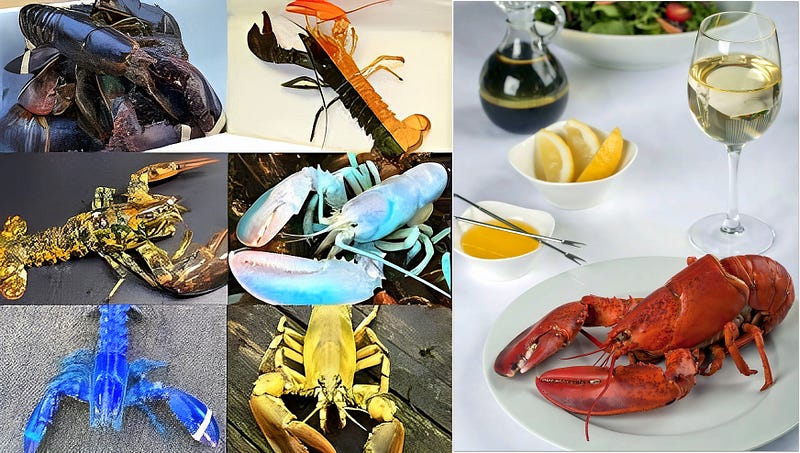
Belonging to the family Nephropidae, Homarus americanus is a close relative of the European lobster (Homarus gammarus), yet its massive claws and deep-water resilience set it apart. Known simply as the American lobster, Maine lobster, or Northern lobster, this species inhabits the Atlantic coasts of North America. Unlike crabs or spiny lobsters, it is easily recognized by its asymmetrical claws: the crusher claw, built for brute force, and the cutter claw, engineered for precision. There are no distinct subspecies, but regional differences in shell color — ranging from dark greenish-brown to rare cobalt blue or even ghostly albino — have fascinated fishermen and scientists alike.
Biology
This crustacean can grow to astonishing sizes, with some specimens exceeding 44 lb (20 kg), making it the heaviest arthropod on Earth. Its body is armored in a chitinous exoskeleton, which it sheds in a vulnerable process called molting. Lobsters may live over 50 years, though exact lifespans remain debated, with some estimates pushing past a century. They possess compound eyes that detect motion rather than detail, antennae packed with chemoreceptors, and a nervous system more decentralized than most vertebrates, sparking long-running ethical debates about whether they feel pain.
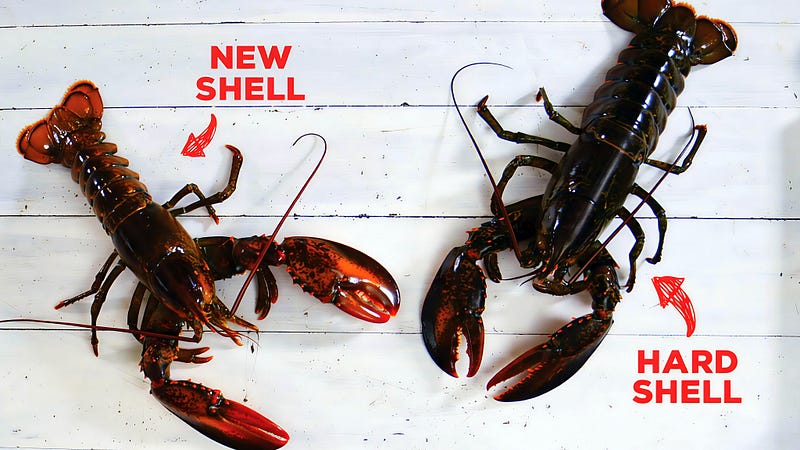
Molting also plays a culinary role. Soft-shell lobsters, caught shortly after a molt, are prized for their tender meat, though they yield less than hard-shell lobsters. Their blood, colored blue by copper-based hemocyanin, circulates through gills adapted to cold, oxygen-rich waters.
Ecology
American lobsters thrive in the North Atlantic, from Labrador down to North Carolina, with the densest populations in the Gulf of Maine. They prefer rocky, coastal habitats where they can shelter from predators like cod, monkfish, and humans. Their ecological role as both predator and scavenger stabilizes benthic communities, recycling nutrients and maintaining balance in marine food webs.
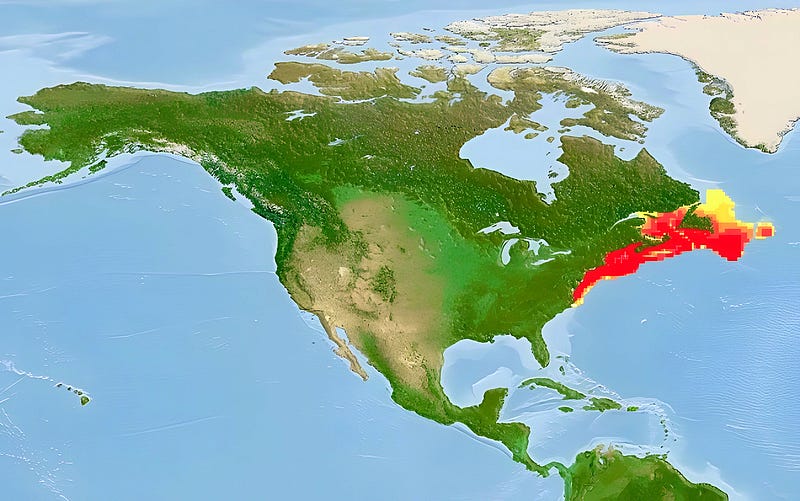
Conservation concerns are pressing. Rising sea temperatures — warmer by 2°C in some regions — are pushing populations northward. Diseases like shell rot, previously rare in colder waters, are becoming more common. Overfishing is curtailed through strict regulations, including trap limits, minimum and maximum size restrictions, and protection for egg-bearing females. These measures are largely successful, but climate change looms as a threat that no trap limit can solve.
Uses
Economically, the lobster industry is the backbone of New England and Atlantic Canada. Annual catches are measured in the hundreds of millions of pounds, valued at billions of dollars. Yet the lobster’s economic history is a study in irony: once considered “poverty food” in the 17th and 18th centuries, fed to prisoners and servants, it is now a global luxury item. Sustainability initiatives include eco-certifications and traceability systems that assure consumers their lobster was responsibly harvested.
Culinary Aspects
The allure of lobster lies in its layered sensory experience. The taste profile balances sweetness with a subtle brininess, echoing the sea it comes from. The flavor is buttery, with delicate umami undertones that intensify when steamed or grilled. Its aroma is lightly oceanic, not fishy, carrying hints of iodine. The mouthfeel is tender yet firm, with a springiness that resists mushiness. Texture varies by part: claw meat is dense and flavorful, tail meat is slightly sweeter, and leg meat is delicate and silky.
Balance and complexity unfold across the palate, with a clean finish that lingers without heaviness. Appearance matters too: a raw lobster’s dark shell transforms into a vibrant red-orange at 212°F (100°C), a visual spectacle caused by the release of astaxanthin pigments. Chemesthesis plays a role in how butter, garlic, or chili accentuates the lobster’s richness, heightening sensory satisfaction.
Nutritionally, lobster is lean, with about 98 calories per 3.5 oz (100 g) serving. It delivers 21 g of protein, trace minerals like zinc and selenium, and omega-3 fatty acids, all with minimal fat. Its cholesterol content is higher than that of some seafood, but balanced by its overall nutrient density.
Culturally, lobster is ritualized. A summer clambake in Maine, a butter-drenched lobster roll in Connecticut, or a thermidor in Paris all reveal how one species can migrate from subsistence fare to haute cuisine. Cooking methods are as varied as cultures: steaming, boiling, grilling, or even poaching in butter at 160°F (71°C) for a tender, luxurious bite.
Wine Pairings
Lobster demands wines that honor its delicate sweetness while cutting through its richness. A Chablis from Burgundy, crisp with notes of flint and citrus, complements the steamed lobster’s purity. A California Chardonnay with subtle oak balances lobster thermidor’s creamy intensity. Sparkling wines, especially Champagne, lift the natural brininess and refresh the palate. For grilled lobster with charred edges, a dry Riesling or Sauvignon Blanc brings acidity that frames the smokiness. Even a light Pinot Noir can surprise, pairing well with lobster rolls layered with butter or mayonnaise.
Conclusion
The American lobster is a creature of paradox: ancient yet modern, humble yet luxurious, abundant yet fragile. It embodies the collision of biology, economy, and culture, forcing us to reckon with how we consume the sea’s bounty. As climate shifts and human demand continue to reshape the oceans, the lobster becomes not just a delicacy but a reminder of the precarious ties between appetite and stewardship. Its claws, once tools of survival, now point us toward questions about sustainability, equity, and the future of our relationship with the ocean.