
Computational Mathematics of AI and Blockchain: Foundations, Controversies, and Real-World…
Historical Background and Foundational Principles

Computational Mathematics of AI and Blockchain: Foundations, Controversies, and Real-World Implications
Historical Background and Foundational Principles
The convergence of computational mathematics, artificial intelligence (AI), and blockchain represents a unique nexus where abstract mathematical theory transforms into tangible technological progress. To understand this fusion, we must first delve into its historical and conceptual roots.
Origins of Computational Mathematics
Computational mathematics emerged in the mid-20th century alongside the advent of digital computers. Initially, mathematicians utilized computation for solving numerical problems that were analytically intractable, giving rise to numerical analysis, algorithmic optimization, and complexity theory. Landmark developments like the Fast Fourier Transform (FFT), finite element methods, and numerical linear algebra established the core frameworks essential for modern computational mathematics.
Evolution of Artificial Intelligence
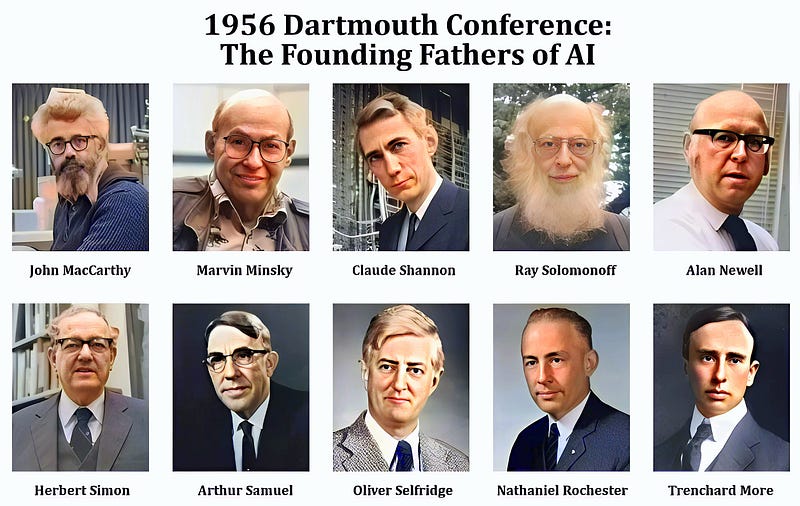
Artificial intelligence, conceived formally during the 1956 Dartmouth Conference, grew from attempts to simulate human cognitive functions such as reasoning, perception, and learning. AI underwent multiple evolutionary cycles: symbolic AI in the 1960s and 70s; knowledge-based expert systems in the 80s; machine learning and statistical methods from the 90s onward; and the recent renaissance driven by deep learning and neural networks, catalyzed by enhanced computing power and large datasets.
Emergence of Blockchain
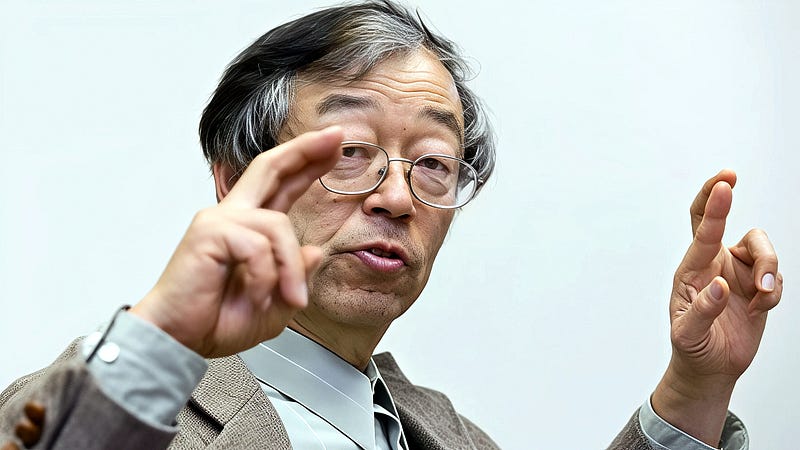
Blockchain technology, introduced by Satoshi Nakamoto in the seminal 2008 Bitcoin whitepaper, redefined the concept of decentralized trust and transparent computation. Its cryptographic foundations — including hashing, digital signatures, and consensus mechanisms — created a system resistant to centralized manipulation, with mathematical rigor underpinning its security guarantees.
Collectively, these technologies leverage sophisticated mathematics — such as linear algebra, cryptography, probability, graph theory, calculus, and optimization — to fulfill their distinctive purposes.
Analysis of Underlying Assumptions and Inconsistencies
While computational mathematics applied to AI and blockchain is rigorous, several implicit assumptions and subtle biases underlie prevalent interpretations:
Assumptions in AI Mathematics
- Linearity and Simplicity: Many foundational mathematical models in machine learning assume linearity or quasi-linearity, yet real-world data frequently violates these constraints, introducing inaccuracies or requiring sophisticated nonlinear approaches.
- Data Representativeness: Mathematical frameworks assume data representativeness, though systemic bias, sampling errors, and incomplete datasets can introduce critical distortions in predictive algorithms.
- Stationarity and Stability: Classical optimization methods presuppose stationary environments. Real-world environments, however, exhibit volatility and dynamic complexity, challenging stable convergence.
Inconsistencies in Blockchain Mathematics
- Idealized Decentralization: Blockchain mathematics assumes perfect decentralization, yet real-world implementations reveal power-law distributions, with mining power and validation capacity concentrated among a limited number of stakeholders.
- Immutability versus Scalability: Cryptographic assumptions prioritize immutability and security, often at the cost of scalability, causing inherent performance bottlenecks in systems like Ethereum.
- Trustless Trust Paradox: Blockchain’s mathematics relies on cryptographic proof structures to eliminate trust. However, user interactions with blockchain networks paradoxically involve trusting developers, exchanges, and interfaces that themselves are rarely mathematically verified.
Recognition of these limitations fosters deeper investigation and innovation, sharpening the discipline’s analytical rigor.
Competing Perspectives and Counterarguments
The union of computational mathematics with AI and blockchain provokes divergent expert opinions, each advocating distinct theoretical approaches and practical priorities.
AI Perspectives: Symbolic versus Connectionist
- Symbolic AI Proponents: Emphasize logic-based reasoning, interpretable symbolic manipulation, and mathematical precision. Their critique against connectionist (neural network) approaches highlights interpretability concerns, opaqueness, and a lack of formal verification methods.
- Connectionist Advocates: Defend neural networks and deep learning methodologies for superior empirical performance, flexibility, and ability to handle high-dimensional nonlinear spaces, despite mathematical opaqueness and empirical black-box behavior.
Blockchain Perspectives: Proof-of-Work versus Proof-of-Stake
- Proof-of-Work (PoW) Supporters: Advocate PoW’s mathematically grounded security derived from computational difficulty, cryptographic hashing, and energy expenditure, arguing that costliness prevents trivial manipulation and secures immutability.
- Proof-of-Stake (PoS) Advocates: Counterargue with mathematically elegant probabilistic voting and economic incentive systems, prioritizing efficiency, scalability, and reduced environmental impact, challenging PoW’s perceived inefficiencies.
Both camps employ sophisticated computational mathematics to defend their preferred methodologies, often emphasizing different aspects of security, scalability, and decentralization.
Broader Implications and Future Developments
The interplay between computational mathematics, AI, and blockchain has profound implications across disciplines, reshaping fields as diverse as finance, medicine, governance, and cybersecurity:
- Trust and Transparency: Rigorous mathematical frameworks ensure verifiable integrity and transparency in algorithms and decentralized ledger systems, fundamentally altering trust dynamics in digital ecosystems.
- Ethical and Societal Impact: Mathematical accountability shapes ethical AI deployment and blockchain governance, compelling transparent algorithmic decisions, privacy protection, and unbiased representation.
- Quantum-Resistant Cryptography: Future computational mathematics faces quantum threats. Both AI-driven cryptographic protocols and quantum-safe blockchain encryption algorithms demand intense mathematical innovation, pushing the boundary of cryptographic theory.
In the coming decades, this integrated mathematics will profoundly influence policy, economic structures, social governance, and technological infrastructures, extending beyond academia to global-scale systems and institutions.
Real-World Applications and Case Studies
The theoretical intricacies of computational mathematics find concrete expression across numerous domains:
Finance: Algorithmic Trading and DeFi
- AI-driven mathematical models govern algorithmic trading, portfolio optimization, and risk management.
- Blockchain mathematics underpins decentralized finance (DeFi) protocols, employing cryptographic algorithms to securely automate financial transactions without intermediaries (e.g., Uniswap, Aave).
Healthcare: Medical Diagnostics and Secure Records
- AI mathematics enables machine learning-driven diagnostics, disease prediction models, and medical imaging analysis (e.g., TensorFlow-based tumor detection).
- Blockchain’s cryptographic mathematics secures electronic health records (EHRs), ensuring integrity, privacy, and accessibility across institutions (e.g., the MedRec project).
Governance: Smart Contracts and Transparent Voting
- Computational mathematics and cryptographic verifiability empower smart contracts, automating complex governance operations transparently and securely.
- AI mathematics supports algorithmic policy modeling and predictive governance analytics, improving decision-making efficiency.
Cybersecurity: Threat Detection and Data Integrity
- AI-driven anomaly detection employs probabilistic models, Bayesian inference, and neural network architectures to identify cybersecurity threats.
- Blockchain mathematically guarantees data integrity, facilitating tamper-evident logs, secure communications, and immutable transaction histories.
Conclusion: Mathematics as the Keystone of Innovation
Computational mathematics, deeply integrated into the evolving fields of AI and blockchain, forms the critical bridge between abstract theoretical precision and tangible real-world efficacy. Its rigorous methodologies expose limitations, inspire novel frameworks, and enable unprecedented practical applications.
As we move forward, continuous reflection upon foundational assumptions, transparent examination of biases, critical engagement with competing perspectives, and interdisciplinary applications will drive the dynamic evolution of computational mathematics in AI and blockchain — shaping our collective digital future through meticulous mathematical inquiry and innovative technological application.