Crimson Roots and Timeless Flavors: Exploring the Wonders of Alkanet
Introduction Hidden within the sun‑kissed fields of the Mediterranean, a humble herb quietly weaves its legacy through centuries of dyeing…
Introduction
Hidden within the sun‑kissed fields of the Mediterranean, a humble herb quietly weaves its legacy through centuries of dyeing, healing, and cooking. Alkanet, known to botanists as Alkanna tinctoria, is more than just a pretty wildflower; it serves as a living bridge between ancient traditions and modern sustainability. When I first encountered its deep red roots in a rustic market in southern France, I was struck by how a plant so unassuming could carry such an intense, almost magical color. This is a plant that refuses to be overlooked, one that demands a closer look from anyone who cherishes the interplay between nature, culture, and cuisine.
Taxonomy
The genus Alkanna belongs to the family Boraginaceae, a group renowned for rough‑leafed herbs and shrubs. Among them, Alkanna tinctoria is the most celebrated species, known in various regions as dyer’s alkanet, bugloss, or orcanet. While there are wild relatives spread across the Balkans and Anatolia, this particular species has been cultivated selectively for its vivid red dye compounds, which are found in the roots. Some varieties lean more toward medicinal use, while others are favored by culinary artisans seeking a natural tint for oils and confections. Its taxonomic lineage, stretching back through ancient herbal texts, underscores a continuity that few plants can boast.
Biology
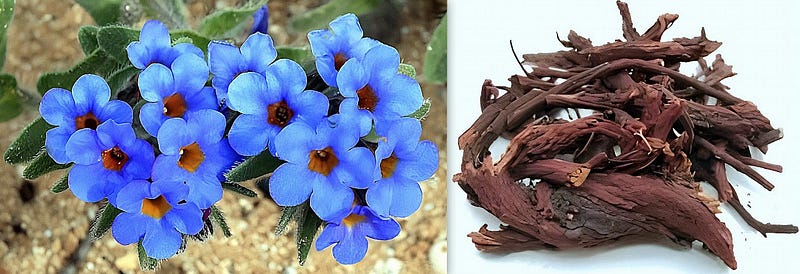
Alkanet’s unassuming blue‑violet flowers crown a base of bristly, gray‑green leaves. Beneath the soil lies its true treasure: a thick, reddish root laced with alkannin, the pigment that has fascinated dyers and herbalists for centuries. The plant is a perennial, thriving across seasons, pushing up new foliage after the winter cold and unfurling blooms in the warmth of spring. Its taproot anchors it firmly in poor, gravelly soils, a testament to its resilience. It is built for survival, able to thrive in semi‑arid conditions where other herbs wither, making it a botanical paradox — delicate in appearance, yet robust in constitution.
Ecology
Across the Mediterranean basin, Alkanna tinctoria plays its part in sustaining pollinators, its flowers drawing bees with a nectar rich enough to rival better‑known wildflowers. It prefers open, sunny slopes, often appearing where soil has been disturbed, helping prevent erosion with its dense root system. In an age of ecological strain, it stands as a reminder that traditional plants can offer modern solutions. Sustainable cultivation is not merely possible; it is vital. Farmers are now experimenting with organic methods to grow alkanet without depleting wild populations, ensuring that its natural habitats remain intact for generations to come.
Uses
Historically, the root’s crimson dye colored fabrics, ointments, and cosmetics. Apothecaries once prized its extract for soothing skin irritations, and modern herbalists still employ it in tinctures. On a commercial scale, alkanet root continues to be used as a natural colorant in artisanal soaps and organic lip balms. The market for botanical dyes is resurging as consumers seek chemical‑free alternatives, and alkanet sits at the forefront of this revival. Entrepreneurs are finding ways to integrate it into sustainable fashion and niche culinary products, proving that old‑world plants can fuel new‑age economies.
Culinary Aspects
In the kitchen, alkanet is less about bold flavor and more about quiet artistry. When steeped in oil, it imparts a ruby hue that transforms simple dishes into works of visual poetry. In southern Italy, I once watched a chef infuse olive oil with powdered alkanet root, then drizzle it over fresh mozzarella, the color contrast as striking as a sunset over the Adriatic. Although the root itself is not consumed directly, its use as a natural coloring agent aligns with modern culinary trends that favor authenticity and minimal processing. The resulting oils and syrups carry no harshness, only a whisper of earthiness that complements Mediterranean fare.
Wine Pairings
A dish adorned with alkanet‑infused oil deserves a wine that respects its subtlety while celebrating its visual drama. A crisp Vermentino from Sardinia, with its notes of green apple and saline breeze, elevates the gentle herbal undertones without overwhelming them. For richer dishes like alkanet‑tinted sauces over roasted vegetables, a medium‑bodied Grenache offers warm red fruit and soft tannins that harmonize beautifully with the vivid presentation. These pairings echo a simple truth: color and flavor are partners in the sensory experience, each enhancing the other.
Conclusion
Alkanet is more than a botanical curiosity; it is a symbol of how the old and new can coexist gracefully. Its roots, steeped in history, continue to color our fabrics, soothe our skin, and inspire our kitchens. To cultivate and cherish it is to honor a lineage of human ingenuity and respect for the earth. As we look toward a future that demands sustainability and creativity, plants like Alkanna tinctoria remind us that sometimes the most enduring treasures are those that have been waiting in the soil all along.