Crowned with Spines: The Secret Life and Taste of Bahun‑uni
Along the cold, emerald‑rimmed coastlines of the northern Pacific, a small, spiny creature has quietly shaped marine ecosystems and…
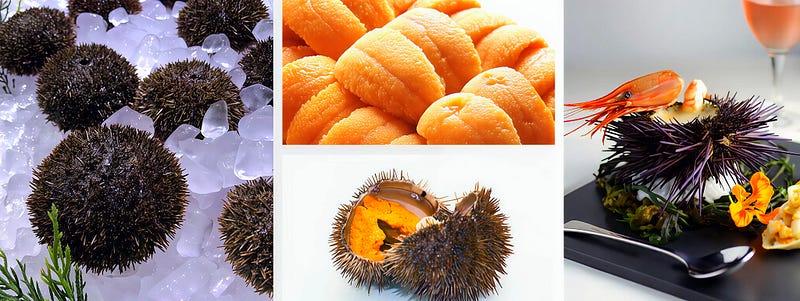
Along the cold, emerald‑rimmed coastlines of the northern Pacific, a small, spiny creature has quietly shaped marine ecosystems and culinary traditions for centuries. Bahun‑uni, known to scientists as Hemicentrotus pulcherrimus, is more than a sea urchin. It is a living link between the rhythms of the ocean and the artistry of the table, embodying sustainability, rarity, and gastronomic intrigue.
Taxonomy
Within the class Echinoidea, this species belongs to the order Echinoida and the family Strongylocentrotidae. Its genus, Hemicentrotus, reflects the distinctive spine arrangement that sets it apart from its relatives. The species name, pulcherrimus, means “most beautiful,” a fitting descriptor for an urchin that displays a striking olive‑green tone with hints of rust along its spines. While there are no formally recognized subspecies, regional variations exist depending on habitat, lending subtle differences in size, coloration, and flavor to harvested specimens.
Biology
Bahun‑uni is a nearly spherical echinoderm armored with dense, short spines that shield a rigid calcareous test. Its anatomy reveals radial symmetry and a complex water vascular system that powers tube feet, enabling the urchin to graze and cling to rocky substrates despite strong currents. The reproductive cycle peaks in late winter, when adults release eggs and sperm into open water. Microscopic larvae drift and develop over several weeks before settling and maturing into juveniles. This species exhibits remarkable regenerative ability, rapidly replacing lost spines and repairing damaged tissue, a testament to its evolutionary resilience.
Ecology
Found primarily along the temperate coasts of Japan, Korea, and parts of China, Hemicentrotus pulcherrimus thrives in nutrient‑rich waters that foster dense kelp forests. It plays a pivotal ecological role as a grazer, controlling algae and contributing to balanced marine ecosystems. However, unchecked population surges can lead to overgrazing, stripping habitats bare, and creating so‑called urchin barrens. In response, fishery regulations and community‑based management programs have been instituted to ensure that harvesting practices remain sustainable, protecting both the species and the delicate environments it inhabits.

Uses
Beyond its ecological significance, Bahun‑uni is an economic cornerstone for coastal communities. Its edible roe is sought after in global markets, particularly in high‑end sushi and sashimi. The shell, once emptied, is often ground for use in fertilizers, adding value to what would otherwise be discarded. Emerging aquaculture projects cultivate this species in controlled environments, refining feeding and breeding methods to meet demand while alleviating pressure on wild populations. Such initiatives highlight the balance between traditional practices and modern sustainability efforts.
Culinary Aspects
In culinary circles, Bahun‑uni is renowned for its uni — the golden, creamy reproductive tissue that yields a flavor both luxurious and elemental. Its taste is often described as a delicate fusion of brine, sweet cream, and subtle oceanic minerality. In Japanese cuisine, it is served atop vinegared rice as gunkan‑maki or incorporated into seasonal kaiseki menus, where its richness complements simple preparations. The roe’s high content of omega‑3 fatty acids, vitamins, and protein adds nutritional depth, further elevating its appeal to chefs and diners alike.
Wine Pairings
The complexity of Bahun‑uni’s flavor invites thoughtful pairing. A Chablis, with its crisp acidity and flinty undertones, underscores the uni’s buttery texture. Premium junmai sake, clean and subtly sweet, harmonizes with its maritime character. For celebratory settings, a well‑balanced Champagne provides effervescence that lifts the palate and frames each bite as an indulgent experience.
Conclusion
Bahun‑uni stands as both a biological marvel and a culinary delicacy, symbolizing the intimate connection between nature’s rhythms and human ingenuity. As global demand for premium seafood grows, this species serves as a reminder that sustainability and reverence for tradition are not opposing forces but twin pillars of responsible gastronomy. To understand Bahun‑uni is to appreciate a story of survival, beauty, and flavor carried on the tides of the northern Pacific.