Dancers of the Tidal Edge: The Story of Sandpipers
Introduction
Introduction
On the thin line where sea kisses shore, small figures dart and weave with clockwork precision. Sandpipers, members of the genus Calidris, are the restless dancers of the world’s coastlines. Their hurried steps, probing beaks, and sudden flights are more than an aesthetic delight; they embody a story of global migration, ecological interdependence, and ancient ties between people and the shorebirds they have long observed, admired, and at times consumed. To understand sandpipers is to glimpse the fragile beauty of a species that bridges continents and cultures.
Taxonomy
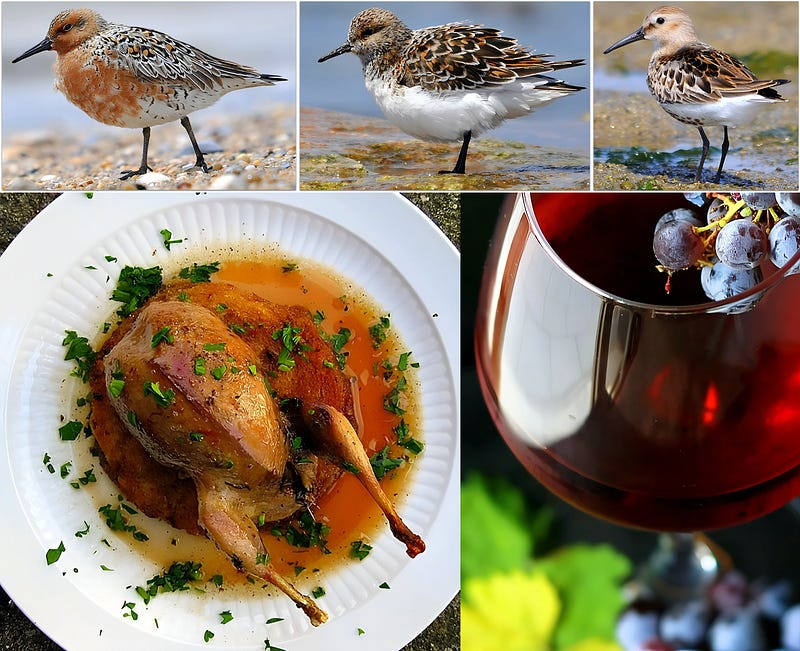
The genus Calidris belongs to the family Scolopacidae, one of the most diverse families of wading birds. More than 20 species bear the sandpiper name, though distinctions blur, especially during migration when plumage shifts from striking breeding colors to subdued grays and browns. The red knot (Calidris canutus), the sanderling (Calidris alba), and the dunlin (Calidris alpina) are among the best known. While most sandpipers share common names rooted in their habitats or behaviors, regional dialects have produced colorful alternatives — “peeps” in North America, “stints” in Europe.

Biology
Sandpipers are generally small, ranging from the 6 in (15 cm) little stint to the larger 10 in (25 cm) red knot. Their bodies are adapted to a life of probing mudflats and sandy shores: slender bills, sensitive to vibration, detect prey beneath the surface, while long legs enable them to wade shallow waters. Migratory instinct defines their biology. Some species, like the red knot, complete astonishing annual journeys of nearly 9,000 miles (14,500 km), flying from Arctic breeding grounds to the southern tips of South America. Their plumage shifts dramatically — breeding males often flush with rufous or chestnut tones, which fade to gray-white in winter. Lifespans can stretch over a decade, though the rigors of migration exact a heavy toll.
Ecology
Sandpipers are quintessential inhabitants of tidal flats, estuaries, and shorelines, though some adapt to inland wetlands. Their foraging helps regulate populations of marine invertebrates, while their migratory habits make them indicators of global ecological health. Declines in food-rich stopover sites, particularly horseshoe crab spawning grounds on the Delaware Bay, have caused dramatic drops in populations of species like the red knot. Conservationists stress that protecting sandpipers means protecting entire tidal ecosystems. Rising sea levels and coastal development pose further threats, narrowing the already slim band of habitat where sandpipers thrive.
Uses
Historically, sandpipers were not just admired but also hunted. In parts of North America and Europe, shorebird hunting once provided food for rural communities. By the late nineteenth century, unsustainable hunting had drastically reduced populations, leading to widespread bans. Today, sandpipers’ economic relevance lies not in their flesh but in their role in eco-tourism. Birdwatchers travel vast distances to witness mass migrations, contributing significantly to local economies. Their presence at coastal wetlands also underscores the value of preserving these areas, aligning conservation with sustainable development goals.
Culinary Aspects
Although no longer a mainstream food source, historical accounts suggest that sandpipers offered lean, dark meat, reminiscent of other small game birds. They were often roasted whole, much like quail or woodcock. In eighteenth-century New England, shorebird stews were a seasonal delicacy, tied to autumn migrations. Today, the culinary relevance of sandpipers is mostly cultural memory, preserved in cookbooks and oral traditions rather than active practice. Still, they remind us of a time when coastal communities lived closer to the rhythm of migration and the tide.
Wine Pairings
Imagining sandpipers at the table evokes a historical lens rather than a modern one. In the rare contexts where they were consumed, their earthy, game-like flavor would have paired well with light-bodied red wines — think a young Beaujolais or a Pinot Noir with its subtle berry notes cutting through lean game. A dry Riesling, with its crisp acidity, would also harmonize with the brinier undertones of a shorebird dish, complementing the coastal terroir. While conservation rightly removes sandpipers from our modern menus, the thought experiment connects gastronomy with natural history.
Conclusion
Sandpipers remind us that beauty is not always grand or static. It can be fleeting, quick-footed, and dependent on a thousand miles of open sky. Their survival is tied to a global chain of wetlands, beaches, and estuaries — ecosystems under strain in a warming world. To protect sandpipers is to protect the shared spaces where water, land, and life converge. The next time you see them racing the waves, consider their journey across oceans and the delicate thread of survival they represent. In their hurried dance lies a story not just of birds, but of our responsibility to the world they — and we — call home.