Environmental Psychology of Sexuality in Long-term Confined Prison Inmates
The psychological impacts of long-term confinement on sexual behavior and identity in prison environments represent a complex intersection…
The psychological impacts of long-term confinement on sexual behavior and identity in prison environments represent a complex intersection of environmental psychology, institutional control, and human adaptation. Research reveals that prison environments fundamentally alter how individuals express, experience, and understand their sexuality, creating unique psychological adaptations that extend far beyond the physical confines of incarceration.
Environmental Psychology and Confinement Effects
Environmental psychology theory demonstrates that physical environments profoundly shape human behavior and psychological well-being. In prison settings, the environmental deprivation model provides a framework for understanding how institutional constraints create specific psychological responses. The prison environment represents what Goffman termed a “total institution” — a closed social system that controls virtually all aspects of daily life.[1][2][3][4]
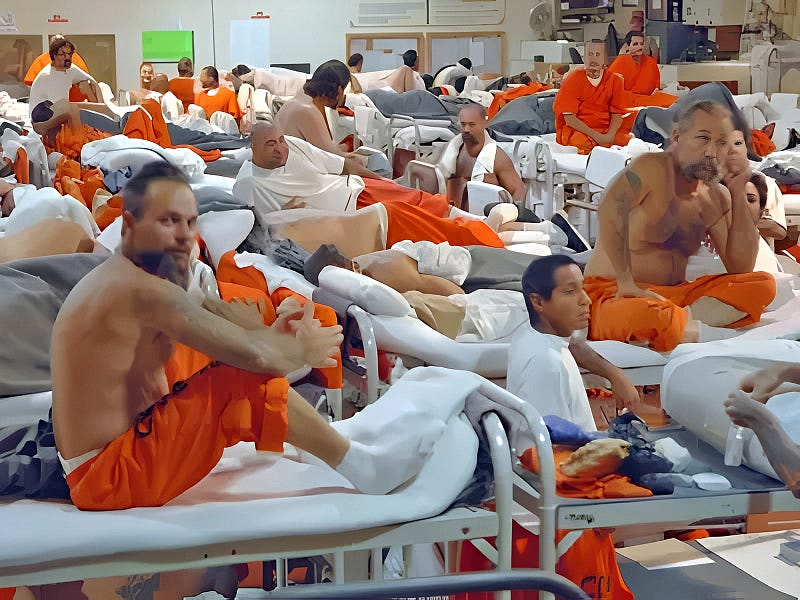
The physical design of prisons significantly impacts inmate behavior and mental health. Research shows that traditional prison environments, characterized by overcrowding, limited natural light, poor ventilation, and constant surveillance, exacerbate feelings of isolation, anxiety, and depression. These environmental stressors create what researchers call “sexual deprivation” — not merely the absence of sexual activity, but the complete disruption of normal sexual identity and expression.[5][6][1]
Theoretical Models of Prison Sexual Behavior
Deprivation Model
The deprivation model, first introduced by Clemmer in 1940 and expanded by Sykes in 1958, suggests that prisoners develop alternative sexual behaviors as adaptive responses to the loss of heterosexual relationships and normal social interactions. According to this model, sexual frustration combines with other prison deprivations — loss of autonomy, security, and meaningful activity — to create a psychological environment where situational sexual behavior emerges as a coping mechanism.[7][1]
Research indicates that deprivation of heterosexual relationships has profound psychological impacts on both male and female inmates. In male prisons, the exclusively masculine environment generates anxieties about masculinity and can activate latent homosexual tendencies without necessarily translating into overt behavior. For female inmates, homosexual relationships often emphasize emotional needs alongside sexual release, with many women expressing concerns about the implications for their future heterosexual relationships.[1]
Importation Model
The importation model proposes that inmates bring pre-existing sexual attitudes, behaviors, and identities into the prison environment. Rather than creating entirely new sexual patterns, this model suggests that prison simply provides a context where previously suppressed or marginal sexual behaviors can emerge. Research supports this model by demonstrating that prisoners with prior same-sex sexual experience are more likely to engage in homosexual behavior while incarcerated.[8][4][7]
Social Constructionist Model
The social constructionist approach views sexuality as fluid and constructed by social situations and cultural contexts. In this framework, prison environments create unique social conditions that can lead to genuine changes in sexual identity and orientation. A significant study found that inmates who engaged in homosexual behavior while incarcerated were more than 52 times more likely to report a change in their sexual orientation, supporting the idea that sexuality can be reconstructed within institutional environments.[9][7]
Psychological Adaptations and Sexual Identity
Masculinity and Sexual Hierarchy
Prison environments enforce rigid masculine hierarchies that profoundly shape sexual behavior and identity. The hypermasculine culture of male prisons creates a sexual hierarchy where maintaining heterosexual identity often requires either abstinence or assuming the dominant role in homosexual encounters. Research shows that many heterosexual male inmates who engage in homosexual activity maintain their masculine identity by exclusively taking the penetrative role, while receptive partners face stigmatization and may be subjected to prostitution and rape.[10][11][12][1]
This masculine ideology creates what researchers term “toxic masculinity,” which manifests in prison through violence, sexual aggression, and rigid adherence to heteronormative behaviors. The pressure to maintain a masculine identity while navigating sexual deprivation creates significant psychological stress for long-term inmates.[13][10]
Situational Homosexuality
Situational homosexuality describes sexual behavior that occurs specifically as a response to environmental constraints rather than inherent sexual orientation. Research indicates this phenomenon is particularly common in long-term inmates who maintain a heterosexual identity while engaging in homosexual behavior as an adaptive response to confinement. Studies show that approximately 44% of male prisoners and 46% of female prisoners engage in some form of consensual sexual activity during incarceration.[14][8][1]
The psychological impact of situational homosexuality varies significantly. Some inmates experience guilt, confusion, and identity conflict, particularly upon release, when they must reintegrate into heterosexual relationships. Others report that such relationships provide emotional support and stress relief that improves their mental health during incarceration.[15][1]
Mental Health and Sexual Satisfaction
Research demonstrates a strong correlation between sexual satisfaction and psychological well-being among prison inmates. Studies show that sexually abstinent inmates report significantly higher levels of depression and lower mental health scores compared to those who maintain some form of sexual activity. This relationship is particularly pronounced among inmates without partners, suggesting that sexual deprivation creates measurable psychological distress.[15]
The link between sexual frustration and mental health is compounded by the general psychological effects of long-term incarceration. Nearly one in four federal prisoners and one in four jail inmates experience serious psychological distress, including anxiety, depression, and post-traumatic stress symptoms. Sexual deprivation contributes to what some inmates describe as “sexual torture,” indicating the severe psychological impact of enforced celibacy.[16][17][15]
Vulnerability and Sexual Victimization
Long-term confinement creates particular vulnerabilities that increase risks of sexual victimization. Research shows that inmates with mental health disorders are significantly more likely to experience sexual abuse, with rates of victimization by other inmates reaching 83 per 1,000 for male inmates with mental disorders compared to 31 per 1,000 for those without. Female inmates report even higher rates, with 234 per 1,000 inmates with mental disorders experiencing sexual victimization by other inmates.[18]
The prison environment creates what researchers term a “sexual commodity system,” where sexual activity becomes a form of currency used to secure protection, goods, or services. This commodification of sexuality particularly impacts vulnerable populations, including young inmates, those with mental health issues, and LGBTQ+ individuals who face disproportionate rates of sexual abuse.[19][20][8][7]
Environmental Interventions and Implications
Direct Supervision Models
Research on environmental psychology in corrections has identified direct supervision models as more effective in reducing sexual violence and improving inmate mental health. These models emphasize smaller housing units, increased natural light, better acoustics, and more normalized living conditions that reduce the environmental stressors contributing to sexual dysfunction and violence.[3][6]
Policy Implications
The environmental psychology research suggests several important policy implications for managing sexuality in long-term confinement:
Conjugal Visitation Programs: Research indicates that only 4.3% of sexually active inmates participate in conjugal visitation programs, despite evidence that such programs reduce prison rape and improve relationship stability. Expanding access to these programs could significantly improve inmate mental health and reduce situational sexual behavior.[8]
Mental Health Services: Given the strong correlation between sexual satisfaction and psychological well-being, targeted interventions addressing sexual health and identity issues could improve overall inmate mental health and reduce recidivism.[15]
Environmental Design: Improvements to prison physical environments, including better lighting, reduced overcrowding, and spaces that support positive social interaction, can reduce the environmental stressors that contribute to sexual dysfunction and violence.[6]
Long-term Psychological Consequences
The psychological effects of sexual adaptation to long-term confinement extend well beyond release. Many former inmates report experiencing “Post-Incarceration Syndrome,” which includes difficulties with intimate relationships, social interactions, and sexual identity. Research indicates that the institutionalization process can create lasting changes in personality and behavior that affect reintegration into society.[16]
For inmates who experienced changes in sexual identity or engaged in situational homosexuality, the transition back to heterosexual relationships can be particularly challenging. Studies document confusion, guilt, and relationship difficulties among released inmates who must navigate the gap between their prison sexual experiences and their pre-incarceration identities.[1]
Conclusion
The environmental psychology of sexuality in long-term confined prison inmates reveals how institutional environments fundamentally reshape human sexual behavior and identity. Prison settings create unique psychological pressures that lead to adaptive sexual behaviors ranging from complete abstinence to situational homosexuality to sexual victimization. Understanding these adaptations requires recognizing the complex interaction between environmental deprivation, social construction of sexuality, and individual psychological needs.
The research demonstrates that sexual behavior in prison cannot be understood solely through individual psychology but must be examined within the broader context of environmental psychology and institutional control. Long-term confinement creates psychological adaptations that serve immediate survival needs but may have lasting consequences for post-release adjustment and mental health.
Effective interventions must address both the environmental factors that contribute to sexual dysfunction and the individual psychological needs of inmates. This includes improving physical prison environments, expanding access to healthy sexual outlets, and providing targeted mental health services that address the complex relationship between sexuality, identity, and psychological well-being in confined populations.
Citations
- https://johnhoward.on.ca/wp-content/uploads/2014/09/jhs-alberta-report-effects-of-long-term-incarceration.pdf
- https://www.simplypsychology.org/zimbardo.html
- https://assets.cambridge.org/97805214/52762/frontmatter/9780521452762_frontmatter.pdf
- https://www.arfjournals.com/image/catalog/Journals Papers/JCCB/No 2 (2021)/2_Craig J.pdf
- https://morethanourcrimes.org/voices/sexual-frustrations-in-prison/
- https://venetianletter.com/2021/01/18/humane-prisons-why-should-we-care-about-the-inmates-environment/
- http://www.inquiriesjournal.com/articles/1328/sexual-behavior-in-prison-populations-understood-through-the-framework-of-rational-choice-and-exchange-theory
- https://pmc.ncbi.nlm.nih.gov/articles/PMC5145766/
- http://amberleighcare.co.uk/uploaded_files/GIBSON and Hensley — Social Construction of Sexuality in Prison 2013.pdf
- https://pmc.ncbi.nlm.nih.gov/articles/PMC10323979/
- https://lawcat.berkeley.edu/record/1124519/files/fulltext.pdf
- https://journals.sagepub.com/doi/10.1177/1097184X17695037
- https://www.psychologytoday.com/us/blog/prisons-and-prisms/201904/toxic-masculinity-in-and-outside-prison
- https://www.reddit.com/r/explainlikeimfive/comments/3dk0n3/eli5_if_being_gay_isnt_a_choice_then_why_do/
- https://pmc.ncbi.nlm.nih.gov/articles/PMC6571614/
- https://www.prisonpolicy.org/blog/2021/05/13/mentalhealthimpacts/
- https://www.mcleanhospital.org/essential/incarcerated-mh
- https://pmc.ncbi.nlm.nih.gov/articles/PMC2811043/
- https://pmc.ncbi.nlm.nih.gov/articles/PMC8430972/
- https://transequality.org/sites/default/files/docs/resources/TransgenderPeopleBehindBars.pdf