
European Colonization and Exploration in America, 1600–1610: Ambition, Conflict, and the Birth of…
Historical Background and Foundational Principles
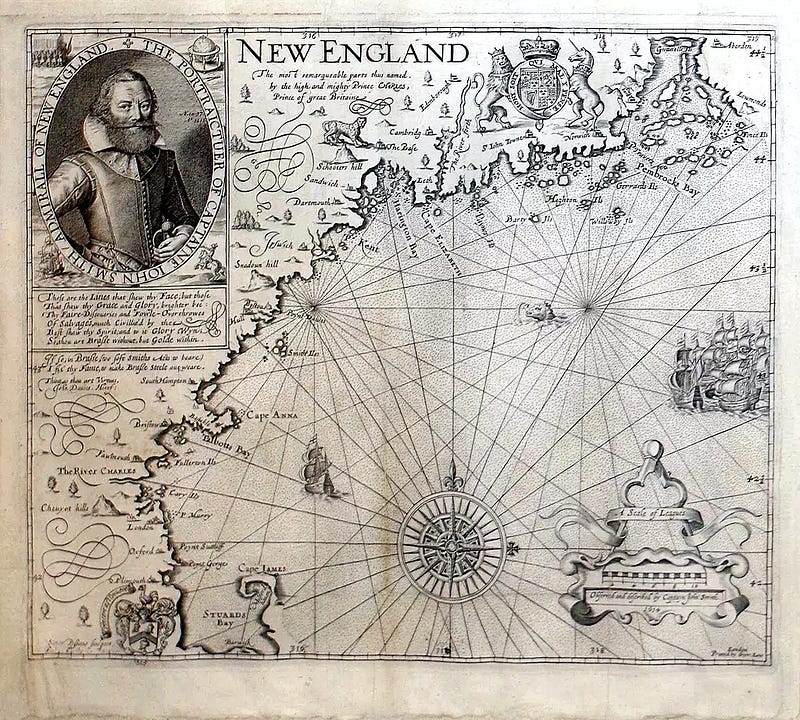
European Colonization and Exploration in America, 1600–1610: Ambition, Conflict, and the Birth of New Worlds
Historical Background and Foundational Principles
The dawn of the seventeenth century was a transformative era defined by fierce competition among European powers seeking dominance through colonization of the New World. Driven by religious zeal, imperial ambition, and economic necessity, European explorers undertook perilous voyages across the Atlantic, aiming to establish permanent settlements in the Americas. England, France, the Netherlands, and Spain were the primary actors whose actions laid the groundwork for modern North and South America.
In 1600, Europe was entrenched in political rivalries and religious strife. England had emerged from the Elizabethan era marked by conflicts with Spain, while France sought to expand its fur-trade empire into North America. Spain, having secured vast territories in Central and South America, fiercely guarded its dominance. Meanwhile, the Dutch entered the scene intent on challenging Iberian supremacy in global commerce, particularly through ventures like the Dutch East India Company.
The principles driving European colonization encompassed mercantilism — a belief in maximizing exports and accumulating precious metals — as well as a religious mission. Spain promoted Catholicism through aggressive evangelization, England pursued Protestant settlement to secure its ideological foothold, and France combined commercial enterprise with missionary outreach. These dual principles of wealth acquisition and religious expansion underpinned nearly every colonizing effort.
Below is a list of 25 key events that took place in America between 1600 and 1610, along with a brief description of each. These events span early English, French, Dutch, and Spanish initiatives on the continent during the dawn of European colonization.
- 1602 — Gosnold’s New England Landing
Bartholomew Gosnold becomes the first English explorer to land on the New England coast, opening the way for future settlements. - 1602 — Naming of Cape Cod
During his exploration, Gosnold identifies the hook‑shaped peninsula and names it “Cape Cod” for its resemblance to a stocking. - 1602 — Naming of Martha’s Vineyard
Gosnold also charts and names the large island off the Massachusetts coast “Martha’s Vineyard” after a relative. - 1605 — Founding of Port‑Royal in Acadia
French explorers established Port‑Royal in modern‑day Nova Scotia as the first capital of Acadia, marking France’s early colonial efforts. - 1605 — Weymouth Explores New England
English explorer George Weymouth sails into New England’s waters, contributing to European mapping and claims along the coast. - 1606 — Formation of the Virginia Company
The Virginia Company of London is founded and receives a Royal Charter from King James I, setting the stage for English colonization in North America. - 1607 — Departure for Jamestown
A fleet of three ships carrying 105 settlers departs England with the mission to establish a permanent English colony in the New World. - 1607 — Founding of Jamestown, Virginia
Upon arrival in Virginia, the settlers established Jamestown — the first permanent English settlement in America. - 1607 — Construction of the First Jamestown Fort
The colonists quickly erect a wooden fort at Jamestown to secure their new settlement and provide protection against hostile forces. - 1607 — Election of John Smith as Leader
Among the early challenges, Captain John Smith emerges as a key leader by being elected to help organize and guide the struggling colony. - 1607 — Establishment of the Popham Colony
In the same year, another English venture — the short‑lived Popham Colony in present‑day Maine — is founded by the Virginia Company of Plymouth. - 1607 — First Native American Encounters at Jamestown
Early interactions begin between the Jamestown settlers and local Powhatan peoples, setting the stage for both trade and conflict. - 1608 — Founding of Quebec (Habitation de Québec)
French explorer Samuel de Champlain establishes Quebec, marking the start of permanent French settlement in Canada. - 1609 — Henry Hudson’s Expedition Begins
Commissioned by the Dutch, explorer Henry Hudson sets sail and begins exploring the region that would later bear his name — the Hudson River area. - 1609 — Exploration of Delaware Bay
During his voyage, Hudson also navigates Delaware Bay, laying the groundwork for future Dutch trading claims in the region. - 1609 — The Wreck of the Sea Venture
Part of a supply fleet bound for Jamestown, the flagship Sea Venture is caught in a violent storm and wrecked on Bermuda — events that later indirectly affect Jamestown’s fate. - 1609 — Onset of the Starving Time at Jamestown
Shortly after supply delays (exacerbated by the Sea Venture’s wreck), Jamestown enters a period of severe food shortages that drastically reduce its population. - 1609 — Evidence of Desperation: Cannibalism
Archaeological and historical records from Jamestown suggest that, during the Starving Time, some settlers resorted to cannibalism to survive. - 1610 — Arrival of the Relief Fleet Under Lord De La Warr
A new supply and reinforcement fleet reaches Jamestown, led by Lord De La Warr, providing crucial aid that helps stabilize the colony. - 1610 — Re‑establishment of Jamestown
The resupply and fresh settlers arriving in 1610 allowed the battered colony to recover from the Starving Time and begin rebuilding. - 1610 — Return of Sea Venture Castaways
Survivors from the wreck of the Sea Venture on Bermuda eventually joined the Jamestown relief effort, contributing to the colony’s recovery. - 1610 — Establishment of Santa Fe, New Mexico
While far to the west, Spanish explorers established Santa Fe as an early colonial outpost, representing Spain’s push into the interior of North America. - 1606–1612 — Impact of Severe Drought
Paleo-climatic studies indicate that a major drought during these years severely affected local food production, contributing to Jamestown’s hardships. - 1607–1610 — Formation of a Colonial Government in Jamestown
In these early years, the settlers organized a governing council at Jamestown — an embryonic form of self‑government that would influence future American political traditions. - 1607–1610 — Early Attempts at Cash Crop Cultivation
Even as the settlers struggled for survival, initial experiments (later perfected in subsequent years) were made with cultivating cash crops such as tobacco to ensure economic viability.
Underlying Assumptions and Inconsistencies
Central to colonization were assumptions of European cultural and religious superiority, an ideology that rationalized dispossession and violence against indigenous peoples. Europeans viewed Native Americans through biased lenses, often characterizing them as “savages” or inferior beings needing salvation or subjugation. Yet contradictions abounded. Indigenous peoples exhibited advanced agricultural practices, complex political structures, and intricate trading networks — qualities European narratives frequently minimized or ignored.
Moreover, colonizers presumed the Americas to be inexhaustible sources of wealth. The reality proved different; colonies often teetered on collapse due to starvation, conflict, and inadequate preparation. Jamestown, established in 1607, exemplified these inconsistencies vividly: its settlers expected immediate prosperity but encountered disease, malnutrition, and brutal clashes with native groups. This inconsistency between expectation and reality exposed inherent weaknesses in colonial plans driven by idealism rather than pragmatism.
Competing Perspectives and Counterarguments
European colonization from 1600 to 1610 invites sharply divergent interpretations. Traditional narratives emphasize exploration as courageous adventures of discovery and progress. From this viewpoint, explorers like Samuel de Champlain, who founded Quebec in 1608, and John Smith at Jamestown, represent heroic endeavors, bringing civilization and advancement to untamed wilderness.
In stark contrast, revisionist perspectives highlight exploitation, violence, and oppression. They argue that colonization was primarily an enterprise of conquest and extraction rather than exploration or settlement. Scholars adopting indigenous perspectives stress devastating outcomes, including demographic collapse due to introduced diseases, forced displacement, cultural erasure, and the destruction of long-established indigenous societies.
Each perspective bears weight and complexity. Traditional narratives capture the spirit of ambition and innovation among settlers, recognizing undeniable bravery and resilience. Yet, revisionist views effectively expose the darker consequences, emphasizing a moral imperative to re-evaluate historical interpretations through a more balanced lens.
Broader Implications and Meanings
The period from 1600 to 1610 is pivotal because it crystallized patterns of colonialism still resonant today. The establishment of Jamestown in 1607 provided the blueprint for English colonialism — dominated by corporate-sponsored settlement and the exploitation of land and resources. Similarly, Champlain’s Quebec foreshadowed French approaches focused on trade alliances and cooperation with indigenous populations, albeit shaped by underlying power imbalances.
The era also influenced international geopolitics profoundly. It solidified European rivalries in the Americas, setting the stage for future conflicts, including the French and Indian War and later colonial wars. The practices initiated during this decade, including plantation agriculture, resource extraction, and racial hierarchies, shaped socioeconomic structures that have persisted through the centuries.
Real-world Applications of Theoretical Concepts
Understanding colonization in this critical decade illuminates contemporary debates about identity, colonial legacy, and cultural reconciliation. The United States and Canada grapple continuously with the legacies established during colonization. Land-rights disputes, indigenous sovereignty issues, and debates over historical narratives trace directly back to foundational colonial events.
For instance, the acknowledgment of indigenous lands before public events — now commonplace across North America — originates from heightened awareness of historical injustice traced back to these initial encounters. Similarly, economic practices like commodity export dependency in Latin America echo mercantilist principles initially implemented by European powers in the early seventeenth century.
From cultural memory to political dynamics, the reverberations of these initial decades of colonization are ever-present, underscoring the practical necessity of historical understanding to inform modern policy-making, reconciliation initiatives, and education programs.
Conclusion
Between 1600 and 1610, the European quest for dominance reshaped the global order. By critically examining underlying assumptions, reconciling competing perspectives, and recognizing lasting impacts, contemporary scholarship enriches our understanding of the past. Such nuanced exploration helps societies today address unresolved legacies of colonization, shaping a more informed and conscientious approach to history and reconciliation.