Feathered Jewels of the Savanna: The Story of the Guinea Fowl
In the shimmering heat of the African savanna, where acacia trees throw shadows like lace across the earth, a bird streaks past in a flash…
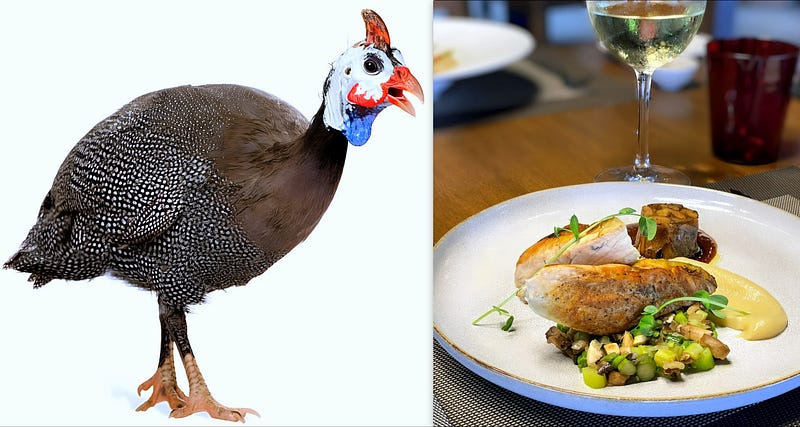
In the shimmering heat of the African savanna, where acacia trees throw shadows like lace across the earth, a bird streaks past in a flash of speckled gray and white. It's call cuts through the afternoon air like a brass horn, bold and unmistakable. This is the Guinea Fowl, Numida meleagris, a bird steeped in ancient tradition, ecological importance, and unexpected culinary elegance. From village courtyards in West Africa to boutique restaurants in Paris and New York, the Guinea Fowl carries with it a heritage that is both wild and cultivated, ancient and thoroughly modern.
Taxonomy
Numida meleagris belongs to the family Numididae, a small but striking lineage of ground-dwelling birds native to Africa. The species is commonly known as the helmeted guinea fowl, named for the bony casque atop its head. Within this species, several subspecies exist, varying in subtle plumage patterns and adaptations to their regional habitats. Farmers around the world often refer to them simply as guinea hens, pintadas in parts of Europe, and faraona in Italy. The domesticated varieties most often consumed at the table are descended from this African stock, carefully selected over centuries for size, temperament, and flavor.
Biology
At first glance, the Guinea Fowl’s plumage appears almost cosmic, black feathers scattered with perfect white dots, as though someone spilled a galaxy upon their backs. Adults typically weigh around three pounds, or 1.36 kilograms, with some larger birds reaching up to four pounds, or 1.81 kilograms. Their bodies are compact and muscular, built for short bursts of flight and tireless ground foraging. They are monogamous birds, often pairing for life, and their nesting behavior is notably secretive. Females lay clutches of a dozen to twenty eggs in shallow scrapes, each egg with a surprisingly thick shell and a rich, buttery yolk. Their keen eyesight and sharp alarm calls make them excellent sentinels against predators, which is why small farms sometimes keep them alongside chickens as an added layer of protection.
Ecology
These birds are most at home in open woodlands and savannas across sub-Saharan Africa, although domesticated flocks now thrive on every continent except Antarctica. They play an understated yet vital role in controlling insect populations, devouring locusts, ticks, and other pests that can devastate crops or spread disease. Sustainable farming advocates often champion Guinea Fowl as an eco-friendly alternative to chemical pest control. Because they scratch less aggressively than chickens, they are less destructive to delicate soil structure, making them ideal partners in regenerative agricultural systems. In regions where habitat loss threatens wild populations, conservation programs encourage community-based stewardship, ensuring that this ancient bird remains a familiar sight and sound in its native landscapes.

Uses
Beyond their beauty and ecological value, Guinea Fowl contribute significantly to rural economies. Their hardy nature makes them easier and cheaper to raise than many poultry breeds, while their meat commands a premium price in gourmet markets. Small-scale farmers in Africa, Europe, and North America increasingly recognize them as a sustainable niche product. Their eggs, with shells so thick they often require a gentle tap with a knife to crack, are prized in specialty baking for their richness and stability. In a world hungry for sustainable protein sources, the Guinea Fowl quietly answers the call with resilience and grace.
Culinary Aspects
On the plate, Guinea Fowl offers a sensory experience that sits somewhere between chicken and pheasant. The meat is lean yet flavorful, with a slight gaminess that speaks of the wild. A roasted Guinea Fowl yields crisp golden skin and tender flesh that pairs beautifully with earthy herbs like thyme and sage. In France, pintade au choux remains a winter classic, the bird braised slowly with cabbage, wine, and smoked bacon. In parts of West Africa, the bird is marinated in fiery pepper sauces, then grilled over charcoal until the skin crackles. Its nutritional profile is impressive, offering high protein content with lower fat levels than standard poultry, making it both a gourmet and health-conscious choice.
Wine Pairings
Guinea Fowl invites thoughtful pairing. Its richer flavor and lean texture call for wines that balance elegance with depth. A Pinot Noir, particularly one from Burgundy, with its soft tannins and red-fruit notes, brings out the bird’s subtle gamey sweetness. For those who favor whites, a full-bodied Chardonnay with a whisper of oak provides a creamy counterpoint to the meat’s lean structure. In warmer climates, even a chilled Grenache rosé can play well, its bright acidity cutting through the richness while highlighting herbal accompaniments.
Conclusion
The Guinea Fowl is far more than a rustic curiosity scratching in the dirt. It is a thread connecting ancient African landscapes to contemporary kitchens, a symbol of sustainability and quiet elegance in a world often too quick to overlook the humble and the familiar. To taste Guinea Fowl is to taste resilience, history, and possibility. In an era when we must look more carefully at the choices that shape our ecosystems and our diets, this speckled wanderer reminds us that beauty, utility, and flavor can walk hand in hand through the grasslands and onto our tables.