Fire and Flavor: The Story of Paprika (Capsicum annuum)
Introduction
Introduction
Few spices tell as dramatic a tale as paprika. At first glance, it may seem like a simple red powder sitting quietly in a kitchen jar. But hidden within those ground flakes of Capsicum annuum lies centuries of botanical intrigue, culinary innovation, and cultural identity. Paprika is not merely a seasoning; it is an agricultural triumph, a flavor-shaping agent of empires, and a symbol of sustainability in the face of global demand. To trace its story is to follow the path of a pepper that conquered continents with both its heat and its sweetness.
Taxonomy
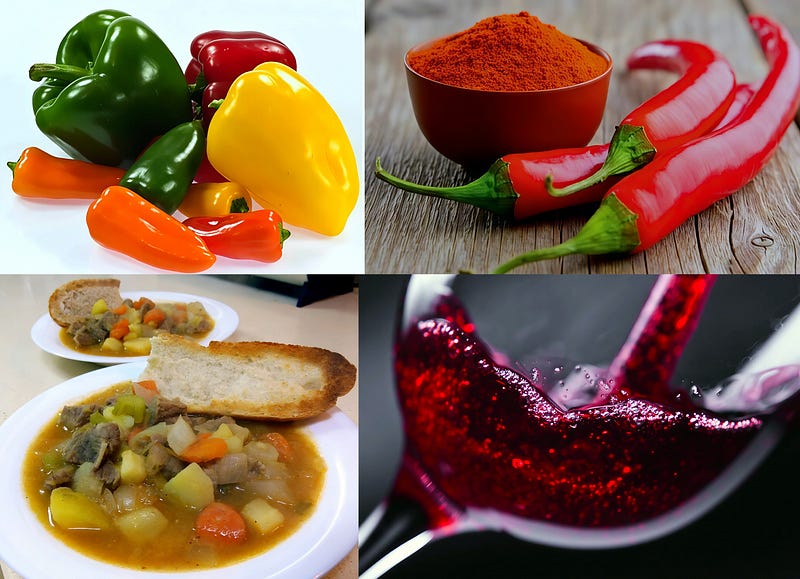
Paprika belongs to the species Capsicum annuum, the most diverse member of the Capsicum genus. This single species encompasses an astonishing range of peppers, from sweet bell peppers to fiery chilies. Within this umbrella, paprika is most closely tied to specific varieties bred for drying and grinding, particularly in Hungary, Spain, and Latin America. The plant belongs to the family Solanaceae — the nightshades — alongside tomatoes, potatoes, and eggplants. Its common names span continents: in Hungary, it is simply paprika, in Spain, pimentón, and in parts of the Americas, it falls under the broad “chili pepper.” Edible varieties vary in intensity from mild and sweet to robustly smoky, making it one of the most versatile spice crops on earth.
Biology
Paprika peppers are typically conical, measuring between 5 and 15 cm (2 to 6 in) in length. Their skins ripen from green to bright crimson, a transformation driven by carotenoid pigments such as capsanthin. Unlike many chili varieties, most paprika cultivars have been selectively bred for low capsaicin content, giving them warmth without overwhelming heat. The plant is an annual in temperate regions but can behave as a perennial in frost-free climates. Germination occurs in about two weeks, with flowering beginning after 60 to 90 days. Harvest often takes place when the fruits are fully red, maximizing pigment concentration. A remarkable adaptation of Capsicum annuum is its ability to deter pests with trace alkaloids while remaining palatable — and irresistible — to humans.
Ecology
Paprika thrives in sunny climates with well-drained soil. The plant’s ecological role is shaped by its ability to cross-pollinate with wild relatives, preserving genetic diversity while supplying local food systems. It was originally domesticated in Central America and brought to Europe by explorers in the sixteenth century, where it adapted swiftly to Mediterranean and Central European climates. Today, Spain’s La Vera Valley, with its unique oak-wood smoke-drying tradition, and Hungary’s Great Plain, where the pepper became a national symbol, stand as ecological heartlands of paprika production. Sustainability concerns now focus on soil management, water use, and fair labor practices. Organic farming, crop rotation, and controlled irrigation are increasingly embraced to safeguard both yields and ecosystems.

Uses
Paprika is more than a kitchen spice; it is an economic cornerstone. Hungary exports thousands of metric tons annually, while Spain’s pimentón commands high prices in specialty markets. In the United States, paprika production occurs mainly in California and New Mexico, where it supports both large-scale agribusiness and artisanal growers. Beyond food, paprika’s pigments are extracted as natural colorants for cheese, sausages, and even cosmetics. Its economic value lies not just in its volume but in its quality tiers — from industrial paprika powder to carefully protected appellations like Pimentón de la Vera DOP. Sustainable markets are now emphasizing smallholder farmers and cooperatives, ensuring both biodiversity and fair trade.
Culinary Aspects
The taste of paprika spans an extraordinary spectrum. Sweet paprika delivers mild, fruity notes that deepen stews and sauces without sharpness. Smoked paprika, or pimentón ahumado, adds a rustic, wood-fired depth to everything from paella to grilled meats. Hot paprika, though not as fiery as cayenne, brings a measured kick ideal for sausages, goulash, and spiced oils. Nutritionally, paprika is rich in vitamin C — once a prized quality in regions battling deficiency — as well as carotenoids that act as antioxidants. In Hungary, paprika is the soul of goulash; in Spain, it defines chorizo; in Morocco, it underpins spice blends like ras el hanout. Its culinary influence is global yet always tied to local identity, a paradox that makes it endlessly fascinating.
Wine Pairings
Pairing wine with paprika-heavy dishes requires sensitivity to both heat and smoke. A Hungarian goulash with sweet paprika harmonizes beautifully with a medium-bodied red such as a 13% ABV Kékfrankos (also known as Blaufränkisch). The mild spice lifts the dark fruit and peppery undertones of the wine. Smoked paprika dishes, like Spanish paella, shine with a white Rioja or an Albariño chilled to 10°C (50°F), where the crisp acidity cuts through the earthy, smoky flavors. For hotter paprika preparations, a lightly chilled Beaujolais or Grenache at 16°C (61°F) softens the spice with bright red fruit, offering balance rather than competition. The marriage of paprika and wine is proof that even humble ground peppers can command sophistication.
Conclusion
Paprika is a story of movement and transformation: a New World pepper carried across oceans, embraced by Old World farmers, and returned to the global table as a defining spice. It embodies the adaptability of agriculture, the creativity of culinary traditions, and the urgency of sustainable practice in a changing climate. To sprinkle paprika on a dish is to season with history, culture, and a fragment of sunlight captured in red pigment. Its story is ongoing, and each bite offers a reminder that the small, fiery details of nature often carry the biggest flavors of humanity’s shared table.