Fritz Haber: Chemist, Nazi, Jew
“Gas as a weapon is not in the least more cruel than flying pieces of metal, to the contrary the partition of fatal diseases is comparable…
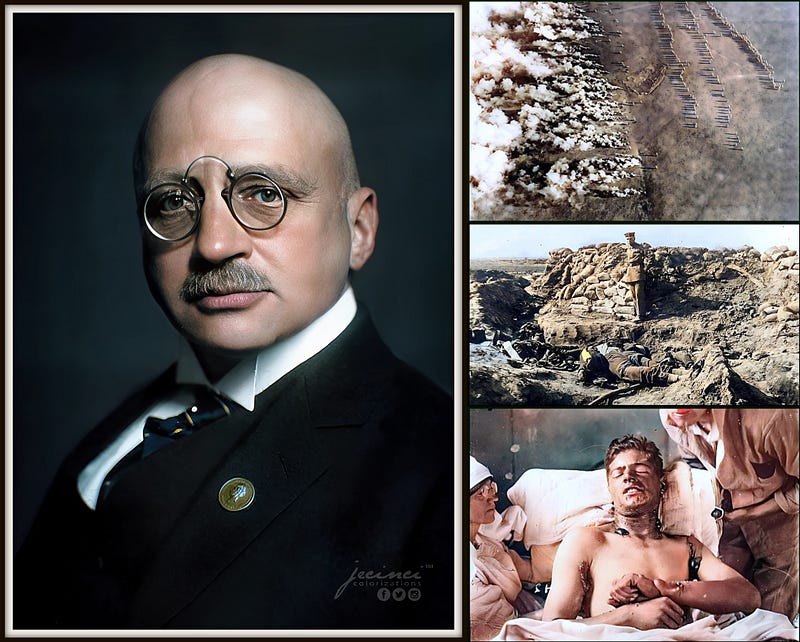
“Gas as a weapon is not in the least more cruel than flying pieces of metal, to the contrary the partition of fatal diseases is comparable small, there are no mutilations and concerning the illnesses that might occur afterwards naturally statistical material can’t be provided yet, but nothing is known to us that would indicate a high frequency. Based on these objective arguments one would not easily ban gas warfare.”
Fritz Haber’s life and work present a stark paradox. He was a Nobel Prize–winning chemist whose innovations nourished millions, yet he is equally infamous as a pioneer of chemical warfare. Born in 1868 to a well-off Jewish family in Prussia, Haber became a towering figure in early 20th-century science. A driven and patriotic German, he devoted his intellect to both the betterment of humanity and the service of his nation’s military ambitions. His story is entwined with profound personal tragedy and moral controversy, making him an enduringly enigmatic figure. This exploration delves into Haber’s writings and scientific contributions, his central arguments and theories, and the psychological, philosophical, political, and personal beliefs that shaped his complex legacy.
Writings and Scientific Contributions
Haber’s scientific writings and research were remarkable for their breadth and impact. Early in his career at the Karlsruhe Institute of Technology, he displayed a talent for marrying theory with practical industrial problems. In 1896, he published his first book, Experimental Investigations on the Decomposition and Combustion of Hydrocarbons, based on his work analyzing flame chemistry. This was followed by The Theoretical Basis of Technical Electrochemistry (1898), reflecting an intensive foray into electrochemistry. Haber’s research ranged from developing methods for electrochemical synthesis of important compounds (such as nitrobenzene) to pioneering work on the glass electrode for measuring acidity. He co-authored The Electrolytic Processes of Organic Chemistry in 1910, and his contributions in this area laid the groundwork for technologies like the modern pH meter.
A major theme in Haber’s work was the application of rigorous physical chemistry to solve pressing industrial challenges. Nowhere is this more evident than in his most celebrated achievement: the synthesis of ammonia from its elements. In 1905, Haber published The Thermodynamics of Technical Gas Reactions, which guided his approach to an urgent problem raised by others like Sir William Crookes: the world’s need for fixed nitrogen fertilizers. Atmospheric nitrogen (N₂) is abundant but inert, unavailable to plants unless “fixed” into compounds like ammonia. Haber’s experiments demonstrated that with extremely high pressure, high temperature, an effective catalyst, and continual recycling of gases, nitrogen could be directly combined with hydrogen to form ammonia in a laboratory reactor. By 1909, he had proven the method viable, and with engineer Carl Bosch at BASF scaling it up, the Haber-Bosch process became an industrial reality by 1913. This process — sometimes dubbed “bread from air” — enabled mass production of fertilizers and explosives, altering agriculture and warfare alike. For this work, Haber was awarded the 1918 Nobel Prize in Chemistry.
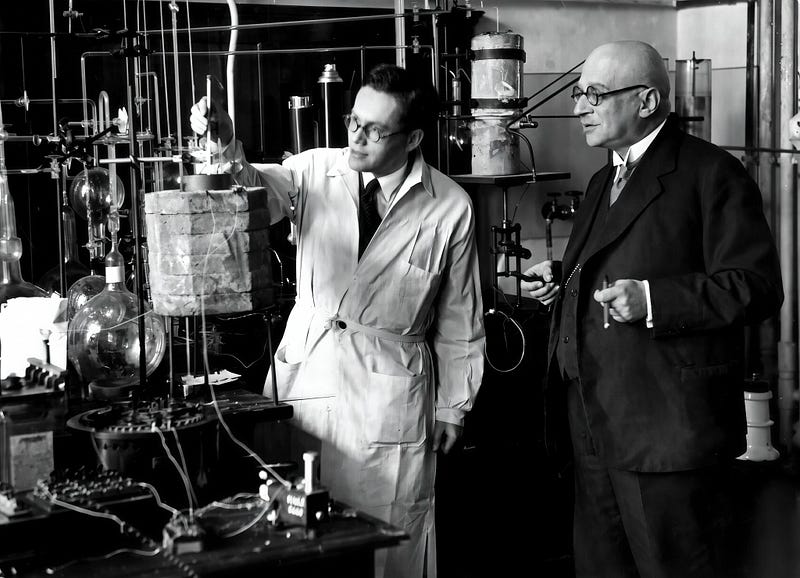
Beyond ammonia, Haber made other notable scientific contributions. In 1919, he proposed, with physicist Max Born, what became known as the Born–Haber cycle for calculating the energies of ionic solids. This theoretical framework remains a staple in chemistry textbooks for understanding lattice energy. Haber’s institute also developed Haber’s rule in toxicology, observing that a low concentration of poison gas over a long time can have the same lethal effect as a high concentration for a short time. Additionally, Haber discovered the Haber-Weiss reaction in atmospheric chemistry and worked on early fuel cells. Many of his later writings were compiled in volumes such as Five Lectures from the Years 1920–1923 and From Life and Work: Essays, Speeches, Lectures (1927), reflecting his role as a public intellectual in the postwar period. These collected essays show Haber engaging with scientific, social, and ethical issues, indicating that his intellectual pursuits extended beyond pure laboratory research.
Central Arguments and Theories
Throughout his career, Haber articulated arguments that often mirrored the dual nature of his legacy. In science, he argued for the union of theory and practice. He believed that fundamental chemistry could and should be harnessed to solve real-world problems — a philosophy that drove his work on industrial processes. His success with ammonia synthesis vindicated the argument that applied science, guided by theory, could achieve what many thought impossible, such as “fixing” atmospheric nitrogen for fertilizer. Haber was proud that his process averted the looming threat of agricultural collapse due to soil nutrient depletion. He often emphasized how scientific innovation could “mould human life and human culture” for the better.
“The disapproval that the knight had for the man with the firearm is repeated in the soldier who shoots with steel bullets towards the man who confronts him with chemical weapons. […] The gas weapons are not at all more cruel than the flying iron pieces; on the contrary, the fraction of fatal gas diseases is comparatively smaller, the mutilations are missing.”
Haber’s most controversial arguments, however, concerned the use of science in warfare. As World War I engulfed Europe, he became an outspoken proponent of chemical weapons. He maintained that killing with poison gas was fundamentally no worse than killing with bullets or shrapnel. “Death is death, by whatever means it is inflicted,” he said bluntly, dismissing the idea that gas was inhumane. In a postwar lecture to German officers, Haber justified poison gas with “objective arguments,” noting that gas caused fewer deaths and no gory mutilations compared to artillery shells. He pointed out that many wounded by gas eventually recovered, whereas flying metal maimed soldiers permanently. To critics who viewed gas warfare as a ghastly violation of civilized norms, Haber responded that this was merely bias against a new technology: “The disapproval that the knight had for the man with the firearm is repeated in the soldier who…confronts him with chemical weapons.” Haber even appeared before a parliamentary inquiry to downplay the horror of chlorine gas, insisting that its effects had been exaggerated and citing his own survival of an accidental exposure as evidence. These arguments — however unconvincing to others — were central to Haber’s theory that chemical warfare was a militarily effective and morally equivalent form of combat.
“According to an historical rule that can be applied to all new effective means of warfare, the physical effect of the chlorine cloud has been profoundly exaggerated. I wouldn’t stand here if it would kill everyone it captures and put him out of action. Because I myself was caught during a large scale field test by my own carelessness and without any protection in such a cloud, I couldn’t find my way out and I escaped with severe but after a couple of days complete disappeared phenomena.”
Another notable stance of Haber’s was his credo regarding the role of scientists in society. He famously remarked that “during peace time a scientist belongs to the world, but during war time he belongs to his country.” This encapsulated his belief that the impartial pursuit of knowledge could be superseded by patriotic duty in times of national crisis. Haber put this credo into practice when, at the outbreak of WWI, he transformed overnight from an international scientific benefactor to Germany’s “weapons scientist” with no apparent qualms.
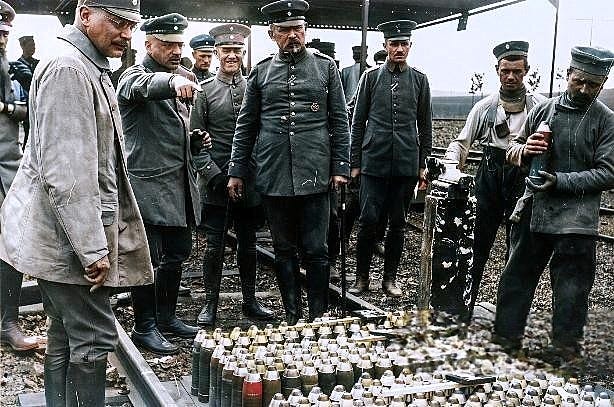
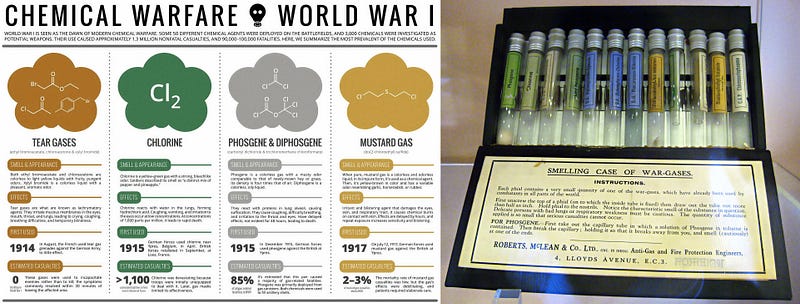
He not only developed chlorine gas for the German army but also took charge of organizing a large-scale Chemical Warfare Service, recruiting other scientists to the cause. He argued that a scientist’s knowledge was a tool that his nation had a right to exploit for survival. This stance was widely rejected by Haber’s peers abroad — British chemist Ernest Rutherford pointedly refused to shake Haber’s hand after the war — but Haber himself never wavered in defending it. Even into the 1920s, he continued research on new chemical agents like mustard gas and hydrogen cyanide, undaunted by the opprobrium he faced. Haber’s central argument remained consistent: that science in war had its own grim logic and necessity, and that he had served his country honorably by giving it “gunpowder from air” and “poison instead of air” when needed.
Psychological Perspectives and Personal Life
Psychologically, Fritz Haber was a study in determination, ambition, and the compartmentalization of conscience. Colleagues described him as energized by challenges that defeated others, a man who relished tackling “technical problems of immense practical significance” with intense focus and hard work. This drive likely stemmed in part from a desire to prove himself: Haber’s mother had died giving birth to him, a tragedy that left a permanent rift between Haber and his father and perhaps instilled in him a lifelong need for achievement. With a sometimes distant, critical father and the shadow of loss in his childhood, the young Haber threw himself into academic and scientific success as a form of validation.
Haber’s personality was often described as assertive and authoritative. He thrived under pressure and showed a genius for quick, decisive problem-solving — traits that served him well in both the laboratory and in wartime administration. During World War I, he donned an officer’s uniform with pride and drove himself relentlessly to meet Germany’s wartime scientific needs. Observers noted that Haber even enjoyed the military life and rank that, as a Jew, he would never have been allowed in peacetime, suggesting that the war fulfilled personal as well as patriotic ambitions. This single-minded dedication to duty, however, came at great personal cost. Haber’s home life deteriorated under the weight of his obsessions. His wife, Clara Immerwahr, herself a chemist, grew increasingly depressed over the “loss of her career” and the moral implications of her husband’s research. Clara reportedly denounced the weaponization of chemistry as a “perversion of science,” and their marriage was fraught with tension as Haber poured all his attention into the war effort.
The psychological breaking point came on the night of May 1, 1915. Haber had just returned home to Berlin after personally overseeing the first chlorine gas attack at Ypres. He and Clara quarreled bitterly — according to accounts, she condemned his work that evening. In the early hours, Clara took Haber’s military revolver and shot herself in the chest, dying in their garden. Their 12-year-old son Hermann found his mother bleeding to death.
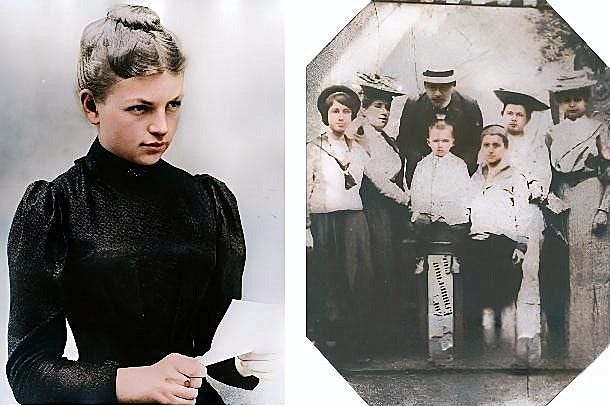
Historians argue that she opposed her husband’s work on chemical warfare. Distraught over his involvement in developing chlorine gas used in WWI, she took her own life. The exact reasons behind her suicide are still debatable. This horrific event barely slowed Haber: astonishingly, he departed at dawn the next morning to head to the Eastern Front, leaving friends to handle Clara’s funeral. The incident revealed Haber’s extraordinary capacity to suppress personal pain and moral uncertainty in the service of what he saw as duty. Contemporary and modern commentators alike have viewed Clara’s suicide as a tragic protest against Haber’s conscience — a human cost that he seemingly refused to confront. Haber remarried two years later, but his second marriage to Charlotte Nathan ended in divorce, suggesting that intimacy and family took a distant second place to his work throughout his life.
After Germany’s defeat in 1918, Haber suffered what he himself described as a near nervous breakdown. The collapse of the cause to which he had devoted himself, and the sudden vilification he faced internationally as the “father of chemical warfare,” must have been immense psychological blows. He fled to Switzerland for a time to avoid potential prosecution as a war criminal. Yet Haber’s resilience reasserted itself — ironically bolstered by the award of the Nobel Prize the same year. Though many condemned the Nobel committee’s decision, Haber took pride in the honor, viewing it as vindication of his scientific genius despite the controversy. He never publicly expressed remorse for his role in gas warfare. In fact, through the 1920s, he remained involved in secret German efforts to continue chemical weapons research in violation of the Versailles Treaty. This suggests that psychologically, Haber coped with any guilt by doubling down on the righteousness of his actions. He appeared to perceive himself as a patriot who had done his duty, unjustly criticized by those who did not bear the same burdens.
By the early 1930s, however, Haber’s psychological and physical state had declined. He had gained worldwide fame and influence, but also faced isolation — many former colleagues shunned him, and Germany’s scientific prominence waned. The rise of the Nazi regime in 1933 dealt the final blow. Facing the virulent anti-Semitism of a country he had loved, Haber grew deeply disillusioned and depressed. He resigned from his beloved institute in protest rather than comply fully with the laws expelling Jews. Friends noted that Haber left Germany a “broken man,” suffering from severe heart disease and a loss of will to live. Years of internal conflict and sacrifice had caught up to him. He died in exile in 1934, at age 65, his health and spirit spent. Haber’s psychological journey — from ambitious optimism, to fierce justification, to final disillusionment — mirrors the turbulent era he lived in, and underscores the human fragility behind his iron facade.
Philosophy and Principles
Though not primarily known as a philosopher, Fritz Haber had a keen interest in philosophical ideas, and this subtly informed his worldview. As a university student in Berlin, he studied under the renowned thinker Wilhelm Dilthey and developed a “bent for philosophy, especially Kantian” thought.
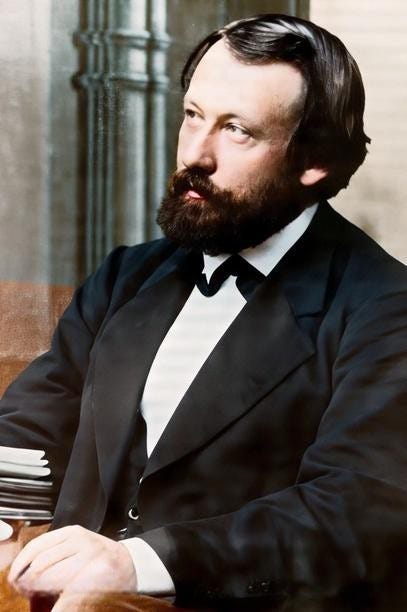
Immanuel Kant’s emphasis on duty and moral law may have resonated with Haber’s strong sense of obligation. Indeed, Haber’s guiding principle — “In peace for mankind, in war for the fatherland” — has a ring of categorical imperative turned on its head, an absolute duty to serve humanity in one context and the nation in another. This principle was more than a slogan; it became Haber’s personal ethic. He genuinely believed that the pursuit of science was a noble global endeavor in peacetime, advancing knowledge and the welfare of all people. Haber’s own career exemplified this in his peacetime work on fertilizers and industrial chemistry that benefited agriculture worldwide. However, once war broke out, he believed equally strongly that a scientist was bound by patriotism to apply his skills to victory. This binary moral code — internationalist in peace, nationalist in war — was Haber’s attempt to reconcile universal Enlightenment values with fierce loyalty to his homeland.
Ethically, Haber subscribed to a utilitarian and pragmatic philosophy. He judged actions by their results more than by abstract principles. For example, he defended chemical warfare by focusing on outcomes (arguing it killed fewer soldiers overall) rather than on the intrinsic horror of poison. His stance implicitly held that the ends (shortening the war or saving German lives) could justify the means. Haber was aware that poison gas provoked a visceral dread, yet he philosophized that this was a psychological hurdle, not an ethical one: in his words, the “impression” on the human soul was different, but not the basic reality of combat. He seemed to consider it a soldier’s “moral strength” to overcome the taboo and embrace new technology, a perspective that elevated duty over sentiment.
“In the case of gas as a warfare agent everything is the other way around. It is essential to them that their physiological impact on the human being and the sensation they evocate change thousandfold. With every change in the impression that nose and mouth are feeling the soul is trembled by a new and unknown impact and it is a new challenge to the moral strength of the soldier in the moment when the whole performance of his soul is needed for the fight.”
Haber’s philosophy of science was rooted in the 19th-century German tradition of Bildung and progress. He believed deeply in the power of human ingenuity to master nature for constructive ends. His correspondence and lectures often stressed the cultural mission of science — how research could enrich civilization and solve social problems. Haber’s own life work — creating fertilizer to feed the hungry, synthetic fuel and nitrates to sustain nations, even attempting to extract gold from seawater to relieve Germany’s reparations debt — reflected a quasi-Promethean belief that science could overcome scarcity and adversity. This optimistic, rationalist philosophy was tempered by virtually no overt religious belief. Haber had been raised Jewish, but like many assimilated intellectuals of his time, he was secular in outlook and saw religion as nonessential to modern identity. His conversion to Christianity in 1892 was a pragmatic choice, not a spiritual one, undertaken to better integrate into German academia and society. In an essay that influenced Haber, historian Theodor Mommsen urged Jews to abandon sectarian loyalties for the sake of German national unity. Haber embraced this idea wholeheartedly — philosophically, he believed in the Enlightenment ideal of a common national culture superseding religious divisions. This conviction later proved tragically idealistic in the face of Nazi racism, but it was foundational to Haber’s identity.
In sum, Haber’s guiding philosophy combined scientific humanism with nationalist duty. He valued Wissenschaft (scientific knowledge) as one of the highest human endeavors and was committed to the notion that knowledge must be applied — whether to improve farming or to defend one’s country. He lived by a personal code that might be described as technocratic patriotism: the belief that the scientist-engineer is a servant of civilization in peace and a servant of the state in war. This philosophy was sincere, even if it led Haber into moral grey zones that he never fully acknowledged. It explains how he could win the Nobel Prize for improving life and, in virtually the same breath, insist he had nothing to apologize for in devising new ways to deal with death.
Political Views and Ideologies
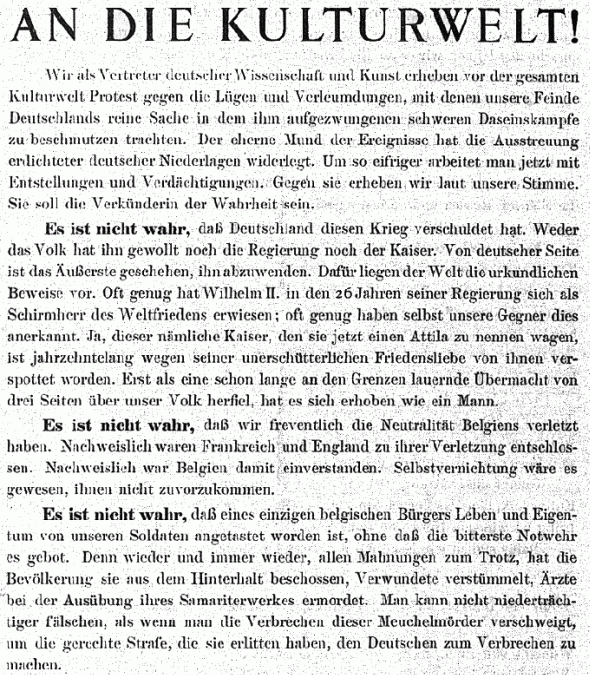
Politically, Fritz Haber’s life was defined by intense German patriotism and a complex relationship with his Jewish heritage. He came of age in the newly unified German Empire, imbibing the fervent nationalism of the era. In 1914, when World War I erupted, Haber did not hesitate to align himself with the hardline pro-war sentiment among German intellectuals. He was one of 93 prominent scientists and scholars who signed the “Manifesto of the Ninety-Three,” a public declaration wholeheartedly supporting Germany’s war conduct and denying alleged atrocities. This act underscored Haber’s unequivocal loyalty to the Kaiserreich. He viewed the war as a just cause and believed Germany’s national interests and survival were paramount.
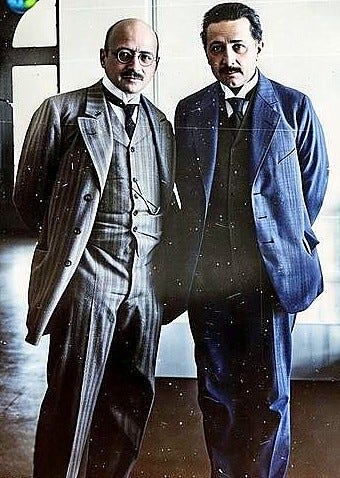
Unlike his friend Albert Einstein — who maintained pacifist leanings and criticized militant nationalism — Haber had no qualms about German militarism in 1914. He even chided Einstein for lack of patriotic solidarity, reflecting how fervently Haber embraced the wartime zeitgeist.
Haber’s political ideology, however, was not that of a party politician or theorist; it was a straightforward creed of national service. He valued order, duty, and hierarchy, as evidenced by his delight in receiving an officer’s rank (Captain) during WWI and his integration into the Prussian military establishment. In peacetime, Haber was cosmopolitan — he traveled widely, collaborated internationally, and promoted German science on the world stage. But he always saw himself as representing German achievement. After WWI, once Germany was ostracized, Haber played a key role in rebuilding scientific bridges. For instance, he led efforts to reintegrate German chemists into international conferences and helped manage funds to support German science during the economic crisis. These actions show a pragmatic patriotism: Haber wanted Germany restored to respect and strength through scientific prowess.
The rise of the Nazi Party brought Haber’s political and personal identities into fatal conflict. Though baptized as a Protestant and intensely proud of being German, Haber was still regarded as Jewish by Nazi racial laws. At first, he hoped his illustrious record would protect him. In 1933, new laws “restoring” the civil service required the dismissal of Jews, but as a decorated war veteran, Haber was initially exempt. Nevertheless, he was ordered to purge all Jewish scientists from his institute. Haber’s response was one of anguished principle: he refused to remain under such terms. In his resignation letter, he condemned judging scientists “on the basis of their grandmothers” and rejected Nazi racial ideology. This was a courageous political stand, effectively a protest against Nazi policies at a time when many others acquiesced. Haber delayed his departure long enough to help many of his Jewish colleagues secure positions abroad, demonstrating loyalty to his staff and a sense of responsibility to fellow scholars facing persecution.
Ultimately, Haber’s faith in German society was shattered. The nation he had served “in war for the fatherland” repaid him with ostracism. Stripped of his institute and unwelcome in his homeland, he accepted an offer in British Mandate Palestine in 1934 — a poignant decision for a man who had once distanced himself from the Jewish community. While Haber never became a Zionist ideologue, his final act of seeking refuge in what would become Israel suggests a late-life reconciliation with his Jewish identity, or at least a desperate pragmatism. He even willed his extensive personal library to the Sieff (later Weizmann) Institute in Palestine, a gesture that indicates he was coming to terms with a new political reality beyond Germany. Haber died en route, in a Basel hotel — a stateless scientist without the country he loved.

Politically, then, Fritz Haber can be seen as a tragic exemplar of the assimilated German Jew. He believed utterly in German nationalism and in the promise of Enlightenment values that offered Jews full citizenship in exchange for cultural assimilation. For decades, Haber’s own life seemed proof of that promise — he reached the pinnacle of German science and society. But the Nazi betrayal revealed how shallow that acceptance was. Albert Einstein, reflecting on his friend’s life, remarked that Haber’s story was “the tragedy of the German Jew — the tragedy of unrequited love.” In loving Germany and serving it beyond all measure, Haber exemplified a political ideal of integration, only to find his devotion painfully unreturned in the end.
Core Beliefs and Values
At the heart of Fritz Haber’s life were a set of core beliefs that he held with unwavering conviction. Foremost among these was his belief in patriotic duty. Haber valued loyalty to the nation as a cardinal virtue, a principle instilled perhaps by his upbringing and the Prussian ethos of his youth. He truly believed that in times of war, extraordinary measures were justified to protect one’s country. This belief underpinned every controversial choice he made. As he wrote in his farewell letter upon leaving Germany, he remained “proud of serving humanity in peace, [and] the fatherland in war.” That succinct phrase could serve as Haber’s epitaph. It shows that he valued service — both to humankind at large and to Germany specifically — as his highest calling. Even after being cast out by Germany, Haber did not recant this value; he left “with a broken heart, but not a broken honor,” still convinced he had done right by both science and country.
“During peacetime a scientist belongs to the world, but during wartime he belongs to his country.”
Another core belief of Haber was in the power of science and technology as a force for good. He was a secular rationalist who put great stock in human ingenuity. Haber saw chemistry as a tool to conquer material problems — hunger, resource scarcity, military stalemate — and he had almost a messianic faith that science could deliver salvation in each of these domains. The success of the Haber-Bosch process reinforced his belief that scientific innovation could literally save lives on a massive scale by boosting food production. It is telling that when he turned his genius to warfare, it was with the belief that a decisive new weapon might end the stalemate and save lives in the long run. He once remarked that by using his chlorine gas, “You could shorten the war and save the lives of young Germans and young Englishmen” — a viewpoint that, however flawed, reflects his belief in technical solutions to human conflicts. This utilitarian faith in science made Haber somewhat blind to the moral ramifications; he saw only a problem to fix and a tool at hand to fix it.
Haber also believed strongly in assimilation and progress. He valued his German identity above his Jewish background, convinced that the modern world was leaving old prejudices behind. As noted, he converted to Christianity not out of piety but out of a belief in the ideal of a unified German people. For most of his life, Haber acted as if ethnicity and religion were irrelevant details — he hired and befriended people of all backgrounds and married women who also converted to fit in. His core values were grounded in Enlightenment ideals: education, cultural refinement, and loyalty to the state rather than to any religious community. He believed that through achievement and patriotism, one earned acceptance. This was a deeply held value that only crumbled when confronted by Nazi irrationality. Haber’s inability to foresee the power of racial hatred was in part because it ran counter to the very values of rational progress he cherished.
In personal terms, Haber valued honor, determination, and excellence. He had a strong ego and believed in striving for greatness. Mediocrity or half-measures had little place in his mindset. Whether it was running his research institute or leading men in the field, he insisted on rigorous standards and was protective of his team’s work. Former coworkers described him as “always full of ideas” and supportive of younger scientists, indicating he believed in mentoring and advancing knowledge collectively. However, he also believed that personal sacrifice was sometimes necessary for a higher goal. Tragically, that included sacrificing elements of his own humanity. The fact that Haber returned to the front within hours of his wife’s suicide speaks volumes about the stoic, duty-bound values he lived by. He prized resolve and toughness — in himself and others — to an extreme degree.
In the end, Fritz Haber’s core beliefs can be seen as both inspiring and unsettling. He sincerely believed in feeding the world through chemistry; he also believed in using chemistry to win wars. He believed in assimilating into a cultured society; he also believed that society would honor a man for his contributions, regardless of his origins. History proved some of these convictions tragically mistaken. Yet Haber’s values of knowledge, duty, and progress were genuine and passionately held. His legacy forces us to grapple with the double-edged nature of these beliefs. As a man who could create both life-giving fertilizer and deadly gas, Haber embodied the ambiguous moral power of science. Perhaps the most fitting summary of his ethos was provided by Einstein in his eulogy: Haber’s life exemplified a “one-sided love” — a love of country and science so strong that it was not fully reciprocated by the country, nor tempered by the wider humanity his science was meant to serve. It is this poignant mix of greatness and tragedy in Haber’s beliefs and values that continues to fascinate and haunt our collective memory.