
From a Click to a Smarter AI: The Technical Journey of a Thumbs-Up
The seemingly simple thumbs-up or thumbs-down icon is the user-facing tip of a deeply complex technical iceberg. This mechanism is a…

The seemingly simple thumbs-up or thumbs-down icon is the user-facing tip of a deeply complex technical iceberg. This mechanism is a primary channel for human-AI collaboration, transforming subjective preference into actionable data that fuels the model’s evolution. The entire process is a sophisticated pipeline of data capture, storage, analysis, and machine learning.
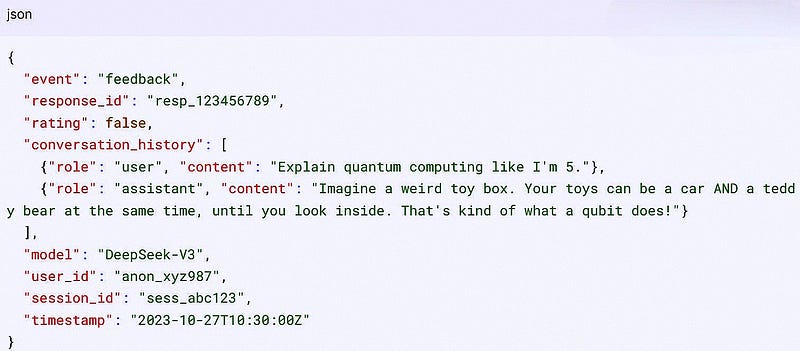
The journey begins the moment you click the icon. This user action is not isolated; it is an event captured by the website or application’s frontend code. The system immediately bundles a rich packet of contextual information. It notes the specific message ID of the AI response you are rating and the binary value of your feedback. Crucially, it captures the entire conversation history that led to that response. This context is everything — a thumbs-down on an answer is meaningless without understanding the prompt that generated it. Additional metadata is also attached, including a unique session identifier, your user ID if you are logged in, the precise timestamp, and details about the AI model itself, such as its version number and configuration settings.
This enriched data packet is then dispatched via an application programming interface call to the company’s backend servers. The payload, often structured in a format like JSON, contains the full narrative of the interaction: the user’s initial prompt, the AI’s response, and your verdict on that response.
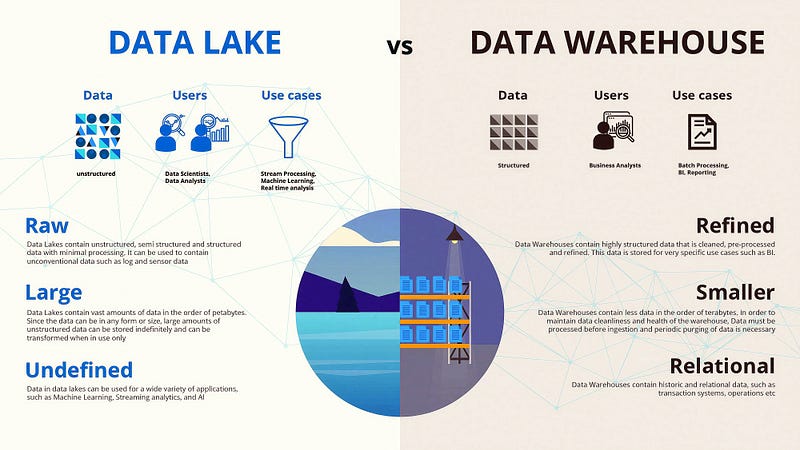
Upon arrival, this information is not immediately used to change the AI but is instead reliably stored in massive-scale data systems such as data lakes or cloud data warehouses. This storage phase is critical for aggregation, allowing engineers and data scientists to later query the dataset to identify broad trends, calculate approval ratings, and pinpoint persistent failure modes across millions of interactions.
The true technical magic unfolds in how this aggregated feedback is utilized to improve the AI model. There are two paramount methodologies. The first and most advanced is Reinforcement Learning from Human Feedback (RLHF). In this process, the vast collection of human preferences is used to train a separate, secondary model known as a reward model. This reward model’s sole purpose is to learn to imitate human judgment. It is shown pairs of AI responses to the same prompt and taught which one humans preferred. Once trained, this reward model becomes an automated critic. The primary AI model is then fine-tuned using reinforcement learning techniques, where it is rewarded for generating responses that this critic scores highly. In this way, the model learns to internalize and prioritize human preferences, aligning its outputs with what people find helpful and accurate.
The second key methodology is Supervised Fine-Tuning and direct data curation. Here, the feedback acts as a quality filter. Thumbs-down responses are flagged as explicit examples of what not to do. AI trainers and labelers analyze these failures to understand the root cause, such as factual error, poor formatting, or unhelpful tone. They then craft ideal responses to the same prompts. This new, high-quality dataset of corrected examples is used to retrain the model, directly teaching it to avoid past mistakes. Conversely, thumbs-up responses help identify exemplars of high-quality output, allowing developers to curate datasets that further reinforce the model’s strengths.
When users provide optional written explanations for their feedback, this textual data is incredibly valuable. It is processed using natural language processing techniques to categorize the criticism or praise into specific tags, such as factual error, verbosity, or ethical concern. This qualitative data provides the crucial why behind the rating, offering clear direction for both the supervised fine-tuning and the analysis of the reward model’s performance.
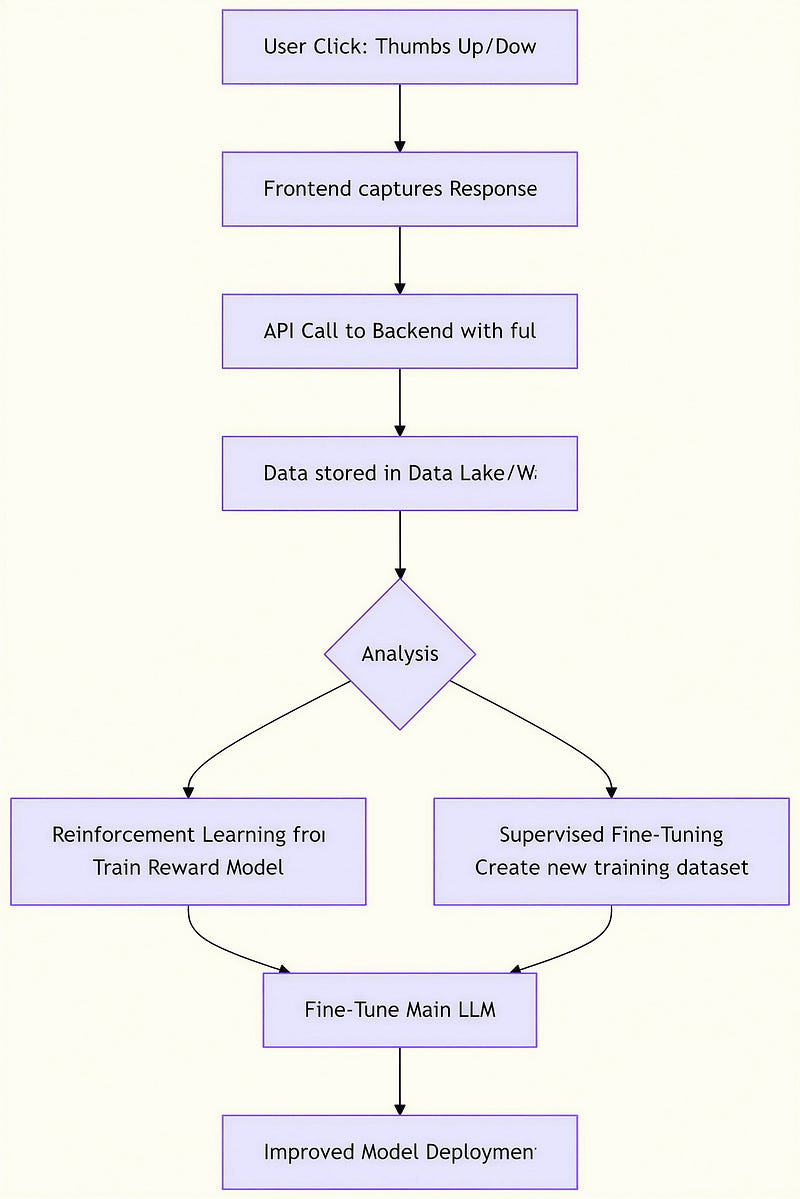
In conclusion, that single click is the first step in a continuous and scalable feedback loop, a fundamental process that gradually steers the AI’s behavior toward greater utility, reliability, and alignment with human values.