Global Digital Payment Services Ranking Analysis
Introduction The way we pay has transformed faster than any other element of commerce. From bustling street markets in Shenzhen to online…
Introduction
The way we pay has transformed faster than any other element of commerce. From bustling street markets in Shenzhen to online boutiques in Berlin, a few digital payment giants now sit at the crossroads of technology, culture, and economics. Their reach is staggering, their influence profound. Understanding who leads, where they dominate, and why they succeed reveals far more than a ranking — it tells the story of how modern money moves.
WeChat Pay: The Powerhouse of China’s Super-App
WeChat Pay reigns supreme in Asia’s digital ecosystem. With over 935 million active users, it processes more than half of China’s mobile payments — an eye-watering volume exceeding fifteen trillion dollars each year. Its dominance is no accident. Embedded within WeChat’s all-encompassing super-app, WeChat Pay handles everything from a morning coffee purchase to utility bills, seamlessly blending finance with everyday life. While its international footprint is limited, with modest adoption in Southeast Asia, within China, it is less a payment method and more a way of life.
PayPal: The Western Standard-Bearer
PayPal’s legacy is woven into the fabric of online commerce. With over 430 million active accounts and transactions totaling more than 1.6 trillion dollars annually, PayPal maintains a formidable global presence. It is accepted on over ten million websites and commands a remarkable share of merchant adoption in markets such as the United States and Germany. Beyond its flagship service, PayPal owns Venmo, a cultural phenomenon in the United States with more than ninety million users. This dual strength makes PayPal the first choice for Western merchants seeking a trustworthy, familiar digital wallet.
Stripe: The Quiet Titan of Enterprise Payments
Stripe operates with less fanfare but immense impact. Rather than focus on individual consumers, Stripe powers the backbone of enterprise-level transactions. Its systems handle over a trillion dollars in payments annually and integrate with millions of websites. Stripe is a favorite of SaaS platforms and subscription-based services, chosen by some of the world’s most influential companies for its developer-friendly tools and global reach. It might not be the household name that WeChat Pay or PayPal is, but Stripe is the engine humming beneath many of the services you use daily.
Regional Nuances and Market Lessons
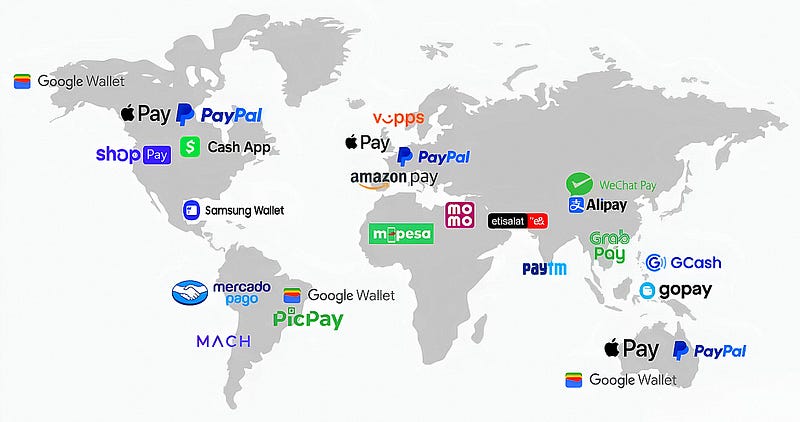
These giants reflect the markets that shaped them. WeChat Pay thrives in an ecosystem of tightly integrated social and financial services, perfectly aligned with Chinese consumer habits. PayPal’s strength lies in its global familiarity and merchant-friendly structure, making it indispensable in Western markets. Stripe focuses on business infrastructure, a domain less visible to the average shopper but vital to modern commerce. Local leaders like India’s UPI and China’s Alipay further prove that geography and culture matter as much as technology in defining winners.
Conclusion
The competition among WeChat Pay, PayPal, and Stripe reveals a fascinating truth: there is no single universal payment solution, only regional champions optimized for their environments. For businesses, the choice is strategic. For consumers, the variety signals freedom and innovation. As digital payments continue to evolve, watch these players closely — each is shaping how value flows in our interconnected world. Whether you are a retailer eyeing new markets or a curious observer of financial technology, the message is clear: the future of money is already here, and it is rewriting the rules of global commerce.