Golden Scales, Global Tables: The Enduring Legacy of the Carp
Carp are not just fish; they are living manuscripts of human history, rippling through the currents of rivers and cultures alike. For…
Carp are not just fish; they are living manuscripts of human history, rippling through the currents of rivers and cultures alike. For centuries, Cyprinus carpio has been a mirror of ingenuity, adaptation, and appetite, rising from humble ponds to the plates of emperors. To speak of carp is to speak of migration, aquaculture, and culinary craft — a testament to how a single species can nourish both body and imagination. In today’s world of sustainability challenges and culinary rediscovery, the carp’s story feels remarkably alive and urgently relevant.
Taxonomy and Identity
Cyprinus carpio belongs to the family Cyprinidae, a vast clan of freshwater fish that have woven themselves into the waterways of Europe, Asia, and beyond. Known widely as the common carp, this species has given rise to countless cultivated varieties. The mirror carp, with its scattered mosaic of scales, and the leather carp, almost bare-skinned and sleek, are two of the most prized forms raised in aquaculture. In certain regions, these fish are even known by names that evoke local pride: in Central Europe, kapr; in Japan, koi, where ornamental strains have been elevated to living art. The edible varieties that find their way to market are often selectively bred for firm flesh and robust growth, illustrating how taxonomy and tradition dance together.
Biology of a Survivor
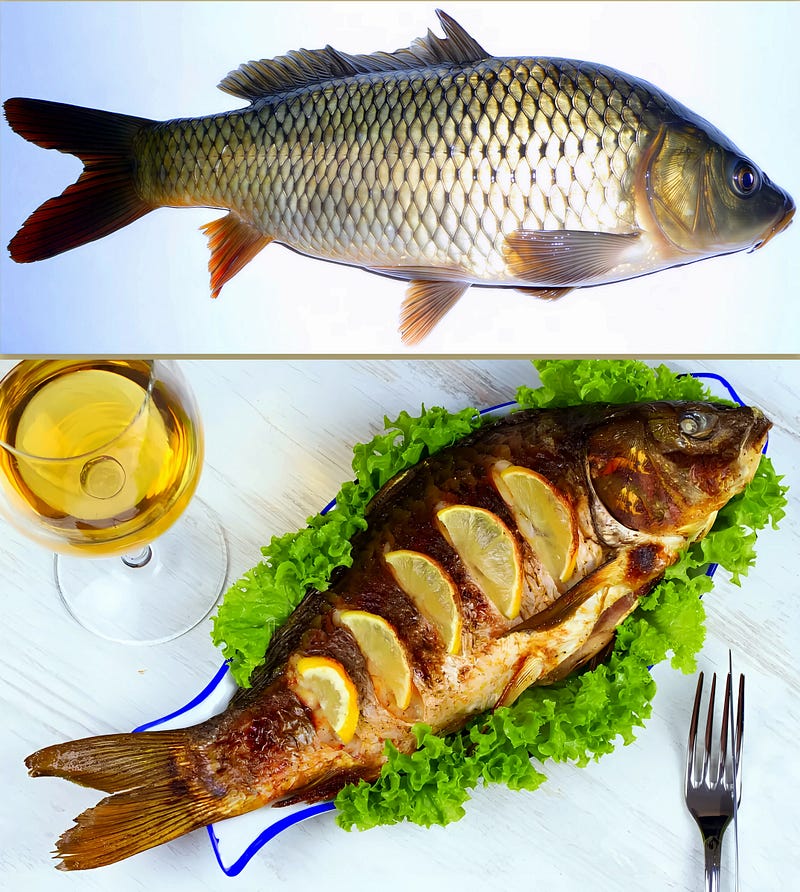
A fully grown carp can weigh well over 30 kilograms, equivalent to about 66 pounds, with some individuals documented at astonishing sizes surpassing 40 kilograms, or roughly 88 pounds. Their elongated, golden-bronze bodies glisten with large scales and a pair of sensitive barbels near the mouth, whisker-like sensors that help them forage in murky waters. Carp are long-lived creatures, with lifespans often exceeding two decades and, in calm, food-rich ponds, sometimes stretching past 40 years. They spawn in spring and early summer, scattering adhesive eggs on submerged vegetation, ensuring the next generation thrives even in challenging environments. What makes them remarkable is their ability to tolerate low oxygen levels and fluctuating water temperatures, thriving in conditions where other species would falter.
Ecology and Influence
Carp inhabit rivers, lakes, and reservoirs across Europe, Asia, and introduced regions in North America and Australia. A species once treasured for its adaptability has, in some ecosystems, become controversial. Their bottom-feeding habit stirs up sediments, altering habitats and threatening native species. Yet, when managed wisely, carp play a vital role in controlled aquaculture systems, recycling nutrients and providing a reliable protein source. Efforts are underway worldwide to balance their ecological impact with their undeniable value. Sustainability-minded farmers are adopting integrated aquaculture methods, where carp share ponds with vegetation or other species, minimizing waste and maximizing yield.

Uses and Economic Relevance
In many cultures, carp is more than a meal — it is a symbol of prosperity and resilience. Across Europe, particularly in countries like Poland and the Czech Republic, carp farming has been an economic pillar for centuries, with annual harvests carefully timed for festive seasons. In China, carp culture dates back over a millennium, and the fish remains a staple in markets today, fueling livelihoods and traditions. Sustainability efforts are focusing on reducing feed costs, improving water quality management, and promoting carp as a viable alternative to overfished species.
Culinary Artistry and Flavor
To dismiss carp as a muddy-tasting fish is to miss the point — and the potential. When raised in clean, well-managed waters, carp flesh is pale, firm, and delicately sweet, with a richness that holds up to a variety of cooking techniques. In Europe, whole carp roasted with herbs fills Christmas tables with aromas of thyme, garlic, and browned butter. In China, carp is often steamed with ginger and soy sauce, the tender fillets absorbing layers of umami. A fillet weighing about 200 grams, roughly 7 ounces, delivers lean protein and omega‑3 fatty acids, offering not only tradition but also nutrition.
Wine Pairings for the Golden Fish
Carp’s versatility in the kitchen calls for thoughtful wine pairings. A roast carp prepared with root vegetables and herbs pairs beautifully with a crisp Riesling, its acidity cutting through the richness. A gently steamed carp in ginger broth sings alongside a Pinot Grigio, where bright fruit notes echo the fish’s subtle sweetness. For more adventurous palates, a lightly oaked Chardonnay can add a layer of complexity, harmonizing with buttery sauces or cream-based accompaniments.
Conclusion
The carp’s journey from muddy ponds to ceremonial feasts is a story of adaptation and endurance, of culinary rediscovery and ecological reckoning. In an age when sustainable choices are no longer optional but essential, revisiting species like Cyprinus carpio offers both nourishment and inspiration. The next time you glimpse those golden scales in a market tank or on a festive table, remember that you are looking at history itself — alive, swimming, and waiting to be honored anew.