
How to Value Sports Trading Cards Without a Spreadsheet: A Simple Math Model That Works
Introduction: The Art and Math of Card Valuation In today’s booming sports card market, collectors and sellers face a simple but critical…
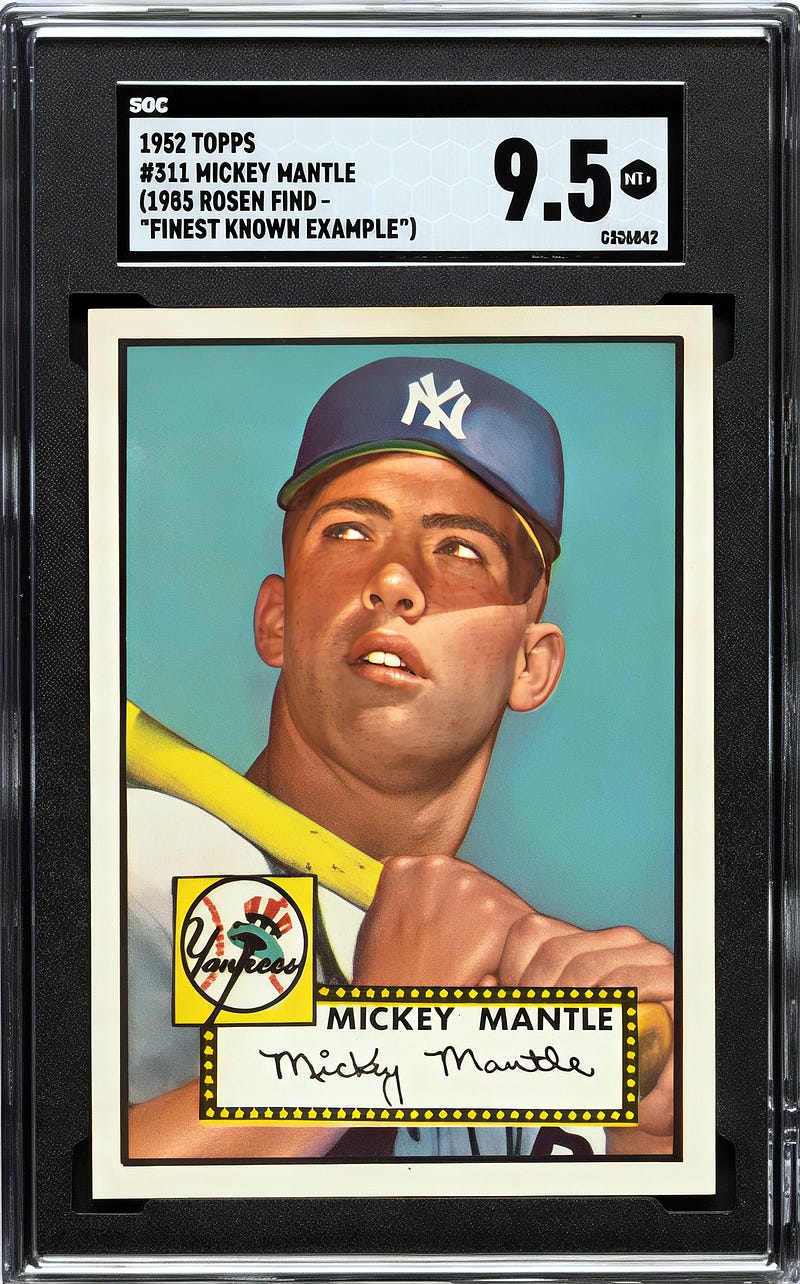
Introduction: The Art and Math of Card Valuation
In today’s booming sports card market, collectors and sellers face a simple but critical question: How much is this card worth?
While complex pricing tools and predictive models exist, most people just want something that works — fast, accurate, and practical. Whether you’re selling a PSA 10 LeBron James rookie or considering a raw Shohei Ohtani card, you need a way to price with confidence. This article introduces a simplified mathematical model for manually valuing sports trading cards using only basic inputs — no software, no spreadsheets, no guesswork.
The Five Core Variables You Need to Know
To begin valuing a card manually, get familiar with these five easy-to-use inputs:
- Raw Price (RP): The market value of the ungraded card.
- Graded Multiplier (GM): Typical multiplier for professionally graded cards (e.g., PSA 10).
- Market Factor (MF): Adjusts value based on trends like player performance or market demand.
- Auction Fees (AF): Percentage of the sale lost to platform fees, shipping, and other costs.
- Desired ROI (ROI): Your profit goal, expressed as a decimal (e.g., 0.60 = 60%).
These values can be estimated with a glance at sold listings, card population reports, and current auctions.
Step 1: Estimate Graded Value
Once you know the raw price and typical graded multiplier, calculate the estimated value after grading:
Graded Value (GV) = RP × GM
Example:
If a raw card is worth $1500, and a PSA 10 version typically sells for 3× that price:
GV = 1500 × 3 = $4500
Step 2: Adjust for Market Conditions
Card prices are not static. They shift based on player performance, card scarcity, and demand. That’s where the Market Factor comes in:
Adjusted Graded Value (AGV) = GV × MF
Example:
If your card’s player just broke a major record, you might apply a market factor of 1.10:
AGV = 4500 × 1.10 = $4950
Step 3: Set an Auction Starting Price
For auctions, you’ll want to start low enough to attract bidders without underselling the card. Here’s a proven range:
- Fixed Price Listing: 105–115% of AGV
- Auction Starting Price: 60–80% of AGV
Example:
If AGV is $4950, a good auction starting bid would be:
Starting Bid = 4950 × 0.70 = $3465
Step 4: Adjust if the Card Doesn’t Sell
Didn’t get any bids? Don’t panic. Price adjustments should be methodical:
- First adjustment: Reduce by 10%
- Second adjustment (if needed): Reduce by another 5–10%
Example:
First drop:
$3465 × 0.90 = $3118
Second drop (5%):
$3118 × 0.95 = $2962
This gradual decline keeps interest alive without signaling desperation.
Step 5: Factor in Auction Platform Fees
Always calculate your actual earnings after fees:
Net Proceeds = Final Sale Price × (1 − AF)
Example:
If the card sells for $3200 and fees are 13%:
Net = 3200 × 0.87 = $2784
Step 6: Measure Your ROI
ROI (Return on Investment) tells you whether you profited, and by how much:
ROI = (Net Proceeds − Total Investment) ÷ Total Investment × 100%
Example:
If you bought the card for $1500 and paid $100 to grade it, total investment = $1600
ROI = (2784 − 1600) ÷ 1600 × 100% = 74%
That’s a strong return, especially for a manual flip.
Step 7: What Should You Charge to Hit a Target ROI?
If you’re planning, reverse the process to find your minimum required sale price:
Target Sale Price = TI × (1 + ROI) ÷ (1 − AF)
Example:
To hit a 60% ROI on a $1600 investment:
Target = 1600 × 1.60 ÷ 0.87 ≈ $2943
That’s your breakeven target to price your listing confidently.
Conclusion: Power in Simplicity
The sports card world thrives on hype, but success comes from discipline. This simplified pricing model empowers collectors, sellers, and flippers to make fast, confident decisions using only basic math. In a hobby where timing and accuracy mean everything, this tool helps you move faster, smarter, and more profitably.
Whether you’re just getting started or looking to sharpen your margins, this method will help you win the numbers game in trading cards — one calculation at a time.