Human Evolution in 2025: How Science, Technology, and Society Are Rewriting Our Origins
Introduction Where do we come from, and where are we headed? In 2025, the study of human evolution is no longer confined to dusty fossils…
Introduction
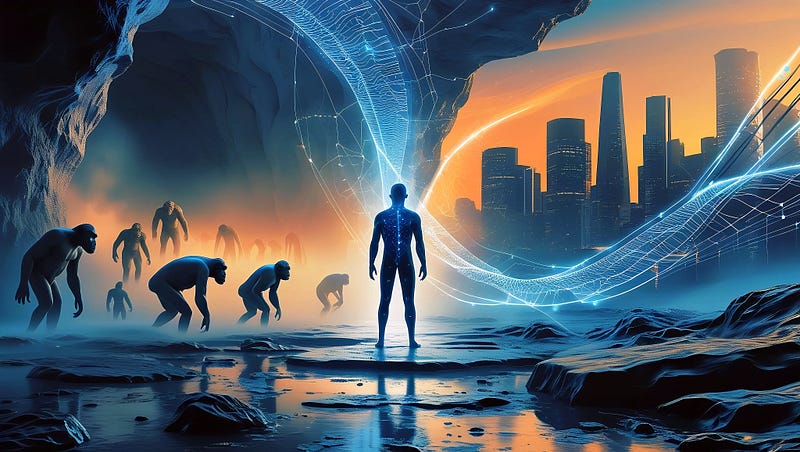
Where do we come from, and where are we headed? In 2025, the study of human evolution is no longer confined to dusty fossils or distant caves. Today, a new wave of research — powered by genetics, neuroscience, artificial intelligence, and environmental science — is painting a more dynamic, intricate picture of our origins. This is a field in renaissance, rich with revelations that reach beyond biology to touch the very fabric of society and technology. Let us step into this unfolding story and see how scientists are redefining what it means to be human.
Self‑Domestication: A Kinder, Gentler Humanity
Recent studies suggest that humans, like domesticated animals, may have evolved by selecting for reduced aggression and stronger social bonds. Anthropologists point to practices like exogamy — marrying outside one’s immediate group — and communal rites of passage as catalysts for cooperation. Over millennia, these cultural choices subtly shaped our neurology and behavior, favoring empathy and collaboration over conflict. It is a humbling thought: our survival may have hinged not on sharp weapons but on softer hearts.
Climate Change and Ancient Adaptation
New research is revealing how prehistoric humans weathered dramatic environmental shifts. By analyzing ancient tree rings and botanical evidence, scientists now see clear links between climate upheavals and evolutionary leaps. Faced with droughts, floods, and changing ecosystems, early hominins adapted their diets, innovated tools, and migrated in search of safer ground. These adaptations echo in our resilience today as we grapple with modern climate challenges.
Genetic Engineering: The Future Steps In
Advancements in gene-editing tools like CRISPR have sparked fierce debates about whether humanity will take evolution into its own hands. Could we, in time, craft genetic traits for sharper intelligence, stronger immunity, or enhanced physical stamina? While these possibilities promise breakthroughs in health and longevity, they also pose profound ethical dilemmas. The future of human evolution may soon be as much about decisions in laboratories as random mutations in nature.
AI and the Evolution of the Mind
Artificial intelligence is not just transforming industries — it may be reshaping our very cognition. With algorithms guiding decisions and automating tasks, researchers suggest our brains are adapting to new forms of problem-solving. Yet this raises a critical question: are we sharpening certain mental skills while letting others atrophy? The co‑evolution of humans and AI may be the most defining chapter in our story yet, for better or worse.
Ancient DNA and New Family Trees
Breakthroughs in ancient DNA analysis have unearthed surprising secrets. Interbreeding between Homo sapiens, Neanderthals, and Denisovans was far more extensive than once believed, leaving traces of beneficial genes that still flow through our veins. High‑altitude adaptations and immune system boosts are just two examples of inherited gifts from long‑lost cousins, reminding us that human evolution is a tapestry woven from many threads.
The Brain’s Fragile Triumph
Modern neuroscience has uncovered a bittersweet truth: the brain regions that grant us advanced reasoning and creativity also carry heightened vulnerability to diseases like Alzheimer’s and Parkinson’s. These regions evolved relatively late, suggesting their very complexity comes at a cost. In evolution’s ledger, brilliance and fragility often go hand in hand.
Urbanization’s Invisible Hand
Today’s cities — dense, polluted, and fast‑paced — are subtly influencing human biology. Researchers are investigating how urban stressors shape epigenetic markers, potentially altering traits passed to future generations. The modern metropolis may be an engine of cultural progress, but it also serves as a crucible where human evolution continues to unfold in unexpected ways.
Conclusion
Human evolution in 2025 is no longer a story carved in stone; it is a living dialogue between our past and our choices for the future. As we decode ancient DNA, edit genes, rely on AI, and adapt to urban life, we are reminded that evolution is not only about where we have been but also about where we are willing to go. The next chapter is ours to write — one informed by science, guided by ethics, and shaped by our shared humanity.