Indiana Fever and Caitlin Clark: Organizational Failures and Criticisms
The hype around Caitlin Clark’s WNBA debut made the 2024 Indiana Fever season must-see TV. Nearly all Fever games were nationally…
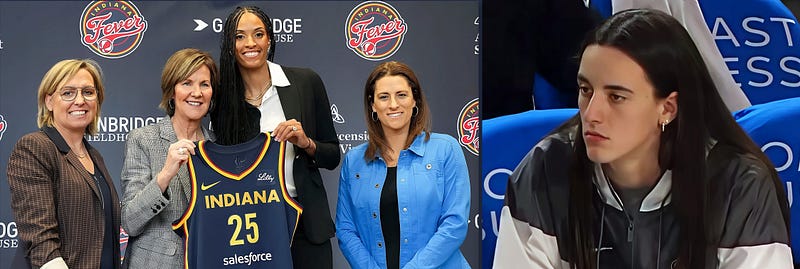
The hype around Caitlin Clark’s WNBA debut made the 2024 Indiana Fever season must-see TV. Nearly all Fever games were nationally televised, attendance jumped 320%, and league-wide viewership hit record highs. Clark’s presence alone is singularly responsible for the league’s newfound popularity. But under the surface of this gold rush, critics have assailed the Fever’s handling of the star rookie. From tone-deaf branding at the front office to stagnating on-court strategy, and from recurring injuries to brutal physical targeting, virtually every aspect of the organization has come under scrutiny. Analysts, former players, and fans complain that faulty decisions and poor execution are limiting Clark’s development and threaten both her success and the WNBA’s momentum.
Front Office and Team Building Criticism
Many fans and pundits believe the Fever front office misread the situation. In a now-infamous press conference, team president Kelly Krauskopf spoke glowingly of building a Fever “brand, an enduring brand, like Apple” even as Clark was singled out as a foundational player. That Apple analogy struck fans as tone-deaf; one tweeted that the franchise was being exploited and was only in it for a shameless grab, rather than loyal support for Clark. Some supporters openly threatened to abandon the Fever if Clark’s loyalty wasn’t reciprocated, warning that when the Fever loses Caitlin Clark, their fan base will never forgive them, and that Caitlin goes and so does 80% of the Fever fan base. One fan lamented that the organization seemed to think these players are interchangeable, while the fans aren’t interchangeable. Even amid these complaints, Clark publicly praised the offseason moves that added veterans DeWanna Bonner and Natasha Howard, saying they were exactly what the team needed in the locker room. But critics note that veteran talent alone isn’t enough. The Fever bench and roster still lack consistent playmakers beyond Clark, and star forward Aliyah Boston has often been sidelined by injury. In short, detractors say the franchise has yet to effectively build a winning team around Clark, instead focusing on branding initiatives. The contrast between front-office hype and on-court weakness has fueled the notion that Indiana may be undermining its superstar.
Coaching Strategy and Player Usage
On the court, head coach Stephanie White has also come under fire. Critics argue the Fever offense revolves almost exclusively around Clark’s shooting and playmaking, with little off-ball movement or secondary options. Stephanie White herself conceded that Indiana’s offense still hasn’t adapted after her injury, admitting that the absence of ball movement allowed defenses to pressure her and that when they circulate the ball, good things happen. Clark privately agreed that the execution was shaky. After a blowout loss, she bluntly assessed that the offense starts on defense, and the team struggled scouting report-wise, struggled with personnel, and struggled to do what the coaches asked of them. Coach White echoed this frustration, saying their attention to detail was poor, they were undisciplined, and their energy and competitive fire were not there. These comments underscore fans’ frustrations that the game plan seems incoherent. Pundits point out that defenses swarm Clark regardless, so without plays to free her teammates or alternate options, Indiana has appeared predictable. One analyst provocatively declared the Fever were even more dangerous when Caitlin Clark doesn’t play, because she’s a ball-dominant guard, implying they could spread the ball better without her. That claim was quickly debunked when the Fever lost badly without Clark, but it reflects the external skepticism. In many games, Clark has been on the floor, opponents sell out to double-team her, and the Fever have few answers. Fans have complained on social media that Clark is often forced to play hero ball; some even circulated advanced stat graphics suggesting that White’s lineups with other guards were more effective in her absence. In summary, critics say White’s star system risks Clark’s growth by not diversifying the offense. They note that the young point guard often logs extremely high minutes with scant relief. There have been calls for more creative schemes or even reduced minutes to keep her fresh, but so far, the team has been reluctant to deviate. As one analyst put it, the Fever offense has Clark at the center and everyone else standing still, a strategy that opponents have consistently exploited.
Medical and Training Management
Clark’s health has been another flashpoint. Indiana has been very cautious with Clark — she was limited in training camp and sat out preseason to protect her leg — yet injuries have still derailed chunks of her season. She sustained a quadriceps strain in late May, missing several games, and then suffered a recurrent left groin injury in July that forced her out again. Medical experts have publicly questioned the Fever’s treatment protocols. Sports physician Dr. Jesse Morse warned on social media that Clark had re-aggravated her groin and lamented that whatever the medical staff is doing right now is unfortunately not enough. Morse noted that groin strains heal slowly and can easily be reinjured, suggesting more aggressive therapies might be needed. The implication is clear: Clark’s team was not fully preventing or rehabbing these injuries, leaving her vulnerable to setbacks. Clark herself looked teary after re-injuring her groin in Boston — a painful scene broadcast live — and observers felt the Fever may have brought her back too soon. Coach White defended their approach, saying they had been super cautious and relied heavily on the training staff to manage Clark’s workload. But after each injury, questions arose whether Indiana’s medical and training team adequately protected her. Critics point out that by late July, Clark had missed roughly 40% of games, hampering her rhythm and raising the specter that her breakout rookie season could be choked off by health issues. A worried fan noted that Indiana had rushed her back and may be paying the price. In short, the Fever’s medical regimen is viewed by some as reactive rather than proactive, forcing Clark to play through nagging injuries with unknown long-term effects.
On-Court Physicality and Protection
Beyond the team’s internal issues, outside factors have compounded Clark’s rookie struggles. Almost from her first game, Clark has been mercilessly hand-checked, bumped, and fouled by opponents. Many observers feel referees have not done enough to protect the league’s biggest draw. Former Fever star Sophie Cunningham, herself sidelined by injury, publicly chided officials after a violent incident in mid-June, saying she thought the referees had a lot to do with it and that it was a build-up of them just not protecting the star player in the WNBA. Four days later, Coach White exclaimed on the podium, “Bad officiating is bad officiating,” calling the tolerance of elbowing and grabbing a league-wide issue. Fans echoed these concerns: one viral social media post demanded the Fever field an enforcer to stand up for Clark and protect the biggest draw of the league. In a recent game, a skirmish erupted when teammates toughened up around Clark. The sentiment is that Indiana’s coaching staff could do more to shield Clark. Yet White’s protests about officiating have been met with shrugs; the league has rarely punished players for hard fouls on Clark. One frustrated fan fumed that allowing anyone — let alone their biggest draw — to get physically attacked with no ejection or consequence is unbecoming of a pro basketball league. The Fever’s responses, such as timeouts and pulling Clark out briefly, have done little to change opponents’ behavior. Critics argue that without institutional support for safety, Clark will continue to absorb punishment every night, a practice that critics say is unwise for both her career and the league’s image.
Impact on Clark’s Development and WNBA Marketability
Taken together, these organizational shortcomings pose a real threat to Clark’s trajectory and, by extension, the WNBA’s recent surge. Clark came in with unprecedented hype — she was expected to elevate Indiana into a playoff team. Instead, the Fever staggered through a 9–10 record and a first-round exit, a far cry from championship contention. Critics warn that wasting her peak years on a weak scheme could stunt her growth. Her arrival packed arenas and drew record-setting TV audiences, audiences that could evaporate if she appears ineffective or is frequently sidelined. Indiana’s nightly TV ratings without Clark have plunged, illustrating that the league’s broader momentum rides on her. If the Fever continues to mishandle Clark — whether by overworking her, underdeveloping her role, or allowing unchecked physical abuse — they risk derailing both a franchise icon and the WNBA’s booming appeal. Fans are already comparing her to a modern franchise cornerstone, warning that her departure would mean most of the Fever’s fan base would go with her. With the league’s future betting on Clark’s stardom, Indiana’s failures have reverberations far beyond Indianapolis. As one analyst bluntly put it, the league can continue without Clark only if it first continues to develop the players around her; otherwise, the WNBA’s new star might fade away. In sum, while Caitlin Clark has already delivered on her hype as a generational talent, the Indiana Fever’s front office, coaching, and support staff have frequently been faulted for failing her. The criticisms are blunt: the organization’s infrastructure and decision-making appear to be undermining her potential rather than nurturing it. If these issues aren’t rectified, both Clark’s success and the league’s explosive marketability could suffer a serious setback.