
Into the Shadows of Freshwater: The Dark Tiger Fish (Nandus oxyrhynchus)
Introduction
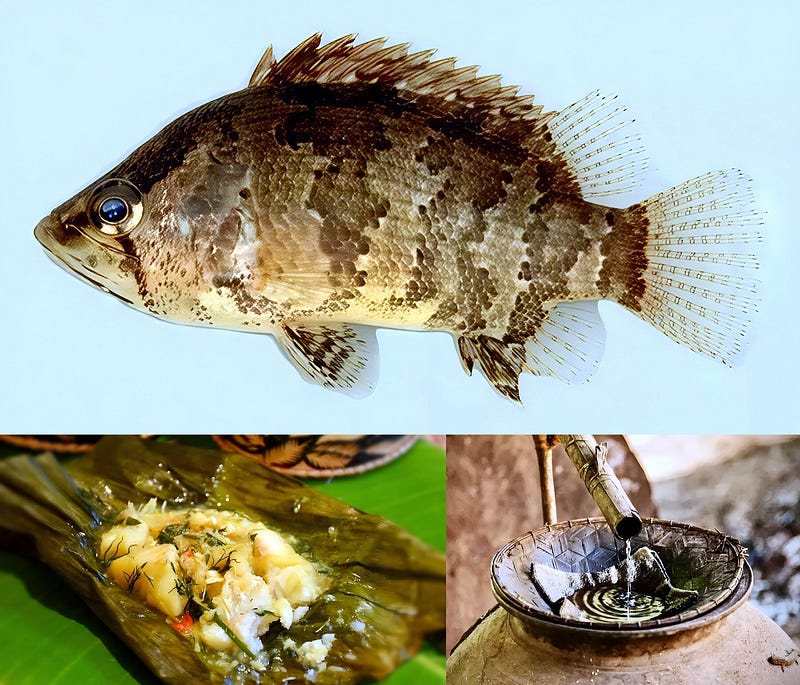
Introduction
In the hushed waters of Southeast Asia, where light is fractured by tangled roots and drifting leaves, a predator lurks with patience and precision. The dark tiger fish (Nandus oxyrhynchus), a master of camouflage and stealth, belongs to a lineage as ancient as the rivers it inhabits. Often overlooked in favor of flashier game fish, this shadow-dwelling ambush predator reveals a story that blends biology, culture, and sustainability — a story of survival and subtle beauty.
Taxonomy
The dark tiger fish belongs to the family Nandidae, a small but distinctive group often referred to as Asian leaffishes. Its full classification reads: Kingdom Animalia, Phylum Chordata, Class Actinopterygii, Order Perciformes, Family Nandidae, Genus Nandus, Species Nandus oxyrhynchus. It is closely related to the better-known Nandus nandus, and the genus as a whole is sometimes called “leaffish” for its uncanny resemblance to a drifting leaf. Locally, it is known under various vernacular names, often referencing its mottled, tiger-like patterning. Though not as widely consumed as other freshwater fish, it has a quiet culinary presence in regional diets.
Biology
This is a fish built for deception. With its laterally compressed body, mottled brown and black stripes, and pointed snout, the dark tiger fish blends seamlessly into muddy riverbeds and submerged foliage. Typically reaching 15–20 cm (6–8 in) in length, it waits motionless for unsuspecting prey before striking with lightning speed. Its jaws, hinged with surprising flexibility, allow it to engulf small fish, crustaceans, and aquatic insects in a single gulp.
Reproduction occurs during seasonal flooding, when pairs seek quiet backwaters to spawn. The eggs adhere to submerged vegetation, and parental care is minimal. Adapted to stagnant and slow-moving waters, the dark tiger fish can tolerate low oxygen levels, an evolutionary advantage in Southeast Asia’s floodplains and swamp forests.
Ecology
The species ranges across Thailand, Cambodia, Laos, and Vietnam, thriving in rivers, lakes, swamps, and rice paddies. It plays a crucial ecological role as a mid-level predator, controlling the populations of smaller fish and insects. Its reliance on vegetated, slow-flowing waters makes it especially vulnerable to habitat loss. Deforestation, damming, and agricultural runoff erode the delicate balance of its environment. Climate change, with its shifting flood cycles, also threatens spawning success. Conservationists stress that while the species is not globally endangered, localized declines are increasingly evident. Protecting the dark tiger fish means protecting the wetlands it calls home.

Uses
While never a star of global aquaculture, the dark tiger fish carries regional economic and cultural importance. It is sold in small village markets, typically fresh, and occasionally finds a place in ornamental aquariums for its unusual appearance. Its market value remains modest compared to staple species like tilapia or carp, yet its role in local subsistence fishing cannot be ignored. Ensuring sustainable harvesting practices — limiting bycatch, protecting floodplain habitats, and monitoring seasonal availability — remains vital to its long-term presence in both ecosystems and kitchens.
Culinary Aspects
For those who know it, the dark tiger fish is considered a delicacy. Its flesh is lean, white, and mild, absorbing spices readily. In rural Southeast Asia, it may be grilled over an open flame, its skin crisping while the flesh remains tender. In Cambodian kitchens, it might be simmered in a sour soup with tamarind and fresh herbs, or deep-fried whole, served with a garlic-lime dipping sauce. Its small size means it is often eaten whole, bones softened by cooking methods that draw out deep flavors. Nutritionally, it offers a good source of protein with minimal fat, fitting neatly into diets rooted in rice and seasonal vegetables.
Wine Pairings
Lao-Lao is a traditional Laotian rice whisky, clear and strong, often homemade and deeply tied to village hospitality and ritual. It’s typically consumed in a single gulp as a sign of respect, and while its flavor is mild, its potency is not. Some versions are infused with herbs or even animals, more for spectacle than taste. In contrast, Sombai is a Cambodian artisanal liqueur inspired by traditional infused rice wine. It’s lower in alcohol, richly flavored with fruits and spices, and presented in hand-painted bottles that celebrate Cambodian culture. While Lao-Lao represents raw tradition, Sombai is a modern, expressive take on heritage — more suited to sipping, mixing, or culinary use. Together, they reflect two very different philosophies of rice-based spirits in Southeast Asia.
Though rarely considered in its native regions, the dark tiger fish lends itself to intriguing wine pairings. Its mild flesh pairs well with crisp, aromatic whites such as a Sauvignon Blanc from the Loire Valley or a dry Riesling from Alsace. When prepared with chili and lime, the heat finds a cooling companion in a lightly sparkling Prosecco. Grilled preparations, smoky and charred, align beautifully with a medium-bodied Chardonnay aged in oak. These pairings bridge Southeast Asian tradition with global culinary refinement, elevating a humble fish into a cosmopolitan dining experience.
Conclusion
The dark tiger fish may never dazzle with size or fame, but it offers something rarer: a story of adaptation, resilience, and quiet cultural value. In its striped body lies an evolutionary masterpiece of camouflage; in its role as predator, a regulator of ecological balance; and in its culinary presence, a reminder that even the most unassuming species can enrich human life. Protecting its habitats means preserving not just a fish, but an entire way of life tied to Asia’s wetlands and rivers. As with all living things, its survival depends on whether we can look beneath the surface — and value what swims in the shadows.