Is Homosexuality a Biological Disorder?
Same-sex sexual orientation in humans has been the subject of intense scientific scrutiny, with growing evidence pointing to a complex web…
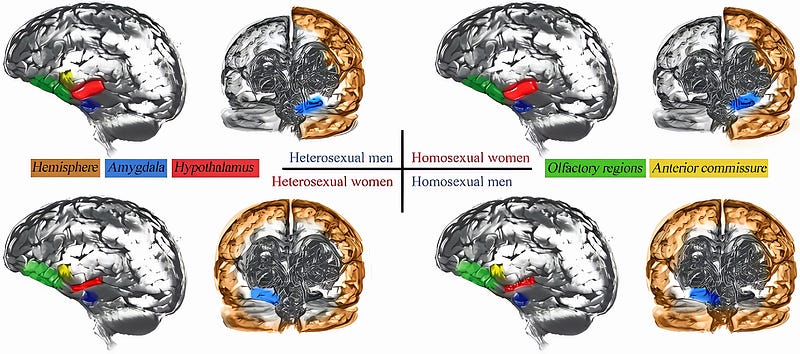
Same-sex sexual orientation in humans has been the subject of intense scientific scrutiny, with growing evidence pointing to a complex web of biological mechanisms underlying its development. Drawing from empirical studies, researchers have identified genetic, hormonal, neuroanatomical, and neuropsychological factors as central to understanding why individuals may experience same-sex attraction.
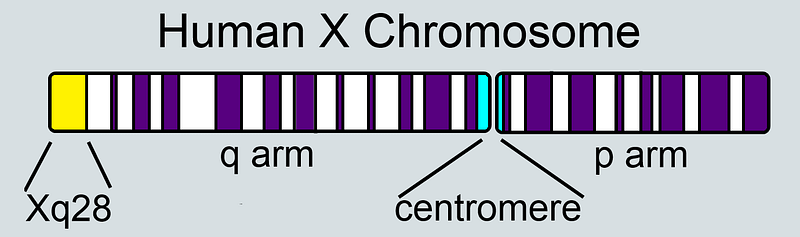
A foundational study suggested a genetic link through the inheritance of markers in the Xq28 region on the X chromosome. In this research, approximately 64 percent of male sibling pairs showed this genetic association, yielding a lod score that indicated strong statistical significance. Although this finding hinted at a potential hereditary component to male same-sex orientation, the study’s limitations, including sparse participant details and possible selection biases, underscored the need for further validation.
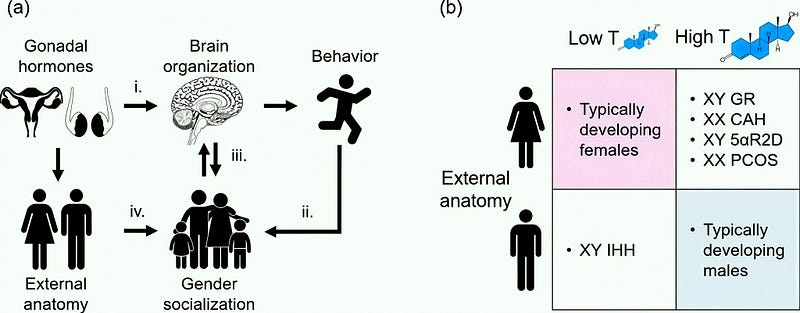
The role of prenatal hormonal exposure emerged as another critical piece in the biological puzzle. Researchers examined women with classical and non-classical congenital adrenal hyperplasia, a condition marked by elevated levels of prenatal androgens. These women exhibited significantly higher rates of bisexuality and homosexuality compared to unaffected controls. The degree of prenatal androgen exposure correlated with the likelihood of non-heterosexual orientation, supporting a model of sexual differentiation influenced by hormonal factors during fetal development. In parallel, a study focusing on second-to-fourth digit ratios found that homosexual men and women displayed lower ratios than their heterosexual counterparts, a trait considered indicative of higher prenatal androgen exposure. Importantly, this association was not accompanied by increased developmental instability, suggesting that the hormonal influence was specific and not a result of general fetal anomalies.
Neuroanatomical differences further deepen the biological narrative. One study analyzing postmortem brain tissue discovered that the third interstitial nucleus of the anterior hypothalamus was more than twice as large in heterosexual men compared to both women and homosexual men. No size differences were found in the other three nuclei assessed. This anatomical finding implies that the structure of the hypothalamus may serve as a biological marker for sexual orientation in men, echoing earlier findings that brain morphology can be sexually dimorphic.
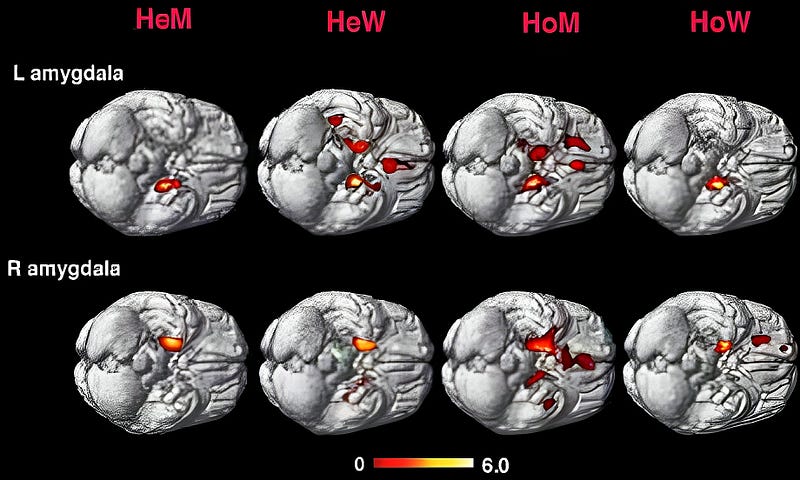
Another perspective stems from brain lateralization. Research assessing handedness patterns found an increased prevalence of left-handedness among homosexual women and a similar trend among homosexual men. This trait, often linked to hemispheric asymmetry, hints at neurodevelopmental differences possibly influenced by early hormonal environments. These findings suggest that sexual orientation may be associated with brain organization, shaped long before birth.
Collectively, these studies support the presence of multiple biological pathways leading to same-sex orientation. While hormonal and neuroanatomical influences appear to play a role across sexes, the exact mechanisms may differ. For example, elevated prenatal androgens were implicated in female same-sex orientation, whereas diminished androgen levels or anatomical brain differences were suggested in male participants. Despite differing mechanisms, a unifying thread across studies is the presence of biological traits that correlate with sexual orientation in meaningful and measurable ways.
However, the current body of evidence is not without flaws. Methodological weaknesses pervade the literature, including limited sample sizes, narrowly defined participant pools, and incomplete methodological reporting. Some studies relied on indirect markers, such as digit ratios or handedness, while others faced limitations due to postmortem tissue availability and challenges in accurately assessing sexual orientation. Additionally, the absence of large-scale, population-based, or longitudinal studies restricts the ability to draw firm conclusions about causality or generalizability.
In sum, while no single biological factor wholly accounts for same-sex sexual orientation, the research converges on the view that it emerges from the interplay of genetic, hormonal, and neuroanatomical influences. These findings lend weight to the notion that sexual orientation is deeply embedded in the biological fabric of human development, not a product of social conditioning or environmental fluctuation. Yet, the science remains incomplete. A more comprehensive understanding demands rigorous methodologies, diverse participant representation, and an integrative approach that considers both male and female pathways of sexual differentiation. Only through such efforts can the full architecture of human sexual orientation be revealed.