Kingklip: The Cold-Water Crown of South African Cuisine
Beneath the cool, tempestuous waters off southern Africa, a sleek, copper-hued predator threads its way through submarine canyons and rocky…
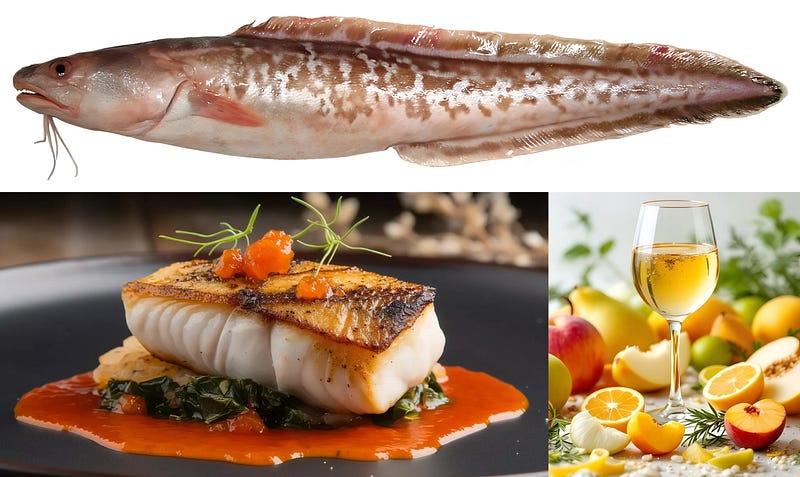
Beneath the cool, tempestuous waters off southern Africa, a sleek, copper-hued predator threads its way through submarine canyons and rocky slopes. The Kingklip, Genypterus capensis, is both a scientific curiosity and a culinary prize — a fish that bridges biology, gastronomy, and sustainability. Its firm flesh and clean flavor have earned it a reputation as one of South Africa’s most refined seafood exports. Yet its life story — marked by slow growth, deep-water breeding, and intricate ecological ties — reveals how delicate the balance is between indulgence and stewardship.
Taxonomy: The Naming of a King
The Kingklip belongs to the family Ophidiidae, the cusk-eels, within the order Ophidiiformes. Its valid binomial is Genypterus capensis (A. Smith, 1847). Historical synonyms include Xiphiurus capensis and Hoplophycis lalandi. Despite its elongated body and eel-like motion, it is not a true eel. The name “Kingklip” is derived from the Afrikaans koningklipvis (“king rockfish”), referring to both its regal quality and habitat preference along the rocky continental shelf.
Common names reveal their culinary and cultural reach. In South Africa (Afrikaans: Kingklip; isiXhosa: Intlanzi yentaba), it is prized on fine-dining menus. In Namibia and Mozambique, it is sold simply as kingfish or ling, while in Spain, it is occasionally labeled mero rosado del Cabo (Cape pink grouper) in export markets. No recognized subspecies exist, but closely related species include the Chilean Kingklip (Genypterus chilensis) and the New Zealand Ling (Genypterus blacodes), both valued analogues in global gastronomy.
Biology: A Predator of Precision
The Kingklip can reach 1.8 meters (5 ft 11 in) and over 15 kilograms (33 lb). Its long, ribbon-like body tapers to a fine tail, colored in gradients of reddish-brown to dusky violet. The head is broad with large eyes — adaptations to dim deepwater conditions — and a protruding lower jaw suited for ambush predation.
It inhabits depths between 50 and 500 meters (164–1,640 ft), spawning primarily in late winter and early spring when temperature and current stability favor larval dispersal. Growth is slow, sexual maturity is delayed until about five years, and lifespan exceeds two decades. These biological traits make the species vulnerable to overfishing — a classic case of culinary value intersecting with ecological fragility.
Ecology: The Cold Currents’ Crown Jewel
Kingklip thrives along the southern African shelf, particularly where the cold Benguela Current from the Atlantic collides with the warmer Agulhas Current from the Indian Ocean. This confluence enriches the waters with plankton and oxygen, supporting dense food webs.
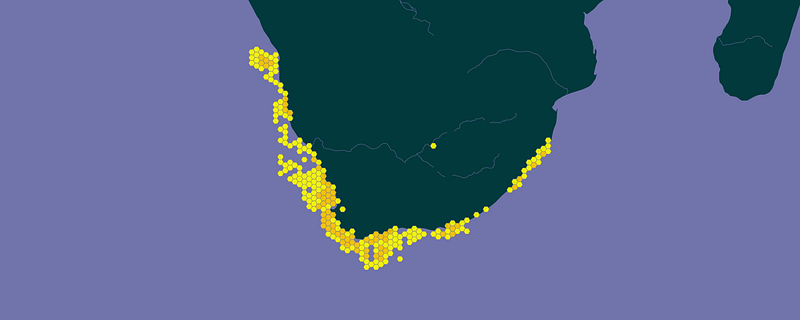
The fish’s ecological role is that of a mesopredator — it regulates mid-trophic species like hake and squid, while serving as prey for seals and larger demersal sharks. Conservation management in South Africa integrates Kingklip within the hake trawl fishery’s bycatch quotas. The species is not currently listed as endangered but is categorized as “Data Deficient” by the IUCN due to patchy monitoring. Its future depends on continuous data collection and habitat protection in deepwater nursery zones.
Uses: From Ocean Floor to Fine Dining
Kingklip’s dense, white fillet is its prime asset — firm, lean, and mild. It’s served grilled, pan-fried, baked, or poached, with peak catches from June to September. Each fish yields about 45% usable meat, averaging 300–400 kg (661–882 lb) per hectare under sustainable quotas. At 95 kcal per 100 g (3.5 oz), it delivers 19 g of protein and 2 g of fat, with no heavy-metal risks in regulated fisheries.
Its flavor is sweet and clean, its texture is meaty yet delicate. Ideal pairings include lemon, capers, butter, and light spice blends. Offcuts become fishmeal with 85% protein conversion efficiency. Certified by the Marine Stewardship Council, Kingklip fetches 300–450 ZAR/kg (≈$15–23 USD/kg) and supports small-scale Cape fishers. Sustainability oversight ensures that indulgence never eclipses balance.
Culinary Aspects: Texture Meets Restraint
Kingklip’s appeal lies in its balance: clean flavor, lean texture, and a subtle marine sweetness that rewards restraint in the kitchen. When cooked to 62°C (144°F), the fillet firms without dryness, yielding a creamy bite reminiscent of monkfish but lighter on the palate. Its aroma is faintly saline and nutty, evoking browned butter and warm bread crust.
Mouthfeel is dense but not rubbery; the aftertaste is clean and mineral. Culturally, Kingklip has become a symbol of refined South African seafood, serving as a culinary ambassador in export markets much like Chilean sea bass once did. It integrates seamlessly into fusion cuisines, from Portuguese bacalhau-style preparations to Japanese-style miso marinades.
Wine Pairings: Precision Over Popularity
A lightly smoked Kingklip with citrus beurre blanc aligns beautifully with an Assyrtiko from Santorini. The wine’s razor-sharp acidity and saline minerality echo the fish’s oceanic origin.
For grilled Kingklip with Cape Malay spices, an aged Chenin Blanc from Stellenbosch provides textural depth and stone-fruit richness that complements the spice’s warmth.
When Kingklip is baked en papillote with fennel and olive oil, a Vermentino from Sardinia or Corsica enhances the herbal and anise notes, maintaining freshness without overwhelming the palate.
For richer treatments — Kingklip thermidor or saffron cream — opt for a Viognier from Condrieu. Its peach blossom aromatics and medium body create a sensory bridge between the butterfat and the fish’s lean protein.
Lastly, raw or ceviche-style Kingklip finds harmony with a Grüner Veltliner from Austria, whose white pepper and green apple cut through the acid and salt balance of the dish.
Conclusion: Depth, Discipline, and Destiny
The story of Genypterus capensis is a case study in deepwater elegance and disciplined management. It thrives in the cold margins where two oceans meet and where human taste must be tempered by ecological respect. Each fillet served in a restaurant carries a legacy of regulation, restraint, and respect for the deep. The future of the Kingklip depends on maintaining this equilibrium — between commerce and conservation, indulgence and integrity — proving that true sustainability, like fine cuisine, demands patience and precision.