Counterinsurgency in the Defense of Israel: Strategies, Dilemmas, and Evolving Narratives
Historical Background of Israeli Counterinsurgency Warfare
Historical Background of Israeli Counterinsurgency Warfare
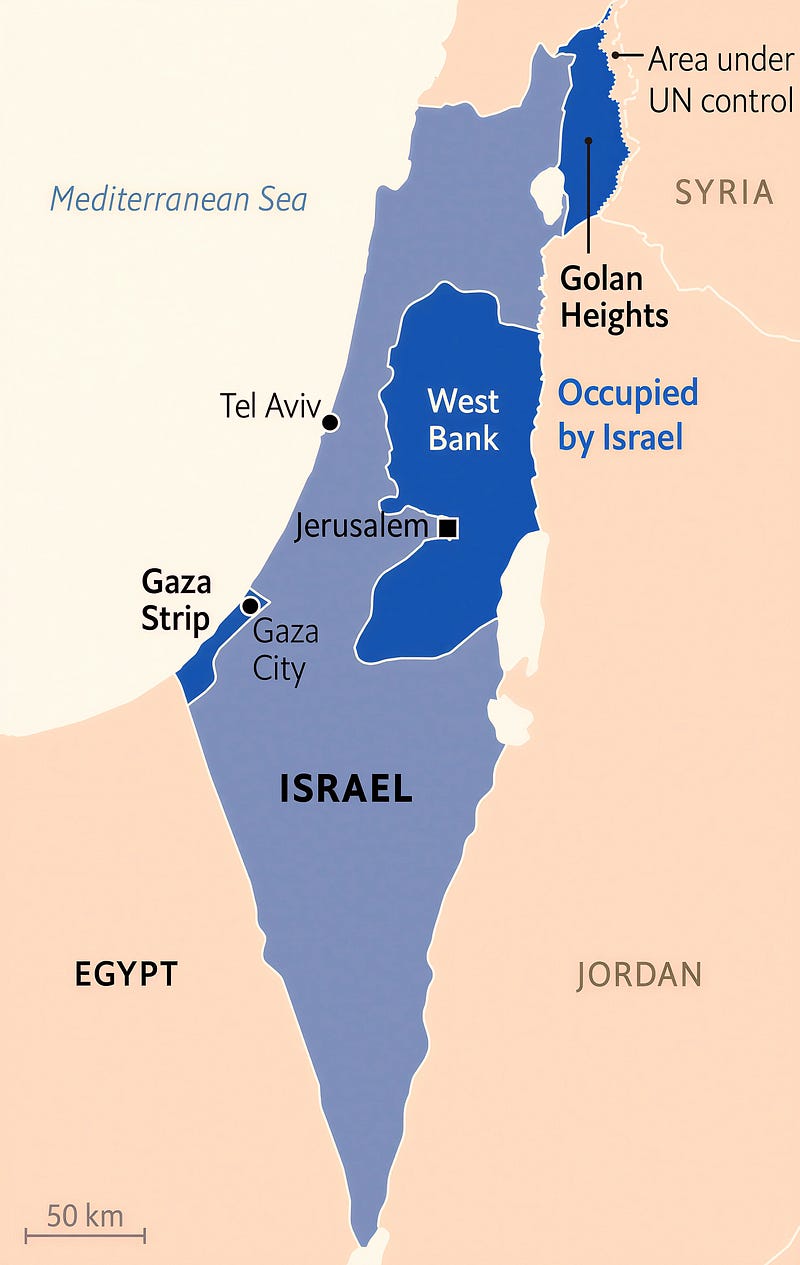
The challenge of counterinsurgency (COIN) has been a constant undercurrent in Israel’s security history, evolving significantly in the 21st century. Even before Israel’s founding, asymmetric conflicts set the stage — from Jewish paramilitary insurgencies against British rule in the 1930s–40s, to early statehood struggles against Palestinian fedayeen raids in the 1950s. Israel’s occupation of the West Bank and Gaza Strip in 1967 brought millions of Palestinians under its control, embedding the COIN problem at the heart of Israeli defense. These territories became the focal point of periodic uprisings, notably the First Intifada (1987–1993), a predominantly unarmed mass revolt that Israel met with military and police measures, and eventually a political process (the Oslo Accords). By the late 1990s, a fragile interim peace saw limited Palestinian self-governance under the Palestinian Authority (PA), but fundamental disputes remained unresolved. This backdrop set the stage for the far more violent Second Intifada that erupted in 2000, which transformed Israeli COIN practices in the new millennium.
Israel entered the 2000s grappling with the collapse of peace talks and the outbreak of the Second Intifada — a sustained Palestinian insurgency marked by suicide bombings, shootings, and ambushes that killed over a thousand Israelis (mostly civilians). In response, the Israel Defense Forces (IDF) shifted from the primarily riot-control posture of the First Intifada to a wartime counterinsurgency footing. High-casualty suicide attacks — such as the Passover 2002 bombing — catalyzed Israel’s launch of Operation Defensive Shield in April 2002, a massive military campaign to reoccupy West Bank cities and destroy insurgent networks. The IDF moved aggressively into urban areas like Nablus and Jenin, engaging in intense close-quarters battles with militants. Though costly, these operations reasserted Israeli control over insurgent strongholds and led to the capture or killing of many militant leaders. Israeli analysts later noted that after this campaign, terrorism originating from the West Bank dropped dramatically — from some 132 Israeli civilian deaths in a single month (March 2002) down to 11 for all of 2006, reflecting a clear, if hard-won, success in repressing the insurgency. The IDF’s ability to “go back in” and conduct continuous raids and arrests in West Bank territory was credited with breaking the back of the uprising by 2005, demonstrating that Israel’s conventional army could adapt to and eventually subdue a guerrilla campaign on its own soil. Indeed, slogans like “Let the IDF Win” — advocating unfettered military action — gained political traction as terror attacks receded following the IDF’s offensive.
While Israel scored tactical victories in the West Bank, it simultaneously faced a shifting COIN landscape in the Gaza Strip and beyond. In 2000, Israel ended its 18-year occupation of southern Lebanon, a retreat driven by attrition inflicted by Hezbollah’s persistent insurgency. Hezbollah’s perceived victory emboldened Palestinian militants, and some Israeli observers worried that “the cognizance of Israeli society” — its tolerance for prolonged guerrilla war — had limits, as shown in Lebanon. In Gaza, Israel unilaterally withdrew its forces and settlements in 2005, hoping to reduce friction. However, Gaza soon fell under the control of Hamas, an Islamist movement that rejected prior peace accords. The Israeli pullout did not end the conflict; instead, Gaza became a launchpad for new asymmetric threats, including rudimentary Qassam rockets fired into Israeli towns. Hamas’s 2006 electoral victory and violent ouster of the rival Fatah faction in 2007 left it solely in charge of Gaza, further complicating Israel’s defense calculations. Rather than a classical counterinsurgency of winning over a population, Israel now faced a quasi-state insurgent entity in Gaza that employed terrorism and guerrilla tactics while also governing a civilian populace. Israel responded with a strategy of deterrence and periodic military offensives, alongside a tight blockade to restrict Hamas’s access to weapons. Post-2000, the conflict thus bifurcated: in the West Bank, Israel worked with the Fatah-led PA to contain insurgents, whereas in Gaza, Hamas’s rule led to recurrent wars. Major operations in Gaza — Operation Cast Lead (2008–09), Pillar of Defense (2012), Protective Edge (2014), and later conflicts — saw the IDF fighting intense urban campaigns against Hamas fighters embedded in densely populated areas. These campaigns illustrated the complexities of Israeli COIN in the 21st century: they combined high-tech conventional firepower with the gritty realities of asymmetric warfare amid civilians, all under global scrutiny.
Foundational Principles and Assumptions in Israeli COIN Strategy
Underlying Israel’s counterinsurgency approach are certain core principles and assumptions, some borne out by experience and others challenged by it. A foundational premise is that the state must ensure security for its citizens above all else, even in protracted low-intensity conflict. Israel’s doctrine has traditionally emphasized taking the fight to the enemy to restore deterrence. In practice, this has meant that the IDF seeks to maintain control of the ground where insurgents operate and to deny them sanctuaries — a lesson relearned during the Second Intifada when the creation of no-go militant havens in West Bank cities was swiftly reversed by reoccupation. Israeli commanders argue that there is no substitute for direct control and intelligence dominance in insurgent hotspots, since precision raids and arrests require actionable on-the-ground intelligence. This assumption aligns with classical COIN theory that securing and patrolling territory is necessary to isolate insurgents. Indeed, former IDF generals have described six conditions for defeating insurgencies — including ground control, intelligence superiority, and cutting off external support — contending that, if met, a conventional army can beat a guerrilla movement. Israel’s experience seemingly validates some of these tenets: once the IDF re-established freedom of action in the West Bank and built an extensive human and signals intelligence network, it dramatically reduced terrorist attacks. Similarly, the construction of a vast separation barrier starting in 2002, though controversial, stemmed the infiltration of suicide bombers into Israel by physically isolating insurgents from their targets. These measures reflect an IDF bias toward security-first solutions — asserting that a vigorous military approach can “mow the grass” of terror and keep violence to a tolerable low level even absent a final political resolution.
At the same time, Israel’s COIN strategy has been shaped by assumptions that invite debate and reveal inconsistencies in application. One key assumption is that there is no viable partner for a hearts-and-minds campaign among a hostile population that fundamentally rejects Israeli rule. Unlike classic counterinsurgency models (e.g., the U.S. in Iraq or Britain in Malaya) that stress winning local support via reforms and development, Israel largely adopted an enemy-centric approach — focusing on defeating and deterring the insurgents rather than winning over Palestinian hearts. This stance is rooted in the belief that, as an occupying power in the Palestinian territories, Israel lacks legitimacy in the eyes of the local population; short of ending the occupation, no amount of economic improvement or community engagement would turn the populace in Israel’s favor. Instead, Israeli strategy assumed that deterrence through superior force would keep the insurgency at bay. The colloquial IDF notion of “mowing the grass” epitomizes this: accepting that periodic use of force to degrade militant capabilities is a grim maintenance task, not a one-time fix. Consequently, measures such as targeted killings, night raids, and punitive demolitions of terrorist suspects’ homes were employed to instill fear and disrupt militant operations, operating under the assumption that raising the costs for the insurgents will eventually break their will or capacity to fight. Maj.-Gen. Yaakov Amidror, reflecting an Israeli viewpoint, explicitly challenged the common idea that insurgents possess greater endurance, arguing “it has never been proven that terror organizations possess greater resilience than…democratic peoples”. This speaks to an assumption that Israeli society’s will to fight can outlast that of the insurgents — a direct counter to the notion that asymmetric wars inevitably favor the side with higher pain tolerance.
Yet these force-centric assumptions sometimes clash with political realities and ethical constraints, revealing inconsistencies. Israel’s insistence on a military “solution” to terror has not resolved the underlying conflict; it temporarily subdued violence while the ideological grievances driving the insurgency persist. Even Israeli strategists acknowledge that destroying the enemy’s capabilities doesn’t equal a decisive peace. A telling anecdote recounts a U.S. officer boasting to a North Vietnamese counterpart that American forces won every battle in Vietnam, only to be told, “that is correct, but why is it relevant?”. The lesson — acknowledged by Israeli analysts — is that military victory on the ground can be negated if the political context remains unaddressed. Israel’s 2002 victory over West Bank terror did not translate into a peace agreement; instead, it produced an uneasy calm that Israel viewed as a victory and Palestinians as a temporary defeat awaiting the next round. This raises an internal inconsistency: while Israel’s government declares security is a precondition for peace, its heavy-handed tactics may sow long-term resentment, arguably undermining the prospect of genuine reconciliation. The assumption that harsh measures deter violence can also backfire by fueling cycles of revenge. For instance, the policy of “targeted killing” — assassinating militant leaders — removed dangerous operatives but sometimes galvanized militants to retaliate or inspired recruits to their cause. In one early case, an Israeli assassination of a militia leader in 2002 shattered a ceasefire and triggered a wave of revenge attacks. Israeli planners assume that over time, decapitating leadership degrades insurgent capabilities and discourages volunteers, a calculus borne out by the steep drop in organized terror by 2005. However, critics point out a paradox: groups like Hamas or Islamic Jihad, though hurt by leadership losses, often managed to replace leaders and adapt, suggesting that the appeal of the insurgency is not easily extinguished by force alone. Biases also infuse the narrative on both sides — Israeli society tends to frame all Palestinian militancy as “terrorism” devoid of legitimate grievance, while Palestinian discourse often portrays all Israeli countermeasures as unjust oppression. These biases reinforce each side’s assumptions and can lead to mirror-imaging, where Israeli forces default to viewing any unrest as a nail to be hammered militarily, and insurgents interpret any Israeli easing of pressure as a victory for resistance. Thus, Israel’s foundational belief in the efficacy of military strength in COIN coexists with the unresolved inconsistency that true peace and security might remain elusive without addressing the insurgents’ political aims.
Biases and Inconsistencies Shaping COIN Narratives
The struggle over counterinsurgency in Israel is not only fought on the ground but also in the realm of narratives, where biases and competing interpretations color every aspect of the conflict. Israeli officials and many Western observers carry an inherent bias that views Israel’s actions as a legitimate exercise of self-defense against terrorism, whereas Palestinian violence is condemned as illegitimate extremism. This perspective is rooted in the genuine security threat Israeli civilians have faced from suicide bombings, rocket fire, and other attacks. Consequently, the Israeli narrative often emphasizes the moral and legal difference between a democratic state seeking to protect its citizens and non-state militant groups deliberately targeting civilians. Western allies, including the United States and much of Europe, frequently echo this view by upholding Israel’s “right to defend itself” and branding groups like Hamas or Hezbollah as terrorist organizations. The bias here lies not necessarily in recognizing Hamas’s brutality, which is amply documented, but in the relative discounting of Palestinian civilian suffering or political grievances. For example, many Western governments long saw Israel’s violence as “morally superior” to that of Hamas because Israel does not intend to kill civilians, whereas Hamas openly revels in indiscriminate terror. This framing can overlook the lived reality on the ground: to Palestinian civilians, the distinction matters little when Israeli airstrikes or shells kill dozens of noncombatants in the course of targeting militants. Indeed, critical voices argue that if Israel’s military actions in crowded Gaza or the West Bank are indistinguishable in their effects from Hamas’s violence, then the automatic moral high ground afforded to Israel is questionable. Such arguments challenge a bias in mainstream discourse that often grants Israel the benefit of the doubt regarding civilian casualties, even as Palestinian attacks are unequivocally condemned.
From the Palestinian and broader regional perspective, a very different narrative prevails, laden with its own biases and inconsistencies. Many Palestinians view their armed factions not as terrorists but as resistance fighters waging an anti-colonial struggle. In this narrative, Israel is cast as an occupying power enforcing an illegal and brutal military rule over Palestinian land. Historical memory runs deep — references to past Zionist militias labeled as “terrorists” by the British (such as Irgun or Lehi) are frequently raised to highlight perceived hypocrisy. The bias here romanticizes or at least legitimizes violence against Israeli soldiers and even civilians as part of a just resistance, glossing over the moral depravity of tactics like suicide bombings in pizzerias or the massacre of entire families in their homes. Hamas, for example, is often defended in regional discourse as a national liberation movement — pointing out that it is simultaneously a political party, a social service provider, and a guerrilla army. This multifaceted reality of Hamas is deliberately obscured when Israel and the West use the simplistic label “terrorist organization”. To Palestinians, branding Hamas as pure terrorists is seen as a way for Israel to delegitimize any form of armed resistance and to avoid addressing the root cause — the occupation. This perspective, however, contains its own contradictions: while insisting on the legitimacy of resistance, it often downplays or excuses actions of armed groups that flagrantly violate international humanitarian norms (like deliberate attacks on Israeli noncombatants). There is also an inconsistency in appeals to international law — Palestinians frequently invoke the law of occupation and human rights, correctly noting that international law enshrines the right of an occupied people to resist and condemns Israeli practices like settlement construction and collective punishment. Yet international law equally forbids targeting civilians, something groups like Hamas routinely do. Each side, in essence, highlights the legal principles that favor its cause and minimizes those that constrain its own methods.
These dueling biases are compounded by the involvement of international actors and media, which further shape COIN narratives. Global human rights organizations and the United Nations often criticize Israeli operations as disproportionate or unlawful, citing high Palestinian civilian tolls and measures like indefinite detentions or torture allegations. Israel, in turn, accuses these bodies of bias, terming such critiques “lawfare” designed to delegitimize its self-defense. Israeli officials note that their military is subject to judicial review and that practices like targeted killings have been vetted by Israel’s Supreme Court within a legal framework (as in the 2006 landmark ruling). Indeed, Israel touts its internal investigations of military misconduct and points to its adherence to certain constraints (for example, warning civilians before airstrikes in some cases). However, a bias in the Israeli narrative is the tendency to treat any external criticism as politically motivated and to assume that no one else can understand the imperatives Israel faces. This defensiveness sometimes leads to a siege mentality in Israeli society regarding COIN: the belief that the world unfairly holds Israel to higher standards, while Israel’s enemies get away with murder. On the flip side, a bias in some international circles is to view the Israeli-Palestinian conflict through a reductive lens of David vs. Goliath, where Palestinians are always victims and Israelis aggressors — which neglects the very real and lethal threats Israeli civilians have endured. These biases feed into inconsistencies such as the international community’s stance of isolating Hamas politically (due to its violence and extremist charter) while simultaneously demanding Israel negotiate with it or at least moderate its tactics dealing with Hamas. As one analysis pointed out, “the international community has tilted the odds against peace by sanctioning Hamas but not the Israeli state despite the fact that their use of violence is comparable in key regards”. This asymmetry — treating a state and a non-state actor by different standards — may be justified in law (since states have the right to maintain order, and insurgents are not exempt from law either). But it breeds a perception of double standards that militants exploit. In sum, deeply entrenched biases on all sides distort the narrative around Israeli COIN: Israelis emphasize an existential fight against terror, Palestinians emphasize an anti-occupation struggle, and external players oscillate between these frames, often inconsistently. Recognizing these biases is crucial for understanding why each side interprets the same events in starkly different ways — and why bridging the narrative gap is as formidable as ending the violence itself.
Competing Perspectives on Counterinsurgency in Israel
Israel’s counterinsurgency campaigns have elicited a wide spectrum of perspectives and counterarguments, reflecting the complexity and moral ambiguity of the conflict. From the Israeli military and government perspective, the dominant view is pragmatic and security-driven: insurgency is seen as a problem to be crushed or contained through force and intelligence, with minimal concessions until violence subsides. In this view, the Second Intifada proved that a democratic state can, through relentless pressure, defeat a terror campaign — a perspective encapsulated by Israel’s proud statistics of terror attacks plummeting after its 2002 offensive. Israeli officials often argue that their COIN tactics, while harsh, have been refined to minimize unnecessary harm. For example, targeted killings are presented as a lesser evil compared to full-scale wars, since assassinating a known terrorist leader is portrayed as more precise than letting suicide bombers run rampant. The Israeli public’s perspective largely aligns with this hardline but defensive posture — years of buses blown apart by bombs and rockets raining on border towns have convinced many Israelis that they face implacable foes, against whom any show of weakness invites more terror. Hence, there is broad domestic support for measures like the security barrier, extensive checkpoints, and preemptive arrests as unfortunate but necessary tools. Even the long-running blockade of Gaza, despite humanitarian criticisms, is defended in Israel as a non-violent means of constraining Hamas’s war machine. A retired Israeli general, articulating this perspective, wrote that a key lesson is the need for “continuous effort” and “determination” to wear down the insurgents, arguing that only when the IDF was unleashed did terrorism truly recede. This camp often cites global precedents (the defeat of communist guerrillas in Greece in the 1940s, or Britain’s success in Malaya) as proof that insurgencies can be quelled by force if a state is willing to stay the course. In their eyes, calls for political compromise before security is achieved are misguided — first, the terrorism must be stamped out or at least throttled down, then diplomatic options can be explored. This Israeli stance faces internal counterarguments as well: a minority of ex-security officials and activists argue that endless force without a political horizon is futile. They warn that Israel’s short-term victories might be pyrrhic, gained at the cost of international isolation and the corrosion of Israel’s own democratic values. Nonetheless, within Israel, the consensus leans toward vindicating the efficacy of its COIN: the fact that for a period in the late 2000s, Palestinian terror attacks dropped to near-zero inside Israel is held up as proof that tough measures — from nightly arrests to the fence — worked.
In stark contrast, Palestinian and Arab-world perspectives vehemently reject the Israeli narrative and offer a counter-narrative of resistance and rights. From the Palestinian insurgent viewpoint (embraced by groups like Hamas, Islamic Jihad, and even many in Fatah historically), Israeli forces are an illegitimate occupier in Palestinian lands, and thus fighting them is not just tactical but moral. They cite international law’s decolonization ethos, claiming the right to resist occupation “by all available means,” a phrase used in Arab diplomatic fora. In this perspective, Israel’s COIN campaigns are cast as state terrorism or even attempted subjugation of an entire people. The high Palestinian civilian casualties in operations like Cast Lead or Protective Edge are pointed to as evidence that Israel’s real aim is to break Palestinian society’s will to resist through collective punishment. A common refrain in regional media is that “Israel only understands the language of force”, flipping the Israeli trope on its head — meaning Palestinians believe that only armed struggle, not negotiations, has ever extracted concessions from Israel (for instance, Hezbollah’s armed campaign is credited with ending the occupation of southern Lebanon, and Gaza rocket fire is claimed to occasionally win minor Israeli easing of blockades). However, competing views exist even among Palestinians. The Palestinian Authority’s leadership in the West Bank, for example, has officially renounced armed struggle and cooperated with Israel on security, arguing that violent intifadas devastated Palestinian society and yielded little but death. This PA perspective posits that institution-building and diplomacy are the wiser path — a stance vehemently rejected by Hamas and many grassroots activists as capitulation. Thus, within the Palestinian camp, one finds a debate between those who see the second intifada’s militarization as a catastrophic mistake and those who view it as a proud, necessary resistance despite the costs. Regionally, much of Arab public opinion historically cheered Palestinian fighters as heroes, but some Arab governments (particularly authoritarian regimes in Egypt, Jordan, and the Gulf) quietly prefer a contained conflict and have little love for Islamist movements like Hamas. These governments may tacitly support Israeli COIN efforts against groups they themselves consider threats (Egypt, for instance, has its own troubles with jihadists and maintains a blockade on Gaza in parallel with Israel’s). Hence, there is a geopolitical counterpoint to the public narrative: Arab states’ leaders might blame Israel in speeches, but behind closed doors, some share the goal of neutralizing radical insurgencies that could spill over into their domains.
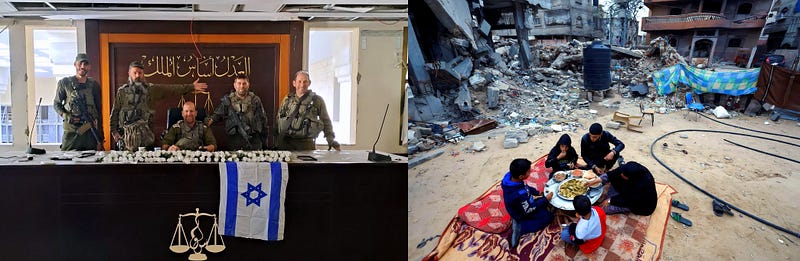
From the standpoint of international law and human rights observers, the Israeli-Palestinian COIN duel is viewed through the prism of legal norms, with plenty of criticism to go around. One perspective emphasizes that Israel, as the occupying power in the West Bank and (de facto) besieger of Gaza, holds the bulk of legal and moral responsibility. Bodies like the International Court of Justice have affirmed that elements of Israel’s COIN regime — such as building the West Bank separation barrier on occupied land and expanding settlements — violate international law. The laws-of-war perspective acknowledges Israel’s right to counter armed attacks, but insists it must strictly adhere to distinctions between combatants and civilians and to the principle of proportionality in all operations. From this angle, operations resulting in large civilian tolls (for example, over 1,400 Palestinians killed in Gaza 2008–09, including hundreds of noncombatants) are condemned as disproportionate and possibly war crimes. Israel’s argument that militants hide among civilians and thus bear blame for collateral damage is met with the counterargument that asymmetric warfare does not absolve Israel of its obligations as a powerful state actor under international humanitarian law. Critics point out patterns: for instance, in repeated Gaza wars, Israeli strikes have hit homes, schools, and hospitals, which human rights groups say indicates at best reckless targeting and at worst a punitive strategy to pressure the civilian population — both forbidden under the Geneva Conventions. On the other hand, some legal scholars provide a counter-perspective defending Israel’s actions within a law-of-war framework. They note that Israel has developed elaborate legal protocols, including military lawyers advising commanders and Supreme Court oversight of certain policies. The Israeli High Court’s targeted killings case (2006) exemplifies this nuanced approach. The court did not ban targeted killings outright but held that each strike must meet the criteria of direct participation by the target in hostilities and proportionality in any civilian harm. This ruling effectively recognized a middle status for insurgents (“civilians taking direct part in hostilities” who can be lawfully targeted during such participation) and insisted on after-the-fact investigations of strikes. Pro-Israel legal voices argue that this shows Israel tries to balance security and law, whereas Hamas flaunts the law by targeting civilians outright and using its own people as human shields. These debates often circle back to fundamental disagreements over definitions — one side’s “terrorist” is the other’s “freedom fighter,” and one side’s “security operation” is the other’s “massacre.” A recent think-tank analysis frankly posed the ethical quandary: “by what standard is the violence that Hamas uses against Israel different from the violence that the Israeli state uses against Hamas?”. It examined legal, political, and operational standards and provocatively concluded that, stripped of labels, there is a troubling symmetry in indiscriminate tactics, even if one is a state and the other a non-state actor. Such conclusions are hotly contested by Israel and its allies, yet they resonate in global forums and drive calls for accountability on both sides.
Finally, Western military strategists and scholars offer their own analytical perspectives, often comparing Israel’s COIN experience with other conflicts. Some American and British officers laud certain Israeli innovations — for example, the IDF’s battle-tested methods in urban warfare, its intelligence fusion, and technologies like drones and tunnel detection, all seen as valuable for NATO armies grappling with insurgencies. The IDF’s ability to quickly adapt after early failures in the intifada, and later to counter rocket and tunnel threats, is frequently cited in military journals. However, Western COIN doctrine (influenced by experiences in Iraq and Afghanistan) also provides a counterpoint: it stresses “winning hearts and minds”, population security, and the eventual need for a political settlement. From that viewpoint, Israel’s heavy kinetic approach might achieve quiet in the short term but fails the long-term test, as it does not address Palestinian aspirations and can even strengthen militants’ recruitment narratives. U.S. Army analyses warn against blindly emulating Israel because the contexts differ — Israel is fighting in its backyard and can sustain decades-long containment, whereas an expeditionary force might not have that luxury. Moreover, some Western strategists argue that Israel’s approach is feasible largely because of Israel’s unique strategic depth (or lack thereof) and domestic political realities: a small democracy can’t accept frequent mass-casualty attacks, so it responds with overwhelming force; but this response, if applied by a great power in foreign lands, could be counterproductive by alienating the local population. These diverse perspectives — Israeli hard security views, Palestinian resistance ideology, international legal/humanitarian critiques, and Western strategic analysis — all intersect and clash when judging Israel’s counterinsurgency record. The truth of the matter, as usual, lies somewhere in between: Israel’s policies have indeed prevented further devastating attacks on its civilians, but they have not extinguished the Palestinians’ will to resist and have engendered profound moral dilemmas, leaving the outcome of the conflict still unresolved and hotly debated.
Broader Implications and Significance of Israel’s COIN Experience
The protracted struggle of counterinsurgency in the defense of Israel carries broader implications that extend well beyond the local arena, influencing military theory, international law, ethics, and geopolitics. In the realm of military strategy and doctrine, Israel’s experience stands as a prominent case study in modern asymmetric warfare. It has demonstrated that advanced militaries can adapt and endure in a long fight against irregular foes, but also highlighted the limits of military power in achieving political solutions. The apparent Israeli success in crushing the Second Intifada by force gave hope to those who argued that “unwinnable” insurgencies could indeed be defeated militarily. Counterinsurgency experts took note: lessons from Israeli operations in dense urban refugee camps were later studied by U.S. forces facing similar challenges in Iraqi and Afghan cities. The IDF’s emphasis on intelligence-driven targeted operations and its integration of technology (such as extensive drone surveillance and high-precision weaponry) have influenced COIN best practices globally. For instance, techniques like “roof-knocking” (firing a warning munition before a larger strike) to reduce civilian harm, or the use of concrete barricades to partition conflict zones, have been emulated or at least examined by other armies. However, Israel’s COIN record also serves as a cautionary tale — a reminder that tactical and operational success does not automatically yield strategic victory. The Israeli case underscores a core principle of insurgency warfare: military actions can only manage a conflict, not resolve it, absent a political settlement. This insight, acknowledged even by Israeli strategists, has informed a generation of Western military thinking. It is often cited that after suppressing violence, Israel was still unable to translate that into a peace agreement, illustrating how insurgencies can morph and re-emerge if root causes remain. In fact, the IDF itself internalized this to some degree; while maintaining readiness to “mow the grass” indefinitely, many in Israel’s security establishment quietly recognize that they are buying time rather than eliminating the threat outright. This realization has contributed to global COIN doctrine, an emphasis on the endgame — the idea that a military campaign must be paired with a viable political roadmap, lest it become a Sisyphean effort.
Israel’s COIN campaigns have also significantly impacted the legal and ethical discourse on asymmetrical warfare, setting precedents — some seen as dangerous erosions of norms, others as innovative adaptations of law. For example, Israel’s legal framing of its conflict with terrorist organizations as an “armed conflict short of war” blurs traditional categories, allowing it to apply looser rules of engagement than peacetime policing but without formally acknowledging combatant rights to its enemies. The Israeli High Court’s nuanced rulings — such as on targeted killings or the prohibition of torture — have been analyzed in international forums for their attempt to balance state security with humanitarian principles. The 2006 targeted killings judgment, which held that each case must be examined individually and adhere to proportionality and distinction, is one such example often cited in debates on drone strikes and assassination policies. It effectively prefigured the kind of legal justifications the United States and others would later use in the global war on terror for similar tactics. Yet, critics worry that Israel’s practices have pushed the envelope of acceptable conduct. The frequent civilian casualties and devastation in Gaza have led to accusations that the laws of war are being systematically circumvented or reinterpreted to permit excessive force. When inquiries like the UN’s Goldstone Commission (after the 2009 Gaza war) allege that both Israel and Hamas may have committed war crimes, it forces the international community to grapple with how to enforce accountability in asymmetric conflicts. Israel’s sometimes dismissive response to external criticism — conducting its own investigations with limited prosecutions — has fed into a broader trend of powerful states resisting international oversight in COIN operations. This dynamic poses a challenge to the international humanitarian law regime: if the line is continually pushed in the Israeli-Palestinian context, will norms erode globally? On the flip side, Israel argues that it has improved its conduct over time under intense scrutiny. By 2014, the IDF claimed to take unprecedented steps to spare civilians in Gaza, to the point of aborting missions if the collateral damage would be too high. The development and deployment of the Iron Dome missile defense system also had an ethical dimension — by intercepting most of Hamas’s rockets, Iron Dome reduced Israeli pressure to respond with maximal force, arguably saving lives on both sides by preventing escalation. Thus, the Israeli case contributes to evolving discussions on what measures are morally obligatory or permissible for a state fighting substate militants who embed themselves among civilians.
Geopolitically, Israel’s counterinsurgency warfare has been a fulcrum around which Middle East politics and alliances have often turned. The intractability of the conflict and images of asymmetrical suffering have fueled anti-Israel sentiment and radicalization across the region — insurgent groups from Iraq to Yemen have invoked Palestine as a rallying cry. Iran, in particular, has leveraged the Palestinian struggle to justify its support for proxy militias like Hezbollah and Hamas, tying Israel down in a constant state of vigilance.
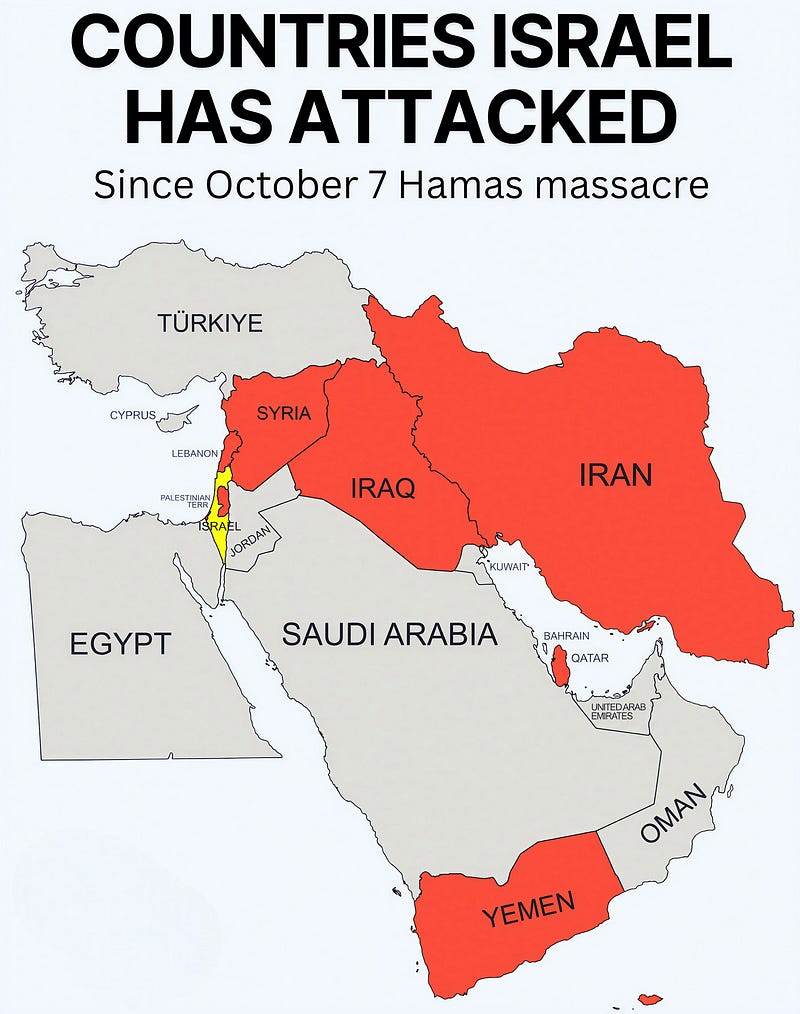
Israel’s COIN, thus, is not an isolated national issue; it is interwoven with regional power plays, from Tehran’s ambitions to the stability of neighboring Arab regimes. At times, flare-ups in Gaza or the West Bank have had spillover effects — such as the 2021 Gaza war contributing to communal unrest within Israel and riots in mixed cities, or the 2023 Hamas-Israel war threatening to draw in Hezbollah and destabilize the Lebanon-Israel front. Moreover, Israel’s dealings with the Palestinian insurgency have influenced its relations with global powers. The United States, Israel’s chief ally, often walks a diplomatic tightrope: it supports Israel’s security measures but worries about regional blowback and damage to U.S. standing in the Muslim world. Over the years, American diplomacy in the Middle East — from the Bush to Obama administrations and beyond — has been consumed with trying to manage or resolve the Israeli-Palestinian conflict, understanding that it remains a potent source of grievance and instability. Notably, as some Arab states like the UAE and Bahrain moved to normalize relations with Israel via the Abraham Accords (2020), they did so partly betting that Israel’s containment of the Palestinian issue was sustainable. However, major escalations in violence (such as the events of October 2023, when Hamas’s unprecedented assault and Israel’s massive response plunged the region into crisis) demonstrate that the conflict can erupt and command the world’s attention at any time. Each such episode forces a recalculation of geopolitical stances: Arab governments that aligned with Israel come under pressure from their own publics, Western countries face polarizing debates about support vs. humanitarian concerns, and global rivalries (for instance, U.S. vs. Russia or China) play out in the UN Security Council over this issue. In essence, Israel’s ongoing COIN struggle has globalized implications — it serves as a barometer of how the international community balances the fight against terrorism with the protection of human rights. It also shapes military cooperation: Israel has emerged as a leading exporter of counterterrorism know-how and technology, from surveillance equipment to cyber capabilities, effectively turning its long COIN experience into a security commodity sought by others (a phenomenon some call the “Israelization” of counterterror tactics abroad).
Finally, the broader meaning of Israel’s COIN travails touches on philosophical questions of war, peace, and the cycle of violence. It raises the question: can a conflict rooted in national and religious identity — essentially a struggle over the same land — ever be truly solved by force? Israel’s story shows both the possibilities and limitations of armed suppression. On one hand, the country is still standing strong; despite being a tiny state surrounded by adversaries and weathering repeated intifadas and wars, Israel has not been worn down into defeat — arguably reaffirming that a determined democracy can prove more resilient than the guerrillas it faces. On the other hand, Israel has not achieved victory in the sense of a peace that renders counterinsurgency unnecessary. The conflict persists in a kind of painful equilibrium. As one analyst put it, what exists now is “relative tranquility and prosperity” for Israel proper, which indeed marks a failure of the Palestinian armed struggle to achieve its aims. But that status quo is acceptable to Israel only because the costs of keeping a lid on insurgency (periodic flare-ups, international opprobrium, moral quandaries) are deemed bearable compared to the existential cost of losing. It is a sobering model for other conflicts: a nation can, if willing to bear the burden indefinitely, manage an insurgency through containment and deterrence — yet the deeper conflict of aspirations remains like a smoldering ember, always threatening to ignite anew.
Real-World Applications and Case Studies in Israeli COIN
Many of Israel’s theoretical approaches to counterinsurgency have been tested in real-world operations, offering concrete illustrations of COIN principles in action. One key example is Israel’s use of targeted killings against militant leaders, a tactic that has become emblematic of its precision-centered approach. During the Second Intifada, the IDF and Israel’s security services systematically hunted the engineers of suicide bombings and leaders of groups like Hamas’s military wing. High-profile strikes — from the helicopter-fired missile that killed Hamas founder Sheikh Ahmed Yassin in 2004 to the drone-guided bomb that killed his successor Abdel Aziz al-Rantisi, weeks later — decapitated the top leadership of Hamas in Gaza. Israeli intelligence assessed that these eliminations sowed confusion and degraded militants’ capability to orchestrate attacks. Notably, Israel’s preference whenever possible was to capture terrorist suspects alive (through risky commando raids in casbahs and refugee camps), as this yields interrogations and further intelligence. But when captures were deemed too dangerous, Israel turned to lethal strikes. Over the decades, Israeli units honed this into an art form — from disguising special forces as locals to snatch targets in the West Bank, to using small armed drones for real-time surveillance and strike combos. The real-world effectiveness of this decapitation strategy is evident in how terrorist infrastructures in the West Bank largely collapsed by 2005 once their leaders were imprisoned or eliminated. Academic studies found that eliminating the most skilled and dangerous terrorists can greatly disrupt an organization’s operations. Indeed, Israeli counterterrorism advisors highlight that not every militant needs to be killed or caught; if the pace of interdiction is high enough, the group loses its critical mass of expertise and cannot sustain complex attacks. However, real-world applications also revealed a downside: some killings produced collateral damage that undermined Israel’s position. A notorious instance was the 2002 airstrike on Hamas commander Salah Shehadeh in Gaza — the one-ton bomb dropped on his hideout also killed at least a dozen civilians, including children, provoking international outrage and debate within Israel about operational overreach. The legal framework crafted by Israel’s High Court for such strikes — requiring careful verification that the target is a combatant and that harm to civilians is proportional — was in part a response to such incidents. In practice, Israel claims it has aborted missions when civilians were detected too close to a target, illustrating an ongoing tension in real-time operations between the intelligence picture and the imperative to strike before a terrorist can act.
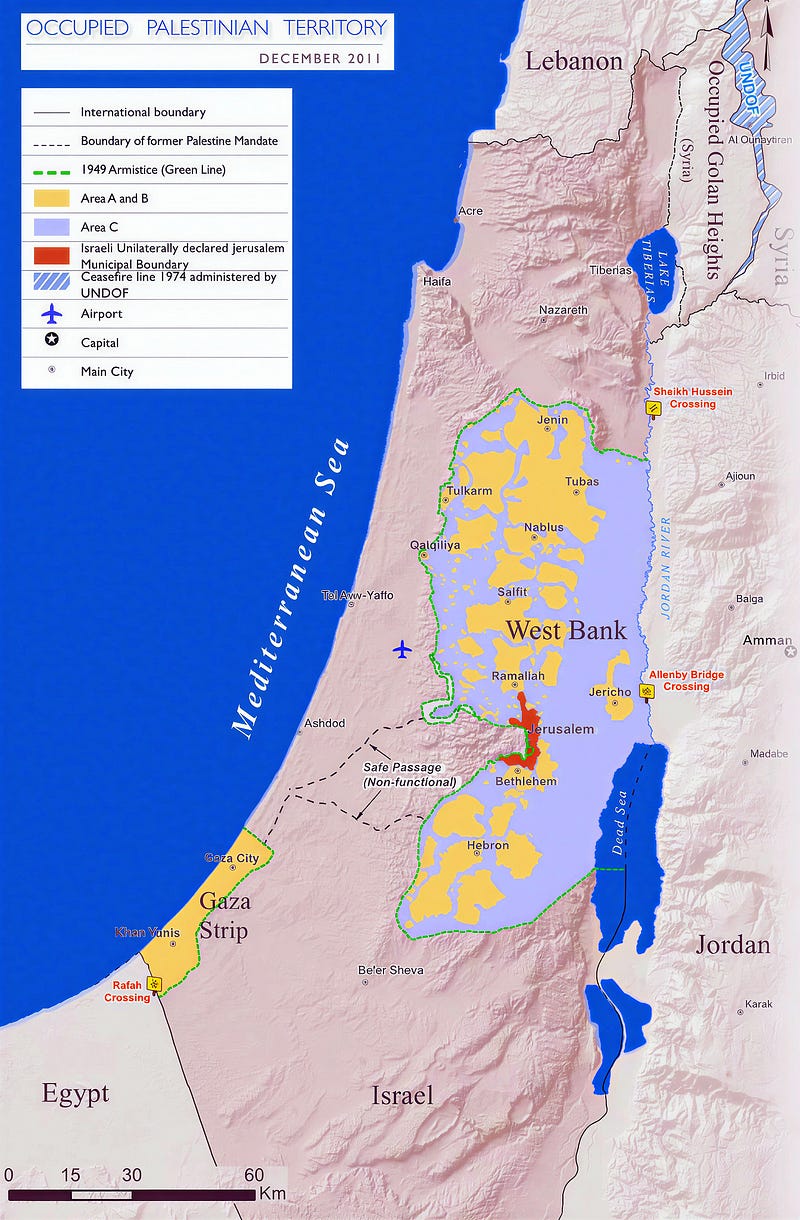
Another real-world COIN measure is the deployment of defensive barriers and technology to contain insurgent movement. The most famous case is the West Bank separation barrier, a sprawling network of fences, walls, and surveillance systems. When Israel began constructing this barrier in 2002, it was a physical application of the principle “isolating the insurgency from cross-border reinforcement”. In effect, Israel treated the line between the West Bank and Israel as a frontline in an internal war, using a barrier to stop suicide bombers who were then slipping through unmarked routes. Within a few years, suicide attacks inside Israel plunged — Israeli officials credit the wall/fence with a major role in this success (alongside IDF offensive operations). The route of the barrier, snaking inside the West Bank to encircle settlement blocs, drew legal challenges. Nonetheless, Israeli courts mostly permitted its construction while ordering a few reroutings to lessen the humanitarian impact. This shows how the COIN strategy moved beyond raids and into the realm of engineering and geography as tools of war. In Gaza too, Israel invested in cutting-edge solutions: a high-tech border fence and underground wall were built to block infiltration tunnels, especially after Hamas militants repeatedly burrowed under the border to carry out ambushes and kidnappings. By 2020, Israel unveiled a subterranean barrier with sensors to detect digging — a novel COIN application of technology to counter an adaptive insurgent tactic. These defensive measures had practical results (the incidence of deadly tunnel infiltrations dropped to zero after the barrier’s completion), but they also symbolized a strategic choice: Israel was effectively separating from and containing a hostile population rather than trying to win it over. The barrier strategy has been called “fortress Israel,” suggesting security behind walls at the cost of deeper enmity on the other side.
Israel’s recurring military operations in Gaza offer a trove of examples of theory meeting practice in COIN, especially in the post-2000 period. Take Operation Cast Lead (Dec 2008 — Jan 2009): faced with incessant rocket fire from Hamas-controlled Gaza, Israel launched a large-scale offensive combining aerial bombardment and a limited ground incursion. The IDF’s goals were to drastically reduce Hamas’s ability to fire rockets and to reestablish deterrence — essentially punitive and preventive aims rather than conquering the territory. In practice, Cast Lead dealt a heavy blow to Hamas’s arsenal and infrastructure, but the images of widespread destruction and some 1,300 Palestinian deaths (per UN figures) also spurred global condemnation. One outcome was the Goldstone Report, whose war crimes allegations against Israel (and Hamas) became a diplomatic battlefield. Israel responded by refining its operational techniques in subsequent conflicts. By Operation Pillar of Defense (November 2012), Israel relied exclusively on stand-off fire: over eight days, it carried out pinpoint airstrikes, including the targeted killing of Hamas’s military chief, Ahmed Jabari, that initiated the conflict. In that operation, Israel notably refrained from a ground invasion, in part due to improved defensive measures like Iron Dome, which successfully intercepted many Gazan rockets (including the first rockets aimed at Tel Aviv in decades). The interplay of offense and defense here illustrates a real-world COIN adaptation — by neutralizing much of the insurgents’ threat through technology (Iron Dome), Israel could limit its own use of force, avoiding deeper quagmires in Gaza’s streets. By the time of Operation Protective Edge (2014), Israel still ended up sending ground troops into Gaza, but with very specific objectives: namely, to locate and destroy cross-border tunnels that Hamas fighters could use to infiltrate Israel. The IDF’s experiences in that conflict underscore the brutal nature of urban counterinsurgency. Israeli units fought block by block in neighborhoods like Shujaiya, encountering booby traps and ambushes. To minimize troop casualties, Israel employed massive firepower — artillery, tank shells, air support — causing extensive damage. This again achieved a short-term goal (dozens of tunnels were demolished, and Hamas’s rocket stock was severely depleted), but at the cost of international outrage due to high civilian casualties and entire districts reduced to ruins. Israeli officials, after 2014, pointed to what they saw as an operational success: for several years, Hamas was deterred and Gaza remained relatively quiet, proving the concept of periodic large operations to “reset” the insurgent threat. Critics retort that this is a tragic cycle — indeed, by 2021, conflict flared again, showing Hamas had rebuilt arsenals and dug new tunnels despite the previous pounding.
The legal battles surrounding COIN have also had concrete applications in Israel’s policies. For instance, Israel’s Supreme Court in 1999 banned certain violent interrogation methods (like shaking, stress positions, etc.) that had been used on Palestinian detainees, a decision with immediate operational effect: the Shin Bet (Israel’s internal security agency) had to adjust its tactics for extracting information, potentially slowing the intelligence pipeline during the intifada. Similarly, the Court’s stance on house demolitions as punishment for families of terrorists evolved — initially green-lighted as a deterrent, this policy was paused in 2005 amid doubts about its effectiveness and morality, only to be resumed later when terror waves resurfaced. Each such judicial intervention shows theory — the rule of law — impacting practice on the ground. In some cases, the military found workarounds or pushed back. For example, after the Court outlawed the use of Palestinian civilians as human shields during arrest operations in 2005, the IDF increased its reliance on robots or dogs to scout buildings, trying to comply while still protecting soldiers. This adaptation highlights how Israel’s COIN is not just a field exercise but also a constant negotiation with legal and ethical oversight.
Real-world applications also extend to cooperative and political measures within COIN. A noteworthy case is the security coordination between Israel and the Palestinian Authority in the West Bank. After 2007, when Hamas seized Gaza, the PA under President Mahmoud Abbas had strong incentives to crack down on Hamas and other militants in the West Bank — both to prevent a similar takeover and to prove to the world that Palestinians could police themselves responsibly. The United States helped train PA security forces (the “Dayton mission”), resulting in improved capabilities. Israel took advantage by outsourcing some day-to-day counterinsurgency tasks to these Palestinian forces, who conducted arrests of Hamas members and quelled unrest in PA-run cities. This cooperation, while quietly effective in keeping a lid on violence, is deeply controversial in Palestinian society (where it’s derided as collaborating with the occupier). But it demonstrates a COIN principle in action: using local forces who have better knowledge and potentially more legitimacy than foreign troops. By leveraging PA forces, Israel could reduce its footprint and thus friction among West Bank civilians — an example of indirect counterinsurgency. However, this model rests on a precarious political foundation. Should the PA weaken or abandon cooperation (as has threatened to happen when peace talks fail or when Israeli raids embarrass the PA), Israel might again face the full burden of controlling West Bank cities alone, with all the attendant risks of higher violence.
Most recently, real-world events have tested Israel’s COIN posture in unprecedented ways. The Hamas surprise offensive of October 7, 2023, in which militants breached the Gaza border, attacked Israeli communities, and killed over 1,200 people, shocked Israel and led to a full-scale war.
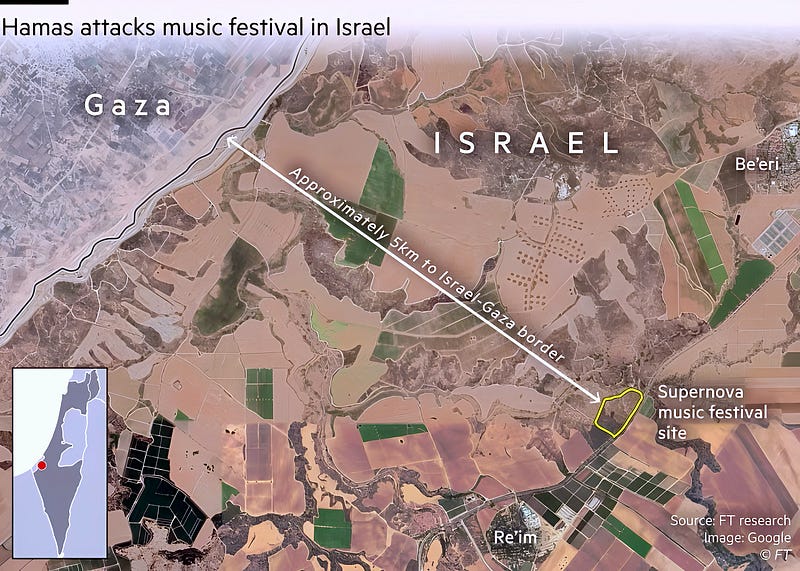
This event had a dual significance: first, it exposed lapses in Israel’s intelligence and the limitations of a strategy that focused on containing Gaza rather than neutralizing Hamas’s intent. Second, it forced Israel into what could be described as an extreme counterinsurgency-cum-conventional war, as the IDF invaded Gaza for the first time since 2005 to dismantle Hamas’s military infrastructure. The aftermath saw Israel reoccupying parts of Gaza amid fierce urban combat, in essence reversing years of “hands-off” containment policy. While this goes beyond typical COIN into outright war, Israel framed it as the ultimate counterinsurgency campaign — to once and for all eliminate Hamas’s capacity to threaten Israel’s populace. The humanitarian and geopolitical fallout of this approach is still unfolding, but it starkly illustrates the endpoint of a long spectrum of COIN escalation. By early 2025, as one analysis noted, Israeli forces were also intensifying operations in the West Bank (dubbed “Operation Iron Wall” by Israel’s defense minister) using lessons “learned in Gaza,” including heavier firepower and less tolerance for armed pockets in refugee camps. This suggested that Israel’s COIN doctrine had shifted towards a more offensive stance everywhere, emboldened by a sense that the international community would not restrain its hand even if civilian casualties were high. The name “Iron Wall” tellingly harked back to early Zionist thinking (Zeev Jabotinsky’s 1923 essay advocating an iron wall of Jewish defense until Arabs acquiesce). In practice, it meant major raids in places like Jenin camp with drone strikes and armored units — tactics once confined to Gaza now applied in the West Bank. The results have been tactically effective in the short term (arrests of wanted men, weapons seized), but at the cost of further eroding the PA’s authority and stirring anger among Palestinians.
In sum, Israel’s counterinsurgency warfare has been a laboratory of real-world applications — some innovative and successful, others controversial or counterproductive. From surgical strikes to separation barriers, from legal petitions to massive military incursions, Israel has tried virtually every tool in the COIN toolbox. Each case study — be it the quieting of the Second Intifada, the cyclical Gaza wars, or the tenuous calm via PA partnership — provides lessons for scholars and soldiers alike. These lessons underscore that counterinsurgency is a multi-dimensional struggle: military might can deliver periods of calm and disrupt insurgent capabilities, but lasting peace and security remain elusive without parallel progress on the political front and respect for the people caught in the crossfire. Israel’s ongoing experience thus remains a masterclass in the promise and pitfalls of counterinsurgency in the modern age.