Kings of the Blue: The Allure of Amberjack
The amberjack embodies strength and adaptability, linking wild migration to culinary tradition. Choosing sustainably sourced Seriola protects both the species and the coastal cultures it supports, reminding us that our seafood choices echo far beyond the shore.
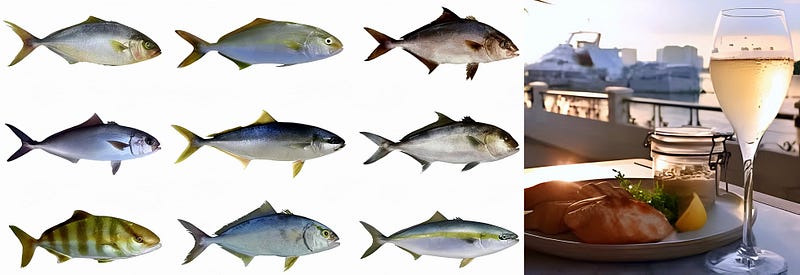
Introduction
In the restless waters of the Atlantic, Pacific, and Indian Oceans swims a fish that commands both the respect of anglers and the admiration of chefs: the amberjack. Sleek, powerful, and shimmering with hues of silver and gold, these predators represent more than just a prize on the end of a line. They embody the delicate balance between oceanic ecology, global trade, and culinary tradition. The amberjack (genus Seriola) is a name spoken with reverence in fishing circles, whispered with excitement in sushi bars, and increasingly discussed in debates on sustainable seafood.
Taxonomy
The amberjack belongs to the family Carangidae, a group that also includes trevallies and pompanos. Within the genus Seriola, notable edible species include the greater amberjack (Seriola dumerili), the lesser amberjack (Seriola fasciata), the almaco jack (Seriola rivoliana), and the yellowtail amberjack (Seriola lalandi), often simply called yellowtail in Japan. These fish go by a variety of regional names: Japanese buri, Hawaiian kahala, or simply “AJ” among American sport fishers. Despite the variety, they share a lineage that blends athletic power with culinary refinement.
Biology
Amberjacks are muscular pelagic predators, torpedo-shaped for speed. The greater amberjack can grow to lengths of 6.6 ft (2 m) and weigh up to 176 lb (80 kg), though most catches fall far below that colossal mark. Their streamlined bodies, deeply forked tails, and keen eyesight make them expert hunters of squid, mackerel, and sardines. They are long-lived — greater amberjacks can reach 17 years — and sexually mature relatively late, making them especially vulnerable to overfishing.
Ecology
These fish are found in temperate and subtropical seas worldwide, roaming offshore reefs, wrecks, and deep ledges. As apex mid-level predators, they help regulate populations of smaller fish, keeping ecosystems balanced. Seasonal migrations bring them closer to shore, where they encounter both commercial fleets and recreational anglers. Yet, heavy demand has placed pressure on wild populations. Greater amberjack in the Atlantic, for example, are currently managed through strict catch limits, while farmed yellowtail (Seriola quinqueradiata) dominates Japanese aquaculture. Sustainability hinges on responsible practices, from line-caught fisheries to carefully regulated mariculture.

Uses
Amberjacks have economic significance across continents. The yellowtail in particular supports an enormous aquaculture industry in Japan, where farmed buri is prized for winter feasts. In the United States, the greater amberjack is a staple of charter boat fishing in Florida and the Gulf of Mexico, often marketed as a lean, flavorful fillet. International trade ensures that amberjack reaches high-end sushi counters in New York and Paris as readily as fish markets in Tokyo or Sydney. However, this global demand highlights the importance of certifications such as the Marine Stewardship Council (MSC) to guide consumers toward sustainable choices.
Culinary Aspects
Amberjack offers a flesh that straddles the line between richness and restraint. Firm yet yielding, with a clean, almost buttery flavor, it adapts to both raw and cooked preparations. Japanese cuisine reveres buri as sashimi, nigiri, and teriyaki-grilled fillets. In Mediterranean kitchens, greater amberjack is seared with olive oil, garlic, and herbs, its meaty texture standing in for tuna or swordfish. A grilled amberjack steak, brushed with lemon and herbs, recalls the taste of the sea in every bite. Nutritionally, amberjack is rich in protein, omega-3 fatty acids, and essential vitamins, though it should be consumed with some awareness of mercury levels, especially in larger wild-caught specimens.
Wine Pairings
The taste of amberjack lends itself beautifully to thoughtful pairings. For raw preparations like sashimi, a crisp, dry sake or a mineral-driven white wine such as Chablis enhances the delicate flavors. Grilled or roasted amberjack shines beside a zesty Sauvignon Blanc or an unoaked Chardonnay, its acidity cutting through the fish’s natural oils. For richer Mediterranean dishes, a medium-bodied rosé from Provence or a light Pinot Noir provides balance without overwhelming the palate. These pairings reveal the fish’s versatility, from bright, clean notes to robust, savory depths.
Conclusion
The amberjack is more than just another ocean predator. It is a creature that embodies strength, migration, and adaptability — qualities that resonate both in the wild and on the plate. As we face the challenges of overfishing and climate change, the future of Seriola depends on human responsibility. Choosing sustainably sourced amberjack ensures that future generations will still marvel at their power in the water and savor their flavor at the table. This fish, golden-backed and ocean-forged, reminds us that the choices we make as consumers ripple far beyond the shoreline.