Napoleon’s Enduring Legacy: The Architect of Modern Europe
Napoleon Bonaparte transformed the Western world through sweeping reforms and military genius, leaving a legacy that still shapes modern…
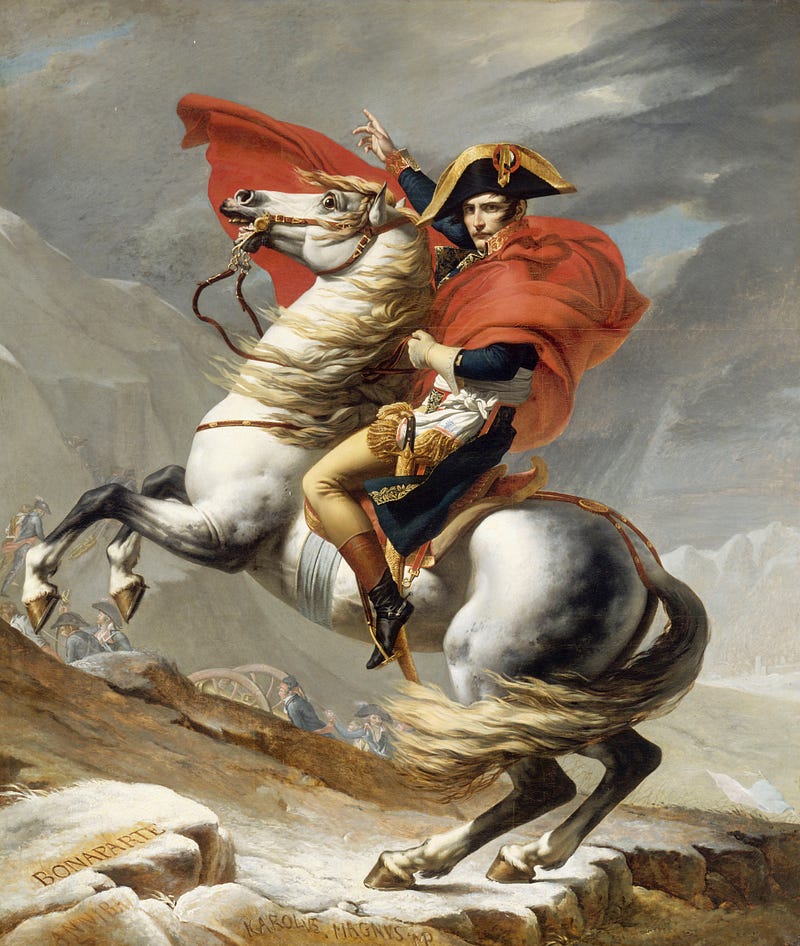
Napoleon Bonaparte transformed the Western world through sweeping reforms and military genius, leaving a legacy that still shapes modern governance, law, and warfare. His most lasting achievement, the Napoleonic Code, revolutionized legal systems by enshrining equality before the law, protecting property rights, and dismantling feudal privileges. Though imperfect — particularly in its treatment of women — this legal framework became the blueprint for civil law across Europe, Latin America, and beyond.
On the battlefield, Napoleon redefined warfare with innovative tactics like the corps system, which allowed for unprecedented mobility and coordination. Victories at Austerlitz and Jena demonstrated his mastery of strategy, while his use of mass conscription turned France into a military powerhouse. Even his failures, like the disastrous Russian campaign, became cautionary tales in overreach and logistics.
Beyond his military conquests and legal reforms, Napoleon left an indelible mark on culture and science, though his contributions were often shadowed by controversy. The Egyptian Campaign, while ultimately a strategic failure, became an unexpected boon for archaeology. French scholars accompanying the army uncovered the Rosetta Stone, providing the key to deciphering hieroglyphs and birthing modern Egyptology. This scientific expedition, complete with detailed surveys and documentation, revealed ancient wonders to Europe and sparked a wave of Egyptomania that influenced art and architecture across the continent.
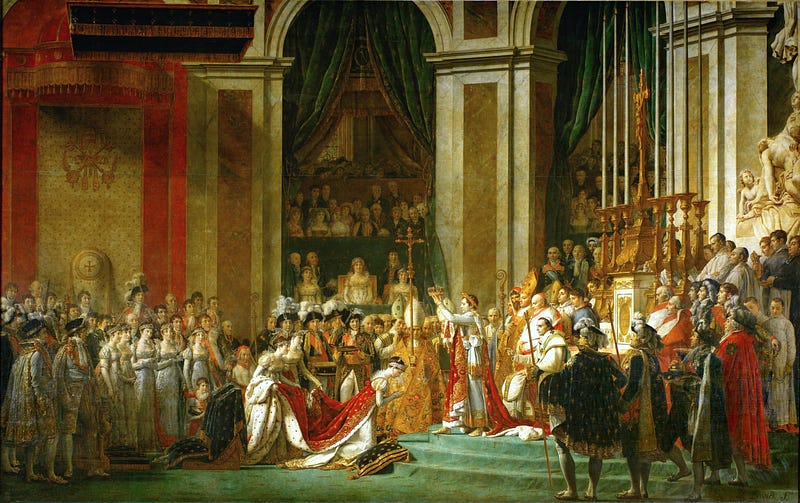
Napoleon understood the power of art as propaganda, commissioning masterpieces like Jacques-Louis David’s monumental “Coronation of Napoleon” to cement his imperial image. He transformed the Louvre into a world-class museum, though many of its acquisitions were essentially war trophies taken from conquered nations — a practice that remains ethically contentious today. His regime also fostered practical innovations, from Nicolas Appert’s food preservation techniques (which revolutionized military logistics) to the development of sugar beet production when British blockades cut off Caribbean sugar supplies.
Yet for all his cultural patronage, Napoleon’s rule spread ideas far beyond what he intended. Though he crowned himself emperor, his armies inadvertently became vehicles for revolutionary principles. The Napoleonic Code, conscription, and administrative reforms planted seeds of nationalism and liberalism across Europe. German and Italian intellectuals, witnessing French-imposed reforms, began imagining their own unified nations. The very ideals of equality and popular sovereignty that Napoleon sought to control would later fuel the revolutions of 1830 and 1848 — movements that ultimately challenged the conservative order his empire had become.
This tension between enlightenment and autocracy defines Napoleon’s legacy. He modernized legal systems while rolling back women’s rights, championed meritocracy while reinstating slavery in French colonies (except Haiti, where slaves had already seized freedom), and posed as a revolutionary while establishing a hereditary monarchy. His 1803 sale of the Louisiana Territory dramatically expanded American power, even as his continental wars drained France’s resources. Perhaps no figure better embodies the paradox of progress — how sweeping change often comes hand-in-hand with oppression, how liberation can be born from conquest. Napoleon reshaped the modern world, but not always in ways he intended or desired.
Yet Napoleon was a paradox: a reformer who reinstated slavery, a liberator who became a dictator, and a military genius whose ambitions sowed his downfall. His influence, however, is undeniable — from the laws that govern nations to the strategies that define modern warfare. Few figures in history have so profoundly reshaped their world in so short a time.