Psychology of Baseball: Mental Strategies and Challenges
The Cognitive Crucible
The Cognitive Crucible
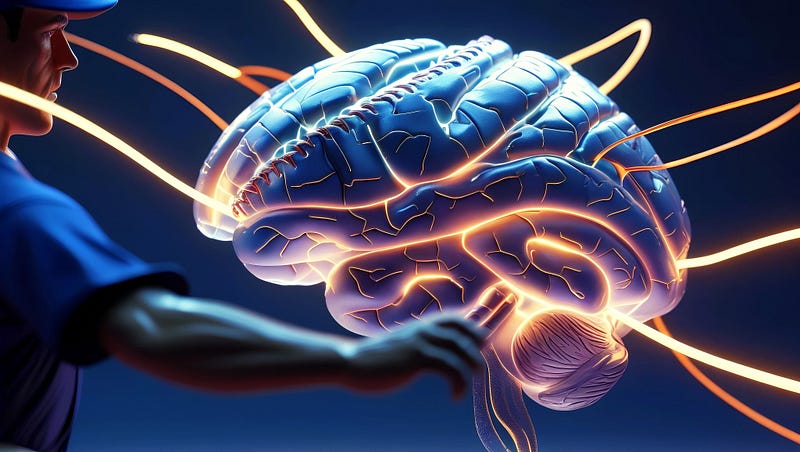
Baseball demands neural processing at the edge of human capability. A batter deciphers pitch type, spin, and trajectory within four-tenths of a second — less time than a blink — forcing the brain into predictive pattern recognition honed through thousands of repetitions. This decoding occurs not in conscious thought but in the cerebellum and visual cortex, where milliseconds determine success or failure. When pressure mounts, the amygdala can hijack this system, flooding the body with cortisol that narrows vision, tenses muscles, and shatters timing. Great hitters master this neural warfare by anchoring themselves in physical rituals: a tap of the cleats, a deliberate breath, a singular focus on the pitcher’s cap bill. These micro-behaviors create cognitive gates, blocking distraction and returning control to the motor cortex.
The Arithmetic of Failure
No sport normalizes failure like baseball. A .300 hitter fails seventy percent of the time; a closer blowing three saves in twenty appearances is elite. This relentless negative feedback erodes confidence through dopamine depletion — a neurochemical slump that impairs decision speed and motor coordination. Players surviving this gauntlet learn to reframe failure: hard-hit outs become moral victories; walks turn into strategic triumphs. They compartmentalize outcomes through process goals, divorcing self-worth from statistics. Data becomes armor only when detached from identity — exit velocity and launch angle matter, but the soul must dwell in the batter’s box, not the spreadsheet.
Flow States and the Illusion of Time
Optimal performance emerges when challenge perfectly matches skill, triggering a neurobiological cascade known as flow. Pitchers describe this as the ball feeling “larger” or the game slowing to a crawl — physical manifestations of theta wave dominance in the prefrontal cortex. Achieving this state requires ruthless present-moment focus, often engineered through sequences like a pitcher’s glove-adjust-breath-repeat ritual or a hitter’s pre-pitch visualization of a line drive up the middle. Distraction is the assassin of flow; a wandering mind activates the default mode network, linking to past failures or future anxieties. Masters weaponize routine to silence everything but the next pitch.
The Yips: When the Brain Betrays the Body
Some failures calcify into pathology. The yips — sudden, inexplicable loss of motor control — represent baseball’s darkest psychological territory. Neuroscience reveals its roots in focal dystonia: a misfire in the basal ganglia where trauma converts skill into paralysis. A single high-stakes failure can become encoded in the amygdala, triggering fight-or-flight responses during future throwing or hitting motions. Traditional “fix your mechanics” coaching often exacerbates this. Breakthroughs now emerge through brainspotting therapy (using eye positioning to reprocess trauma) and sensorimotor retraining, such as pitchers relearning their craft left-handed to bypass corrupted neural pathways.
Future Frontiers: Rewiring the Game
The next evolution merges neuroscience with tradition. Teams now explore fMRI scans to map prospect resilience via anterior cingulate cortex reactivity under stress. Virtual reality trauma exposure therapy allows pitchers to re-enter high-failure scenarios safely, rewiring fear responses. Psychopharmacology research investigates beta-blockers to control competitive anxiety without motor impairment. Even AI enters the mental game: wearable EEGs provide real-time feedback on focus states during at-bats. Yet, the core truth endures: baseball remains a 162-game meditation on controlling the controllable. The mind, not the fastball, is the final frontier.