Red Gold of the Pacific: The Life and Legacy of the Pacific Ocean Perch (Sebastes alutus)
Introduction Beneath the slate-colored swells of the northern Pacific lies a fish whose story is as rich and textured as the cold…
Introduction
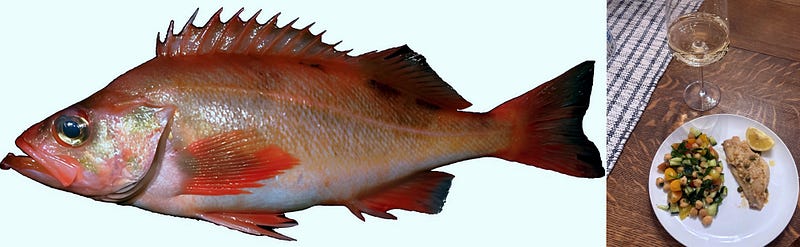
Beneath the slate-colored swells of the northern Pacific lies a fish whose story is as rich and textured as the cold, nutrient-laden waters it calls home. The Pacific ocean perch, Sebastes alutus, may not command the culinary celebrity of salmon or tuna, but among marine ecologists, deep-sea fishermen, and discerning chefs, it is known as a creature of resilience, ecological importance, and unexpected gastronomic delight. This article delves into the biology, ecology, and culinary potential of this scarlet-hued rockfish, whose history mirrors the rise and reckoning of industrial fishing in North America.
Taxonomy
Sebastes alutus belongs to the genus Sebastes, a group commonly referred to as rockfishes, native to the North Pacific Ocean. This genus includes more than 100 species, many of which are edible, though not all are as commercially significant as the Pacific ocean perch. Sometimes called POP, Pacific redfish, or simply “red perch,” Sebastes alutus should not be confused with freshwater perch or true snappers. It is a marine scorpaenid, a distant cousin of the venomous scorpionfish, though it poses no threat to handlers.
Despite its name, it’s not a true perch. Taxonomically, it belongs to the family Sebastidae — a lineage that reveals its ancient evolutionary roots and its remarkable ability to adapt to the cold, high-pressure environments of the continental slope.
Biology
This fish is an icon of patience and longevity. The Pacific ocean perch can live over one hundred years, with many individuals reaching reproductive maturity only after a decade or more. Adults average between 14 and 20 inches in length (approximately 35.5 to 50.8 cm), and typically weigh around 2 to 4 pounds (0.9 to 1.8 kg). Their color ranges from vivid red to a dusky orange, with darker mottling that helps them blend into the rocky sea bottom. Their flesh is white, firm, and flaky, making it a prized but underrated ingredient.
They reproduce through internal fertilization and give birth to live young — an unusual trait among fish — which adds to the species’ vulnerability. Because they invest so much energy in each reproductive cycle and produce fewer offspring than other commercial fish, Sebastes alutus requires long recovery times after population declines.
Ecology
Found from northern California to the Bering Sea, this species thrives at depths between 300 and 2,500 feet (roughly 91 to 762 meters), often forming dense aggregations along continental shelf slopes. It feeds on small crustaceans, plankton, and the occasional fish, while itself becoming prey to larger predators like halibut, sperm whales, and humans.
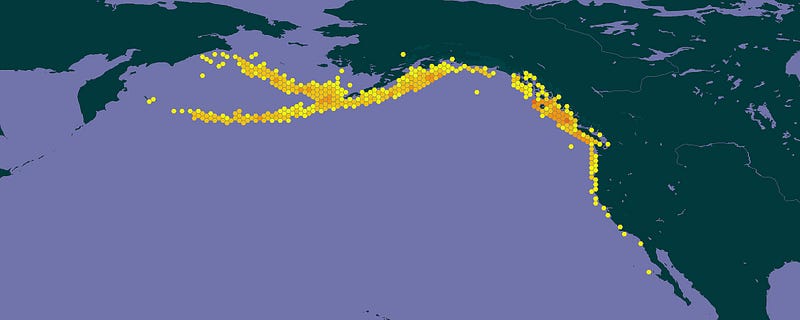
Its ecological role is significant: it is a mid-level predator and a crucial component in the food web of the Pacific slope. Yet it has also borne the brunt of commercial overexploitation. In the 1960s, aggressive trawling by foreign fleets decimated stocks, leading to one of the earliest examples of fishery collapse in the North Pacific. Since then, careful regulation, seasonal closures, and quota systems have allowed some populations to rebound, making the Pacific ocean perch a poster child for slow but effective marine conservation.
Uses
Commercially, the Pacific ocean perch is harvested primarily by bottom trawlers off the coasts of Alaska and British Columbia. In 1982, its catch volume had dwindled so dramatically that fisheries managers declared it overfished. Today, harvests are strictly monitored, and the fish is often marketed frozen or filleted.
Because it grows slowly and lives so long, sustainability hinges on respecting catch limits and protecting spawning grounds. The Marine Stewardship Council now certifies certain fisheries as sustainable, offering reassurance to conscientious consumers and chefs.
Economically, it supports both large commercial fleets and smaller coastal communities. Its value isn’t astronomical — roughly $1.50 to $2.00 per pound (equivalent to about $3.30 to $4.40 per kg) dockside — but its cultural and ecological worth cannot be measured in dollars alone.
Culinary Aspects
The Pacific ocean perch’s flesh is lean, firm, and delicate, with a subtle sweetness that absorbs surrounding flavors beautifully. It’s particularly popular in Eastern European and Japanese cuisine, where it’s featured in soups, fried whole, or steamed with aromatic herbs and vegetables. In American kitchens, it’s often substituted for cod or haddock in fish tacos or baked preparations.
Chefs prize its versatility: seared, poached, grilled, or pan-fried, it performs admirably. It's fat content — about 1 gram of fat per 100 grams of flesh — makes it ideal for health-conscious cooking, while its high protein content supports recovery and performance in athletes and active individuals.
Because of its relatively neutral flavor profile, it pairs well with a range of herbs and sauces. Dill, lemon, garlic, and fennel complement its maritime minerality, while soy sauce and miso enhance its umami depth.
Wine Pairings
To complement its delicate texture and mild flavor, opt for crisp, high-acidity whites. A mineral-driven Sauvignon Blanc from the Loire Valley, or a dry Riesling from the Mosel, balances the fish’s sweetness with brightness and complexity. A Chablis — sharp, citrusy, and clean — provides an elegant counterpoint without overpowering the dish.
For more adventurous pairings, try a light-bodied orange wine or a sparkling brut. Both bring textural contrast and effervescence that cut through any residual oil or butter, especially in pan-seared or roasted preparations.
Conclusion
The Pacific ocean perch is not simply a fish — it is a symbol of both the fragility and resilience of our marine ecosystems. Its story is a cautionary tale of overfishing, yes, but also one of hope, scientific stewardship, and the patient work of ecological recovery. For the curious eater, the mindful chef, and the conscious consumer, Sebastes alutus offers not just sustenance but a connection to the deep rhythms of the ocean and the long memory of the sea.
In a world impatient for quick harvests and instant gratification, this centuries-old fish reminds us that good things — sustainable things — take time. The next time you see Pacific ocean perch on a menu or in your fishmonger’s case, don’t pass it by. Cook it thoughtfully. Savor it slowly. Respect the red gold of the Pacific.