
Results, Not Rhetoric: How Voters Really Choose Presidents
Introduction: The Biggest Misunderstood Truth in American Politics
Introduction: The Biggest Misunderstood Truth in American Politics
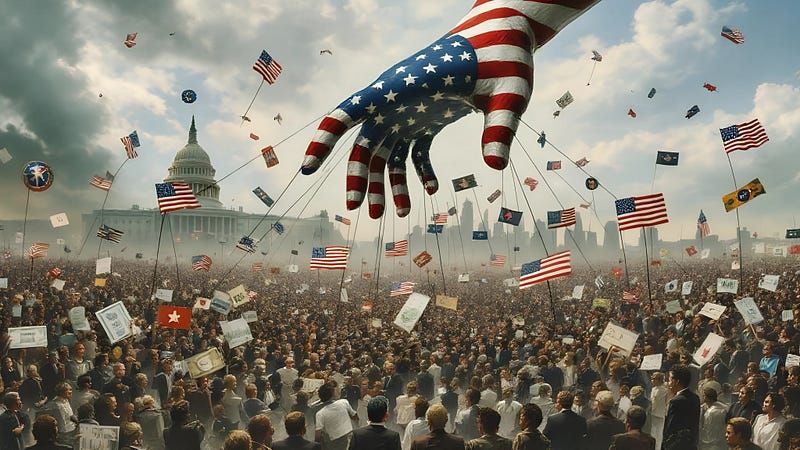
Politicians and pundits spend billions trying to “understand voters,” yet much of that is wasted. The political class often misses a key fact: American voters are not ideological robots, easily manipulated or uninformed. They are pragmatic and make consistent choices that seem obvious once recognized.
Despite the frenzy over debates, viral videos, fundraising hauls, or edgy campaign messaging, none of these factors truly decides presidential elections. Such theatrics might matter at the margins — perhaps swaying a point or two in a tight race — but they do not determine who becomes president. Across lines of class, race, education, and geography, voters tend to vote based on one overarching consideration: how they feel the country is doing under the current leadership. This performance-oriented mindset means voters’ decisions are deeply rational, even if Washington insiders fail to see the logic. In essence, Americans go to the ballot box not as partisans or ideologues, but as shrewd evaluators of national outcomes that affect their lives.
This article explains how and why Americans make their choices on Election Day in a practical way. It reveals the quiet, consistent criteria that guide voter decision-making — and why the insiders who obsess over daily campaign drama often miss what really moves the electorate.
How Voters Think About the Presidency: A Managerial Mindset
When average Americans think about the presidency, they see it as a managerial position, not an ideological one. Political elites might imagine voters as mini policy wonks — debating tax plans, Supreme Court philosophies, or foreign treaties. In reality, voters resemble a board of directors evaluating a chief executive: they don’t need detailed policy briefs, just a sense of whether things are running smoothly.
People evaluate a president with core, results-oriented questions: Are the country’s systems working? Is the nation stable? Is my life improving? Does this president seem competent in the job? If those answers seem positive, voters usually favor the incumbent party. If the answers turn negative and the country appears off track, people seek change at the top. This practical assessment mirrors a board’s decision to fire or retain a CEO based on results; voters collectively apply a gut-level performance review to the Oval Office.
The Four-Question Performance Checklist
Decades of political science research suggest that voters subconsciously use a mental checklist when making presidential choices. While not always explicit, these four practical questions reliably shape election outcomes:
1. Is the economy meeting my needs?
Voters care about the national economy only to the extent that it affects their own lives. Forget abstract metrics like GDP growth rates or stock indices — what matters is the day-to-day cost of living. Is the grocery bill growing each week? Are gas prices high at the pump? Can they comfortably pay the rent or mortgage? Do they feel secure in their job and see their wages keeping up with expenses? Can they save a little money, or does the future feel economically precarious? If people feel financially stressed in their personal lives, they often blame the incumbent party. If their personal economic situation feels stable or improving, the incumbent gets credit. In short, if economic life feels harsh, incumbents suffer; if it feels manageable, incumbents benefit.
2. Is the country stable and predictable?
Beyond their wallets, voters seek a basic sense of stability and predictability in the nation. This doesn’t mean everything must be perfect or peaceful; it means there shouldn’t be constant chaos. Americans ask themselves whether the country is generally calm or lurching from crisis to crisis. Stability, in a voter’s mind, includes the absence of major new wars, the absence of widespread unrest or uncontrolled violence in the streets, no out-of-control pandemics, no financial system collapse, and no constant governmental turmoil or scandal that dominates the news. People can tolerate problems, but they want to feel that tomorrow will look roughly like today, not that the nation is spiraling out of control. History shows that when a sense of instability takes over — be it 1968 with unrest at home, 1980 with economic malaise and foreign policy humiliation, 1992 with economic unease, 2008 with financial meltdown, or 2020 with a pandemic — incumbent leaders pay the price. Instability is poison for incumbents. Conversely, when life feels normal and the headlines aren’t full of havoc, voters are inclined to reward the sitting president’s party.
3. Does the president demonstrate basic competence and control?
This consideration is not about agreeing with the president’s ideology or personality; it’s about the vibe of competence. Voters size up the commander-in-chief in a fairly commonsense way: Does this person appear to know what they’re doing? A competent president, in the public eye, is steady under pressure and makes decisions in a calm, measured way. They staff their administration with professionals and are seen to manage events (and crises) reasonably well. There’s a certain demeanor of leadership that reassures people — a sense that the president is neither asleep at the wheel nor flailing in panic. Voters pay attention to things like decisiveness, basic professionalism, and the ability to communicate calm direction. They are also keenly aware of drama and chaos: if an administration is constantly mired in scandals, infighting, or erratic behavior, it fails the competence test. Importantly, citizens do not expect a technocratic genius or a flawless problem-solver. They just want a president who can run the government without frequent embarrassing mishaps, someone who seems basically in control of events. If the president passes that gut test of competence, voters are more forgiving. If not, the public starts looking for someone — anyone — who might do better.
4. Has this party exceeded the typical time in power?
This last question is one that many pundits underrate, but it keeps coming up in American history. After about eight years of one party occupying the White House, a certain fatigue sets in among the electorate. Even if people aren’t consciously counting the years, there’s a built-in restlessness that grows over two presidential terms. Voters start to wonder if it’s time to “let someone else have a turn.” This creates a subtle headwind for any party trying to hold the presidency for more than eight consecutive years. We’ve seen it play out consistently: Jimmy Carter’s loss in 1980 followed a Democratic tenure of eight years; George H.W. Bush’s defeat in 1992 came after Republicans held the White House for twelve years; Al Gore’s loss in 2000 came after eight years of Bill Clinton; John McCain’s loss in 2008 followed eight years of George W. Bush; Hillary Clinton’s loss in 2016 came after eight years of Barack Obama. Most recently, the pendulum swung again in 2024, with voters shifting from the incumbent Democratic administration to the Republican opposition after eight years of Democratic control. This pattern isn’t about the individual candidates so much as a structural yearning for change. Call it the “eight-year itch” in American politics: even absent major crises, the passage of time itself can create an appetite for something new.
The Myth of “Messaging”
Ask a high-priced political consultant or listen to cable news chatter, and you’ll hear that elections are won by whoever “frames the narrative” best or “controls the messaging”. Campaign insiders often act as though a snappy slogan or a perfectly crafted ad can magically flip a race. While history might show some notable exceptions, such as the 1964 daisy ad that left a lasting impact, it generally offers scant evidence that messaging alone can swing a presidential election when the underlying fundamentals point the other way.
This is not to say campaigns and messaging don’t matter at all — they can certainly amplify a candidate’s strengths or mitigate weaknesses. However, messaging is always downstream of reality. In other words, when the overall environment favors the incumbent, their positive message will resonate and seem effective; but when the environment has turned against an incumbent, no amount of clever rhetoric can paper over that reality. Think of the major turning-point elections: No brilliant speech or ad campaign could save President Jimmy Carter in 1980 amid economic turmoil and the Iran hostage crisis. George H.W. Bush’s slick 1992 convention themes didn’t prevent voters from punishing him for a sluggish economy. In 2008, as the financial system teetered and markets crashed, no campaign spin could have rescued Republican nominee John McCain from the public’s desire for change. In 2020, Donald Trump’s messaging might have fired up his loyal base, but it couldn’t erase a pandemic and economic collapse from voters’ minds. And if we consider 2024, once high inflation and chaotic immigration headlines set a sour national mood, no Democratic messaging strategy was going to fully negate those concrete issues.
The pattern is clear: messaging is a force multiplier, not a force creator. Good messaging can boost a candidate who is riding on favorable conditions, and bad messaging can slightly harm a candidate who otherwise has things going their way. But messaging alone does not create victories out of thin air. Campaign narratives succeed when they align with voters’ lived experiences, and they fail when they try to contradict what people see and feel in their daily lives.
What Political Consultants Get Wrong
If voters are so consistent in how they choose presidents, why does the political industry get it wrong so often? The answer lies in the culture of modern campaigning. The political consulting business is dominated by highly paid strategists who often confuse noise for signal. They chase the latest Twitter controversy or obsess over one debate zinger, mistaking these for factors that will swing millions of voters. They devise ever-cleverer tactics, come up with viral social media stunts, and preach about “winning the news cycle,” all the while undervaluing the fundamentals that truly sway the electorate.
Consultants love to sell candidates on the idea that a sharper message or a new TV ad will be the silver bullet. It’s an appealing theory for campaign professionals because it makes their work seem decisive. But this approach often misreads voter psychology. To the average voter, a steadily improving paycheck or a sense of peace matters far more than any meme or slogan. A strong economy beats a clever ad. Visible competence beats a viral tweet. Stability beats sound bites. Normalcy beats drama. These aren’t just slogans — they reflect how voters actually prioritize things. Many consultants fail because they focus on what excites the political class rather than what moves regular people. The result is campaigns that generate a lot of chatter among pundits but ultimately fall flat with the electorate, who are paying attention to their real lives instead. The fee structures in the consulting industry incentivize this focus on ‘noise’ because they often reward high-profile activities like ad buys and media appearances over the substantive analysis of fundamentals. This creates a misaligned focus, as consultants are encouraged to continue chasing what appears flashy rather than what genuinely resonates with voters.
The Power of Personal Experience
One of the most common mistakes analysts make is to slice and dice the electorate into demographics — by education level, race, income, region, or party affiliation — and assume these traits determine voting behavior. While these factors can tell part of the story, the most important factor of all is personal experience. How stable or stressful does life feel for each voter? On this, people trust their own eyes and ears above any politician’s words.
If a voter’s rent has jumped 30% in the past year and their paycheck isn’t keeping up, no argument about “overall inflation coming down” will convince them that the economy is fine. If someone’s neighborhood feels unsafe, they won’t be swayed by national crime statistics telling them otherwise. Conversely, if a family feels financially secure and optimistic about the future, doom-and-gloom partisan rhetoric will have a hard time piercing that contentment. Personal experience is visceral and immediate; it overrides talking points and campaign spin every time.
This insight explains why certain issues can profoundly damage incumbents regardless of their party or ideology. High inflation isn’t an abstract policy matter to voters — it’s felt in every trip to the store. A recession isn’t a graph on the news; it’s a neighbor losing a job or a factory in town shutting down. War fatigue sets in when communities see their young people serving multiple tours overseas with no end in sight. On the flip side, when jobs are plentiful and pay is rising, or when a long period of peace and calm prevails, voters often stick with the party in charge even if that party’s rhetoric or ideology doesn’t match the voter’s in every detail. In short, voters are not fooled by spin — they trust their own life experience above all. Any political movement that ignores this does so at its peril.
Why Scandals Rarely Matter
Turn on cable news on any given week, and you might think a political scandal in Washington is about to change the course of an election. Yet history shows that most so-called scandals have little effect on how Americans vote — unless they connect to a broader sense of failure that voters already feel. In other words, scandals only become politically lethal when they reinforce an existing performance problem.
Consider a few famous examples. The Watergate scandal in the early 1970s didn’t just topple Richard Nixon because it was a moral wrongdoing; it shattered Americans’ trust amid an already tumultuous period, amplifying a sense of instability in the country. In 1979–80, the Iran hostage crisis humiliated the United States on the world stage and seemed to underscore President Jimmy Carter’s ineffectiveness during an economic and foreign policy crisis. In 2008, the financial collapse that hit in the fall of the campaign was not a “scandal” per se, but it overwhelmed John McCain’s candidacy and any message he had, because it dramatized the failures of the incumbent Republican administration’s stewardship of the economy. In 2020, the COVID-19 pandemic (coupled with an often chaotic White House response) became a referendum on Donald Trump’s competence and stability; any political jabs or scandals that year were dwarfed by the overarching crisis, which reinforced a negative view of the incumbent.
Now compare those with “scandals” that ultimately fizzled in terms of electoral impact. Bill Clinton was impeached over the Monica Lewinsky affair and lambasted for months in the press, but he left office with high approval ratings, and his party wasn’t punished in the next election largely because the economy was booming and the country was at peace. Voters viewed it as a personal moral failing, perhaps, but not one that affected their lives. Donald Trump was impeached for the first time in 2019 over a Ukraine pressure campaign, a serious matter constitutionally. Yet, it had virtually no effect on the 2020 election dynamic because it didn’t resonate with how voters felt the country was doing (and was overshadowed by the pandemic). Ronald Reagan faced the Iran-Contra scandal, a major controversy. Still, he managed to finish his presidency relatively unscathed in public opinion because, by that time, the economy had recovered and the Soviet Union was in retreat — things felt on the right track. Similarly, persistent stories about Hunter Biden’s business dealings dogged Joe Biden’s first term. Still, in the absence of a direct impact on voters’ daily lives, those stories didn’t gain much traction outside partisan circles. Even the outcry over the Abu Ghraib prison abuses during George W. Bush’s tenure, while it tarnished America’s image abroad, did not stop Bush from winning reelection in 2004 because voters ultimately decided that, in their own lives, things were stable enough and the war on terror needed continuity.
The reason is simple: American voters, for the most part, are outcome evaluators, not moral perfectionists. They certainly don’t love it when leaders behave unethically, but if the country seems to be humming along, many voters will roll their eyes at the scandal-of-the-month and carry on. However, if the nation is in chaos or decline, even a whiff of scandal becomes another log on the fire of discontent. In essence, performance sets the context in which scandals are judged. Good times can insulate a president from fallout; bad times will make every flaw loom larger.
Voters Are Sophisticated, Not Simple
Too often, pundits talk about voters as if they’re easily misled or incapable of making wise choices. The evidence of the past several decades says otherwise: voters are pretty sophisticated in aggregate. They consistently maintain a balance in the system. They punish what they perceive as incompetence or extremism, and they reward periods of stability and growth. They are willing to correct the course of the country when things veer off, but they rarely support extreme lurches unless they feel it’s necessary.
This tendency means American elections are more corrective than revolutionary. For example, when voters swept Ronald Reagan into office in 1980, it wasn’t so much that the whole country had suddenly converted to Reagan’s brand of conservatism; it was that Jimmy Carter’s presidency seemed to have lost control of the economy and foreign affairs, and voters pragmatically opted for a change. Likewise, Donald Trump’s victory in 2016 shocked the establishment, but not because a majority of Americans embraced every aspect of his populist nationalism or his personal style. Instead, a critical mass of voters were willing to take a gamble on something different after feeling disillusioned by the status quo. There was fatigue with the Democrats after two terms of Obama, anger in communities hurt by globalization and deindustrialization, and a perception that Hillary Clinton represented more of the same old politics. Many voters in swing states essentially said: Washington isn’t listening to us; maybe this disruptive outsider will. In doing so, they rejected the political elites’ assumptions and signaled particular grievances, not an undying love for chaos or extremism.
Time and again, voters have shown they are ahead of the political class in diagnosing problems. They course-correct when one party goes too far or fails to deliver. They usually avoid handing unchecked power to leaders they sense might be truly dangerous to democracy, except in the most desperate of circumstances. In short, the electorate as a whole displays a kind of wisdom over time — nudging the country back toward equilibrium. It’s a sophisticated collective instinct that pundits often fail to appreciate.
The Central Truth: Stability and Improvement vs. Chaos and Decline
If we boil everything down, one central truth emerges about U.S. presidential elections: voters reward stability and improvement, and they punish chaos and decline. This simple principle is the engine behind almost every trend in modern American politics. It explains why incumbent presidents usually win reelection when times are good, and why they (or their party’s would-be successors) often lose when times are bad or unsettled. It’s why, after a party has held the White House for eight years, it becomes inherently harder to convince voters to extend that run — eventually, even a well-run administration hits some bumps, or people just crave freshness.
This truth also demystifies why flashy campaigns so often fall flat. A great ground game, a charismatic speech, or a trending hashtag cannot overcome a failing grade on the fundamental questions of peace and prosperity. Conversely, a candidate who might seem boring or gaffe-prone can still win if voters feel essentially content with the direction of the country. In fact, indicators such as presidential approval ratings (which capture the public’s general satisfaction) and basic economic indicators have proven remarkably accurate predictors of election outcomes. They matter far more than the daily media narratives that Washington gets absorbed in. In analytical terms, political scientists have built models that predict elections with just a few variables — often some combination of economic growth, incumbency, and approval ratings. These models work well because they are tuned to the fundamentals that voters actually care about. The framework used throughout this discussion (sometimes referred to as an “IPS model” focusing on Incumbency, Performance, and Stability) succeeds as a predictor precisely because it mirrors the real considerations on voters’ minds.
All of this means that as we look ahead, we can already guess some contours of future races. For instance, the 2028 presidential contest will unfold with certain built-in dynamics: the party in power may face an uphill battle if it has held the White House for two terms, and the electorate will be weighing whether the country feels on solid ground. These aren’t crystal-ball prophecies — just the logical extension of the central truth that has governed elections time and again.
Conclusion: A Consistent Logic Through History
Understanding this performance-driven logic of voter behavior doesn’t just help explain recent elections; it unlocks a clearer view of the entire postwar political era. If we revisit the major elections since World War II through this lens, a consistent pattern emerges. The booming prosperity of the 1950s gave incumbents an advantage. The turbulent late 1960s, with war abroad and unrest at home, saw voters demand change. The economic and social malaise of the 1970s paved the way for a new direction in 1980. The stable growth and end of the Cold War in the late 1980s benefited the ruling party — until a recession in 1992 tipped the scales. In the early 2000s, a contested election, the shock of 9/11, wars in Afghanistan and Iraq, and the 2008 financial crisis all tested voters’ criteria of stability and competence, producing dramatic swings. The 2010s and early 2020s brought their own stresses — from deepening political polarization to a pandemic — again making voters ask: Are things working or not?
In each case, Americans were not responding ficklely or randomly; they were applying the same basic yardstick of results. They were, and remain, practical overseers of the nation’s course. By recognizing this, we can cut through much of the noise that dominates political coverage. American voters, in their collective wisdom, generally steer the country away from prolonged failure and toward a middle path of stability and improvement.
This insight provides a powerful way to interpret both the past and the future. It means that elections are not wild, unpredictable swings of a capricious public, but rather referendums on the real-world conditions that citizens experience. As we move forward, any candidate or campaign that keeps an eye on those conditions — on delivering tangible stability and improvement in people’s lives — will have the inside track. And any political movement that bets against the public’s ability to notice chaos or decline will eventually get a rude awakening at the polls.
(In the next part of this analysis, we will delve deeper into the historical narrative, examining each election from the postwar era to the present to see this consistent voter logic in action. From the postwar economic boom to the crises of the 1970s, the Reagan realignment of the 1980s, the ebb and flow of polarization, and the upheavals of 2000–2024, every chapter in American politics underscores the same lesson: performance is king.)
