Safe Havens of Affluence and Segregation
The Gated Garden: Where Safety in America Comes at a Hidden Cost
The Gated Garden: Where Safety in America Comes at a Hidden Cost
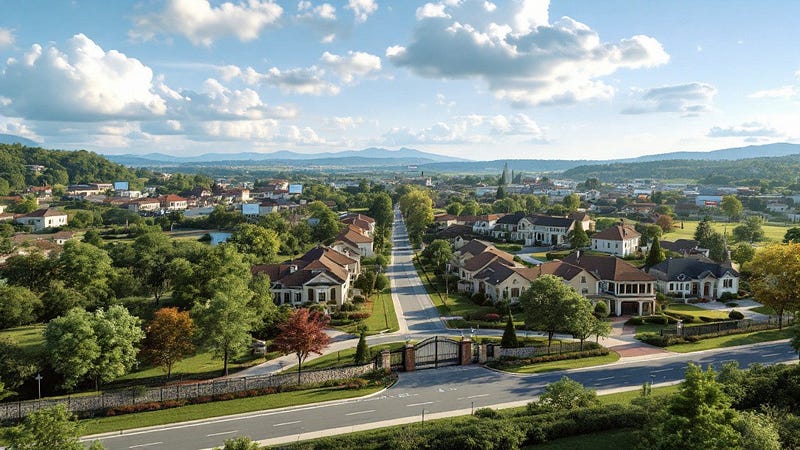
The quest for the safest places in America often leads to a surprisingly uniform portrait, not just of security, but of a specific way of life. These communities are not typically found in the bustling heart of major metropolitan areas but are nestled in their well-manicured suburbs, tucked away in affluent small towns, or secluded within master-planned communities that rise like modern-day citadels. The safety they offer is a powerful magnet, but it is inextricably linked to a distinct and often exclusive set of demographic characteristics.
These havens of low crime are frequently characterized by significant economic prosperity. They are often populated by households with high median incomes, allowing for property ownership, financial stability, and access to resources that are themselves deterrents to crime. This economic power translates into well-funded local police forces, private security patrols, and community watch programs that operate with notable efficiency. The physical environment reflects this wealth: spacious homes, large lots, clean public spaces, and excellent infrastructure. The sense of order is palpable, from the precisely trimmed hedges to the quiet, winding streets that discourage through traffic.
Demographically, these safest areas trend heavily toward homogeneity. They are frequently, though not exclusively, populated by older, established families and wealthy retirees. The racial makeup is often less diverse than the national average, with a high concentration of white, non-Hispanic residents. This is not necessarily a matter of explicit exclusion but is more often a byproduct of historical housing policies, economic barriers, and self-selecting migration patterns where wealth and opportunity have been historically unevenly distributed. Educational attainment is another key marker. These communities boast a high percentage of residents with bachelor’s and advanced degrees, which correlates strongly with higher earning potential and the socioeconomic stability that underpins a low-crime environment.
Furthermore, these areas often possess strong social cohesion, or at least the appearance of it. Residents share similar values, lifestyles, and expectations for community behavior. This creates a tight-knit social fabric where neighbors know each other, and any outlier activity is quickly noted and addressed. This can be a powerful informal tool for maintaining order, but can also foster an environment resistant to change or outsiders who do not conform to the prevailing social norms.
The provocative truth is that the safest places in America often achieve this status through a form of economic and social filtering. The safety is real and deeply desired, but it raises profound questions about equity and access. Is safety a universal right or a luxury commodity? The demographics of these areas suggest the latter, painting a picture of security that is available primarily to the wealthy, the educated, and the homogeneous. They represent a gated garden — beautiful and secure within its walls, but fundamentally separate from the broader and more diverse landscape of the nation. This creates a paradox where the pursuit of safety can inadvertently deepen the very social and economic divisions that contribute to inequality and crime elsewhere.
The Red Safety Divide: Do Republican Mayors Truly Keep Cities Safer?
The pursuit of safety in American cities often reveals a complex tapestry of crime statistics, economic factors, and political leadership. Among the safest urban centers, a notable pattern emerges regarding the political affiliations of their mayors. San Jose, California, consistently ranks as one of the safest large cities, boasting low rates of violent crime, property crime, and drug overdose deaths, and is led by a Democratic mayor. Similarly, Irvine, California, often celebrated as the safest large city in America due to its minimal crime rate per capita, is governed by a mayor affiliated with the Democratic Party. In contrast, Virginia Beach, Virginia, another top-ranked safe city with low violent crime and traffic deaths, is led by a Republican mayor. Honolulu, Hawaii, with one of the lowest homicide rates nationally, has had a mix of Democratic, Republican, and independent mayors historically, reflecting its nonpartisan approach to safety. El Paso, Texas, recognized for its affordability and low crime rates, is governed by a Democratic mayor. Fort Worth and Arlington, both in Texas and frequently appearing on safest cities lists, have mayors affiliated with the Republican Party. Henderson, Nevada, another safe city with low crime rates, is led by a Republican mayor. Lexington, Kentucky, noted for its safety, has a nonpartisan government but often leans conservative. Raleigh, North Carolina, with moderate crime rates, is governed by a Democratic mayor. Boston, Massachusetts, whose mayor proudly declares it the safest major city due to inclusive policies, is led by a Democrat. Scottsdale, Arizona, among the safest mid-sized cities, has a Republican mayor. Gilbert, Arizona, celebrated for its community safety and low unemployment, is led by a Republican. Frisco, Texas, one of the safest cities overall with rapid growth and investment in security, has a Republican mayor. Carmel, Indiana, known for its low crime and high quality of life, is governed by a Republican. Finally, Port St. Lucie, Florida, frequently ranked among the safest cities, has a Republican mayor. This landscape suggests that while political affiliations vary, safe cities often share traits like economic stability, proactive policing, and community engagement, though Republican-led cities appear disproportionately represented among the nation’s safest locales.