The Neurophilosophy of Awareness: From Raw Consciousness to Informed Understanding
... the once esoteric study of awareness has burgeoned into tangible applications. From enabling neurologically injured patients to communicate, to enhancing mental health and cognitive performance, to inspiring new technologies, the theoretical insights are proving their worth.
Historical Foundations of Awareness and Consciousness
Efforts to understand awareness span ancient philosophy and modern neuroscience. Early thinkers like Descartes framed the mind as a non-physical essence, separate from the body, which set the stage for centuries of debate on the mind–brain relationship. By the 19th century, scientists such as Hermann von Helmholtz had begun treating perception as an inference by the brain, foreshadowing today’s views of the brain as an organ that interprets sensory inputs rather than passively reflecting reality. In the 20th century, psychology oscillated between introspective approaches to consciousness and behaviorist dismissals of the mind. The cognitive revolution and advances in brain science eventually brought consciousness back into scientific focus. A turning point came in the 1980s, when philosopher Patricia Churchland championed “neurophilosophy” — an approach uniting neuroscience and philosophy of mind. Churchland insisted that to explain the mind, one must incorporate empirical facts about the brain. Around the same time, cognitive scientist Bernard Baars introduced Global Workspace Theory, likening conscious mind activity to a “theater” in the brain where a spotlight of attention illuminates certain information for a broad audience of unconscious processes. Such frameworks helped rehabilitate consciousness as a legitimate subject for rigorous study. By the 1990s, neuroscientists like Antonio Damasio were proposing biologically grounded models of mind, distinguishing, for instance, between a basic core consciousness anchored in the present moment and an extended consciousness that builds upon memory and selfhood. This historical arc established foundational principles: that “awareness” is not a single simple thing, but arises from brain activity, and that any comprehensive theory must bridge subjective experience with objective neural processes. It also underscored a key challenge — explaining how mere neural firings can give rise to the rich tapestry of conscious awareness and the nuanced grasp of meaning we call understanding. These early efforts set the stage for today’s neurophilosophical inquiries, which seek to integrate insights across disciplines to demystify awareness.
Assumptions, Inconsistencies, and Hidden Biases
Beneath every theory of awareness lie core assumptions — sometimes unspoken — that shape its interpretation of mind and brain. One central fault line is physicalism versus dualism: many neuroscientists and philosophers assume consciousness is ultimately a brain process, nothing more, whereas others contend that subjective awareness cannot be fully reduced to neurons firing. These starting beliefs influence what counts as an explanation. For example, proponents of a purely physicalist view (like Churchland) argue that as neuroscience advances, it will naturally dissolve the mystery of consciousness, whereas thinkers inclined to dualism or panpsychism suspect that something fundamental is missing in a strictly neural account. This debate is epitomized by the so-called “hard problem” of consciousness: the puzzle of why and how brain activity is accompanied by first-person experience at all. Philosopher David Chalmers famously highlighted this as a distinct challenge, implicitly assuming that no amount of neural data alone can reveal why it “feels like something” to be aware. Some researchers, however, argue that the hard problem might be a mirage — based on a misguided intuition that experience is beyond scientific understanding. They suggest the problem has been “misframed and needlessly mystified” by faulty assumptions. This inconsistency — whether consciousness is a fundamentally solvable biological puzzle or an ineffable enigma — colors the entire discourse on awareness.
Biases often lurk in the background. Our own cognitive vantage point can trick us into flawed theories. A good example is introspection: we each have direct insight into our experiences, but this can breed an “introspection illusion,” making us overconfident in our self-knowledge. Historically, many theories trusted introspective reports as evidence of consciousness, but modern research has shown that introspection can be unreliable and biased. For instance, we may feel we know how our attention works, yet experimental evidence of inattentional blindness (failing to notice obvious stimuli when attention is elsewhere) reveals that we often grossly underestimate the limits of our awareness. Additionally, experts in different fields bring disciplinary biases. As one commentator wryly noted, neuroscientists tend to be functional reductionists (assuming consciousness is simply what brain circuits do), physicists often lean toward holistic or even fundamentalist views of consciousness, computer scientists naturally treat it as a computation, and philosophers worry about the pitfalls of dualism. Each community’s bias leads it to emphasize certain aspects of awareness (neuronal data, universal principles, algorithms, or conceptual clarity) while downplaying others. These predispositions can create talking past one another — for example, a neuroscientist might dismiss a phenomenologist’s insights as “unfalsifiable,” while the phenomenologist sees the neuroscientist as missing the essence of first-person experience.
Another hidden assumption involves definitions: the very term “awareness” can mean different things. Does it simply mean being conscious in a basic sense (as opposed to unconscious), or does it imply a knowledgeable consciousness (“awareness of something” in a rich, informed way)? In everyday language, we often use “awareness” to denote a concerned, well-informed attention — e.g., being aware of climate change implies understanding it. But in neuroscience, “awareness” might mean the minimal condition of perceiving or responding to a stimulus. Confusion between these senses can lead to inconsistency. A patient in a coma may have no phenomenal consciousness, yet we might say a well-read person has great awareness of global issues. The failure to distinguish raw sentience from informed understanding muddies debates. To clarify, philosophers like Ned Block have drawn a line between phenomenal consciousness (the raw “what it is like” feel of experience) and access consciousness (information in our mind that we can report or use in reasoning). This distinction reminds us that a brain could have experiential states without the ability to reflect or report on them, and vice versa, one could have information processed (e.g., unconscious knowledge) without it entering the theater of experience. Many disagreements in awareness research stem from conflating these facets. By examining underlying assumptions and biases — be they metaphysical stances, methodological habits, or linguistic confusions — researchers can better understand why their interpretations differ and avoid being led astray by unwarranted intuitions.
Consciousness vs. Understanding: Overlapping but Not Identical
Central to the neurophilosophy of awareness is untangling consciousness from understanding. Consciousness, in the strict sense, refers to raw subjective presence — the feeling of “being here now,” flooded with sensations, thoughts, or emotions. It’s the part of awareness that has a qualitative character (often called qualia). Understanding, by contrast, implies a structured, context-sensitive cognition — a grasp of meaning, relationships, and implications. Understanding is what allows us to not just see patterns of light and color but recognize a face, recall that person’s name, and know our relationship to them. In other words, understanding embeds conscious experiences in a wider web of knowledge. We might say consciousness is experience illuminated, whereas understanding is experience interpreted. They overlap in everyday awareness: when you are aware of a situation, you are usually both conscious of it (you have sensations or thoughts about it) and you have some understanding of what it signifies. But the two can diverge. For instance, a newborn baby is certainly conscious (in terms of having experiences) but has little understanding of what it perceives. Conversely, a person can have understanding in the form of latent knowledge (say, the rules of algebra learned years ago) that isn’t continuously conscious — only when attention calls it forth does it become part of active awareness.
Neuroscience supports this distinction. Antonio Damasio’s framework nicely illustrates how the brain builds consciousness and then understanding on top. He describes a “core consciousness” that provides a fleeting sense of self in the here-and-now, essentially the momentary experience of being alive and sentient. Even animals have this level of basic awareness. Layered on top is “extended consciousness,” which incorporates an autobiographical self, memory of past events, and anticipation of the future. Extended consciousness is where understanding blossoms — it places the raw experiences into context (“I’ve seen this before,” “This relates to my goals,” etc.), drawing on stored knowledge and concern for future outcomes. Damasio notes that extended consciousness “occurs when objects are related to the organism not only in the ‘here and now’ but in a broader context encompassing the organism’s past and its anticipated future,” relying on memory and reasoning. In plain terms, the brain adds meaning and continuity to our core awareness, turning simple wakefulness into an aware mind that knows and cares. This implies that many neural systems beyond mere perception — memory networks, language centers, executive circuits — contribute to what we casually call “awareness.” They furnish the concerned, knowledgeable orientation that the user here emphasizes.
One way to visualize the overlap is through attention and memory. Attention is like the spotlight that selects which information enters conscious awareness (the “stage” of consciousness, to use Baars’ theater metaphor. Memory provides the backdrop, the set and setting that give the spotlighted actors (current stimuli) their meaning. You need consciousness (the spotlight on) to have any subjective experience at all, but you need memory and understanding to know what you’re experiencing. For example, imagine hearing spoken words in a language you don’t know. You are fully conscious of the sounds, but you lack understanding; the experience is a raw sensation without semantic awareness. Now imagine hearing words in your native language — thanks to memory and learned knowledge, those same sounds trigger meaningful understanding. The conscious sensation might not feel drastically different in volume or clarity, but the awareness is qualitatively transformed by understanding. Cognitive neuroscience suggests that when we understand something, additional brain regions activate: not just primary sensory areas, but also frontal and parietal networks that retrieve concepts and associations. In fact, the Global Workspace Theory frames conscious awareness as the brain’s way of globally broadcasting information so that various specialist processes (memory, language, decision-making) can all access and contribute to it. In this view, a conscious state has entered a “global workspace” accessible to many systems, which is precisely what allows information to be understood and used in flexible, context-sensitive ways. If a piece of information doesn’t enter this global workspace, it might still be processed unconsciously, but it remains isolated — for example, your brain might register a subliminal image and even prime some reaction, but you won’t integrate it into your narrative understanding of the situation because it never became a globally available, reportable conscious content.
Thus, we see that consciousness and understanding, though distinct, continuously inform each other. Predictive processing theories make this especially clear: they suggest that what we experience (consciously) is deeply shaped by the brain’s predictions, which stem from learned models (understanding). Neuroscientist Anil Seth summarizes this neatly: our perception of the world is not a direct readout of sensory inputs, but the brain’s best guess — a “controlled hallucination” tuned by reality. The brain constantly compares incoming signals with its internal predictions (based on memory and understanding of prior encounters). When the prediction errors are small, we see what we expect to see; when there’s a surprise, our conscious perception updates — we learn something new or pay closer attention. In this dance, understanding (the brain’s model of the world) and consciousness (the experienced result of that model’s predictions meeting sensory data) are two sides of the same coin. Attention plays a regulatory role, weighting certain predictions or inputs as more important, and memory supplies the raw material for generating predictions.
However, this interplay also exposes inconsistencies. Sometimes our understanding can shape consciousness too much — as in visual illusions or hallucinations, where top-down expectations override actual input. Other times, we are conscious of something without understanding it, as in the tip-of-the-tongue state or when something feels meaningful but we can’t articulate why. Such cases highlight that while related, being conscious is not identical to having insight. Philosophers like Thomas Metzinger push this insight further, arguing that our normal state of consciousness is a kind of “naïve realism” — we experience a world and self so seamlessly that we forget the brain is constructing it. Metzinger’s self-model theory holds that the brain generates a complex model of the world and of “self,” and this model is transparent: we don’t see the building blocks (neuronal patterns, predictions) shaping our awareness, we just see the result as reality. Thus, we understand the world through a model, but we lack awareness of the modeling itself. This idea carries a subtle message: part of understanding (especially of ourselves) involves not being aware of certain processes. The overlap and divergence of consciousness and understanding are at the heart of the neurophilosophy of awareness — appreciating how they can align (in fluid, informed awareness) or misalign (in confusion, illusion, or implicit knowledge) helps clarify many puzzles of the mind.
Competing Perspectives and Theoretical Debates
The study of awareness is notoriously interdisciplinary, and it has spawned a range of theories that sometimes conflict, complement, or talk past each other. Each theory offers a perspective on what awareness fundamentally is, often emphasizing either the neural machinery, the cognitive functions, or the experiential qualities. Let’s survey a few prominent contenders and their counterarguments:
- Global Neuronal Workspace (GNW): Evolving from Baars’ psychological model, GNW (championed by Stanislas Dehaene and others) posits that conscious awareness depends on information being broadcast across a network of widely distributed brain regions, especially fronto-parietal circuits. In this view, myriad unconscious processors (vision, memory, etc.) compete, but when one’s content “wins” and ignites a global workspace, it becomes conscious, enabling integration and report. This theory predicts that we should see a distinctive signature of widespread brain activity (sometimes called an “ignition”) when a stimulus enters awareness. GNW is supported by evidence from brain imaging and EEG: for example, unseen vs seen stimuli can evoke similar early sensory activity, but only seen stimuli trigger later global activity bursts involving frontal areas. Critics of GNW argue it might be too cortex-centric or cognitive. Victor Lamme’s Recurrent Processing Theory (RPT), for instance, counters that localized recurrent loops in sensory regions might suffice for basic consciousness. Lamme notes that even without frontal involvement or global broadcast, recurrent activity in the visual cortex could create a conscious sensation (perhaps one that can’t be reported, but is experienced). The GNW camp replies that without global availability, such states are at best “phenomenal” consciousness without access — an experience you can’t remember or use — and some deny that counts as consciousness in the full sense. This debate highlights differing assumptions: GNW ties consciousness to cognitive functionality (reasoning, report, working memory), whereas RPT focuses on raw experience that might be present even in the absence of those abilities. Both sides agree feedback loops are key; they disagree on how far into the brain’s hierarchy the loops must extend for awareness.
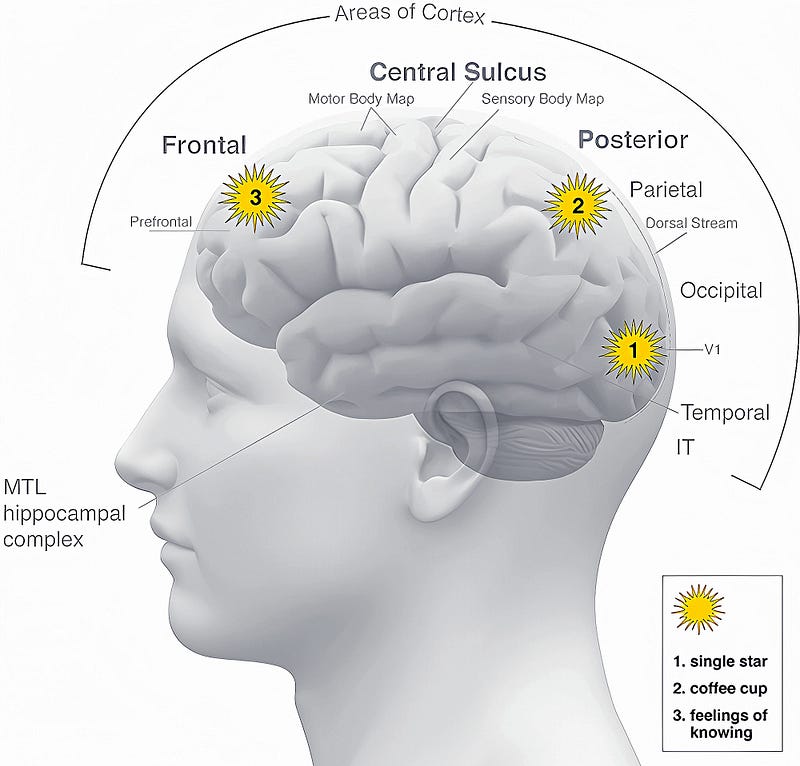
- Higher-Order Thought (HOT) Theories: These come from philosophy of mind (with David Rosenthal, a leading voice) and suggest that a mental state is conscious only when accompanied by a higher-order representation (a thought about the thought). In simple terms, to be aware of being in a state, your brain must have a description or reflection of that state. If a pain hurts but you have no meta-cognitive registration of “I am feeling pain,” then (HOT theorists claim) it isn’t a conscious pain but an unconscious one. This theory addresses awareness as essentially self-referential. An interesting variant by neuroscientist Joseph LeDoux integrates HOT with evolution: he suggests that raw sensory experiences exist, but what we call consciousness (in humans) heavily involves higher-order narratives that likely came later in evolution. The strength of HOT theories is explaining aspects of reflective awareness and metacognition — for example, why we can sometimes realize we were acting on autopilot a moment ago (the higher-order awareness was absent, so the action felt “unconscious”). A common counterargument to HOT is that it risks an infinite regress (do we need a yet higher-order thought to make the HOT conscious, and so on?) or that it might exclude infants and animals from consciousness improperly (since they may lack complex self-reflection yet surely have experiences). Empirical evidence on HOT is hard to pin down, but some neuroimaging studies suggest that brain regions associated with self-monitoring (like the prefrontal cortex) activate during conscious perception, aligning with a higher-order view. Detractors maintain that such activity might be a consequence of consciousness (e.g., preparing an introspective report) rather than its cause.
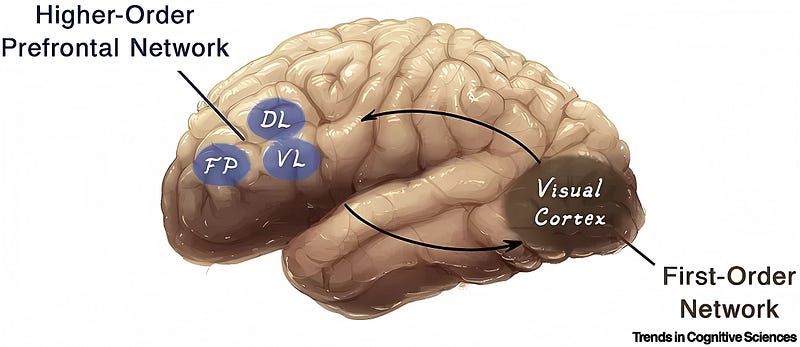
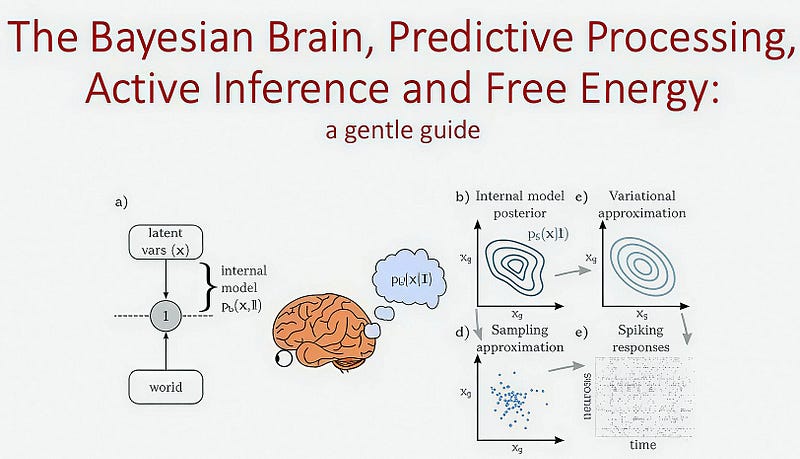
- Predictive Processing and Bayesian Brain: As mentioned, this framework isn’t a single consciousness theory, but a general model of brain function that has big implications for awareness. Karl Friston’s Free Energy Principle and predictive coding models propose that the brain is fundamentally in the business of minimizing surprise (or “free energy”) by constantly predicting sensory inputs and updating its models. Anil Seth and Jakob Hohwy have argued that instead of trying to solve the hard problem head-on, we should tackle the myriad easy problems (specific features of conscious experience) using predictive processing as a unifying paradigm. For instance, they break consciousness into components like vividness, spatial unity, selfhood, etc., and explain each in terms of predictive circuits. One concrete success is explaining why we experience a stable world despite noisy input: the brain’s predictions “smooth over” discontinuities, which is a form of understanding shaping awareness. Predictive processing suggests that disorders of consciousness or perception (like hallucinations in psychosis) result from mis-weighted prediction errors — too much reliance on prior belief, or not enough, can both lead to aberrant conscious experiences. A criticism of this approach is that it might be too broad: skeptics ask, does predictive processing really explain why some brain activity is conscious and some is not? Or is it just a theory of brain that still needs a “spark” to account for subjective experience? In reply, some proponents (Seth among them) speculate that applying the framework systematically might eventually “dissolve” the hard problem by eroding the intuitions that made it seem hard. As our understanding of each aspect of awareness grows mechanistically, the hope is that we’ll stop seeing consciousness as an inexplicable magenta haze and recognize it as the brain in action, in all its predictive, self-fulfilling glory.
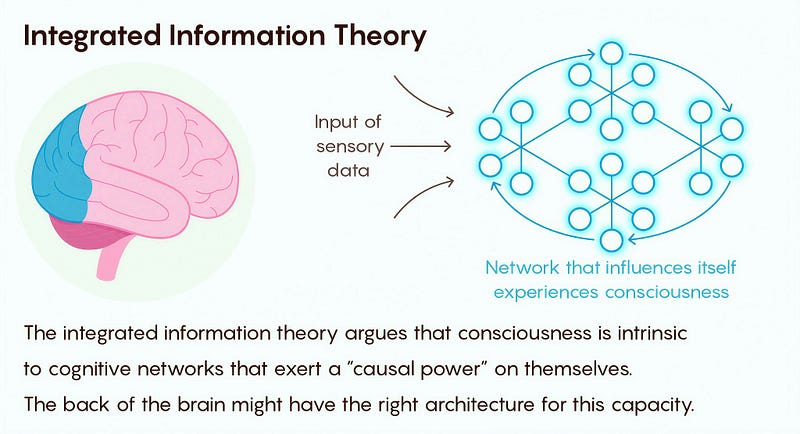
- Integrated Information Theory (IIT): IIT (developed by Giulio Tononi) is another major perspective. It starts from phenomenology, asserting that consciousness is highly integrated and information-rich, and then posits a quantitative measure (Φ, phi) to determine how conscious a system is by how much integrated information it generates. Uniquely, IIT claims to address head-on why consciousness exists: essentially, whenever information is intrinsically integrated, it feels like something to be that system. IIT has the bold implication that even a simple system with non-zero Φ has a tiny flicker of experience. It’s appealing to those who suspect consciousness might be a fundamental feature of reality (panpsychist-friendly), but it has generated pushback for being difficult to test and for perhaps over-ascribing consciousness. Indeed, critics call it “too ambitious” for trying to fully solve the hard problem with one swoop. Empirically, IIT has inspired novel approaches (for example, measuring brain integration in sleep vs wake, finding less integrated EEG patterns in deep sleep as IIT would predict). However, its abstract nature means it doesn’t yet connect well with practical neurobiology in the eyes of many researchers. The debate around IIT often centers on its exotic implications (is a simple computer conscious by IIT criteria? IIT might say, in principle, yes if it integrates information in certain ways) and whether Φ is really the magic meter for awareness or just one factor among many.
- Neurophilosophical and Pragmatic Views: Thinkers like Patricia Churchland represent a pragmatic neurophilosophy that somewhat sidesteps grand theories to focus on bridging explanations. Churchland has argued that progress will come from mapping functions to brain mechanisms step by step, rather than seeking a single master equation for consciousness. For example, understanding wakefulness, attention, memory, emotion, and how they converge may effectively demystify awareness without a clear dividing line where “magic” enters. In line with this, some philosophers (Daniel Dennett and Keith Frankish, for example) advocate “illusionism,” claiming that what we introspect as mysterious qualia are not what they seem — they are user-illusions generated by the brain’s processes. Illusionists don’t deny that we have experiences, but they argue that our sense of a private mental glow (like the redness of red as an irreducible property) is a kind of cognitive magic trick. This view is controversial, with detractors calling it a denial of the very data (experience) that needs explaining. Yet it serves as a counterpoint to views that treat consciousness as an extra ingredient beyond physical processes; illusionists say: perhaps there is no extra ingredient, just a clever brain that makes it seem that way. The tension between taking experience at face value versus explaining it away is another lively debate.
Amid these perspectives, what’s striking is that they need not be mutually exclusive in all respects. They often talk about different levels. For example, one could see predictive processing as the general operating principle, GNW as describing the network dynamics that create a unified conscious field, and HOT as describing when a particular content gets labeled as “I am experiencing X.” In fact, hybrid models are emerging. Attention Schema Theory (AST) by Michael Graziano is one such integrative attempt: it proposes that the brain not only uses attention to focus on certain information, but also constructs a simplified model (schema) of attention, and this model is what we experience as a subjective awareness. AST thereby combines elements of global workspace (importance of attention and information-access) with higher-order reflexivity (the brain’s model of its own attention) — effectively a HOT enacted by an attentional model. While no consensus has been reached, the proliferation of theories has at least clarified many sub-questions and generated testable hypotheses. We now know, for example, that there are distinct signatures for conscious versus unconscious processing in the brain (like certain EEG patterns ~300 milliseconds after a stimulus, or fronto-parietal activation for reportable stimuli). We also recognize that attention, memory, and affect are not peripheral but central to any complete theory. Indeed, a criticism of many theories so far is that they underplay factors like emotion — yet Damasio and others remind us that feeling and value may be integral to why certain information matters enough to become conscious in the first place. Debates continue over whether consciousness is an emergent property of complex computation, a fundamental property of integrated systems, or simply a convenient fiction. Through vigorous cross-talk, these perspectives inch us closer to the truth, or at least to the next generation of better questions.
Implications for Science, Philosophy, and Society
Understanding awareness has profound implications, not just for neuroscience and philosophy, but for how we see ourselves and treat others (and even machines). In the scientific realm, cracking the neural code of awareness would mark a milestone akin to cracking the genetic code. It would unify disciplines: as Churchland argued, neuroscience and philosophy need to collaborate precisely because explaining consciousness requires both neural data and conceptual clarity. We are already seeing this unity in initiatives like the Human Consciousness Project and large-scale studies of brain connectivity in conscious vs unconscious states. If we identify the consistent neural signatures of conscious awareness (the so-called Neural Correlates of Consciousness, NCCs, it could reshape medicine. For example, it could give clinicians objective tools to assess whether an unresponsive patient has inner awareness. Indeed, an implication of current research is the sobering realization that some patients diagnosed as vegetative may actually be aware inside but unable to show it. As we’ll see below, brain imaging is already enabling communication in a few such cases — a direct outcome of applying our theoretical understanding in practice.
Philosophically, unraveling awareness informs age-old questions of epistemology and ethics. Epistemically, knowing how brains produce understanding challenges what it means to “know” something. If our conscious understanding is model-based and predictive, it suggests human knowledge is never a passive mirror of reality but an active construction. This resonates with the Kantian idea that we see the world not as it is, but as our mind’s organizing principles allow. This doesn’t lead to radical skepticism (it’s not that nothing is real), but it encourages humility: our awareness of the world is an informed perspective, always subject to revision with new evidence or better models. In practical terms, this could influence education and communication — recognizing that people literally perceive facts differently if their brain’s prior beliefs differ (hence the challenge of correcting misinformation: beliefs shape what information even reaches awareness). On the ethical front, understanding consciousness might eventually force us to broaden our circle of moral concern. For example, if evidence grows that certain animals have rich conscious lives, society may feel compelled to grant them greater protections. Likewise, if one day we create AI that demonstrates neural-network signatures akin to human awareness, we will face the question of its moral status. Even today, debates rage about pain in newborns or anesthesia in animals — all hinging on interpretations of awareness. A refined neurophilosophical framework could offer clearer criteria for consciousness (maybe IIT’s Φ or GNW’s ignition patterns), thereby guiding policies on animal welfare, end-of-life decisions, and rights for non-biological intelligences.
Within neuroscience and medicine, awareness research has spurred an evolutionary perspective. Scientists are probing how consciousness arose in the course of evolution: what survival advantages did being aware confer? One idea is that awareness allowed for more flexible, context-dependent behavior — creatures could evaluate novel situations rather than just react reflexively. The implication here is that consciousness is not an all-or-nothing trait but likely emerged gradually. This softens the boundary between humans and other animals, suggesting continuity. It also implies that aspects of consciousness (like simple forms of attention or affective feeling) may exist in primitive forms in simpler brains. Accepting this continuum has moral implications (as mentioned) and also practical ones: it might encourage us to study, say, octopus or bird intelligence for clues to alternate forms of awareness, broadening our scientific imagination of what consciousness can be.
Another implication touches on the nature of the self and free will. Neurophilosophical studies of awareness — especially ones like Metzinger’s that highlight the constructed nature of the self-model — challenge our intuitive sense of being a unified, consistent ego. If what I experience as “me” is a simulation the brain uses for control and prediction, then aspects of personal identity (memories, character traits) might be more fluid and modifiable than assumed. This could influence everything from psychiatry (e.g., therapies that deliberately reshape a person’s narrative understanding of themselves) to legal responsibility (if someone’s awareness was impaired or their self-model disrupted, are they fully accountable?). The more we see consciousness and understanding as natural processes, the more we’ll grapple with questions of autonomy: Is free will just the brain’s complex decision-making felt from the inside? Some neurophilosophers say yes — and that’s not necessarily a nihilistic conclusion, it can lead to more compassion in justice (seeing criminals as individuals with broken understanding systems, perhaps treatable, rather than metaphysically evil).
On a societal level, the concept of “raising awareness” takes on new nuance. It’s not enough to bombard people with information; to truly raise awareness, one must engage their conscious attention and help integrate the knowledge into their understanding (making it personally relevant and actionable). Neuropsychology suggests techniques for this: narratives and emotional resonance ensure information isn’t just noticed but understood in context (which aligns with how our brains link memory and feeling to what we experience). Public health campaigns, for instance, now often use vivid storytelling — essentially harnessing the machinery of awareness to create concern and informed interest, rather than expecting that raw data alone will penetrate the global workspace of the populace.
Finally, an intriguing implication is technological: insights from awareness science are informing the design of more sophisticated AI and human-computer interfaces. The global workspace architecture has been used as inspiration for AI models that need to handle multiple streams of information and integrate them (some cognitive architectures explicitly implement a “blackboard” system akin to GNW). If we ever achieve machine consciousness, it may arise not from brute force computing, but from architectures that mimic the brain’s way of broadcasting, predicting, attending, and self-monitoring. Meanwhile, brain–computer interfaces already capitalize on the fact that when something is in a user’s awareness, it has certain neural signatures that a computer can detect. For example, devices can pick up the P300 EEG signal that occurs when you consciously recognize a stimulus — this has been used in rudimentary “mind-reading” spellers for paralyzed patients. As we hone the science of awareness, we could develop more advanced neuroprosthetics that communicate directly with conscious thought patterns, perhaps even allowing sharing of subjective states (a far-future speculation, but theoretically grounded in the idea that if we can map one person’s brain activity for a conscious experience, we could stimulate similar patterns in another’s — a kind of synthetic telepathy).
In summary, the implications of understanding awareness ripple outward: transforming clinical practice, informing ethical norms, enriching philosophical conceptions of knowledge and self, and driving innovation in technology. Just as unlocking the structure of DNA revolutionized biology and society, unlocking the structures and dynamics of awareness could revolutionize how we see our place in nature. It underscores the significance of the endeavor: the neurophilosophy of awareness is not an esoteric academic pursuit, but a quest that could reshape our understanding of reality, of each other, and of what it means to be an aware, understanding being.
From Theory to Practice: Applications in the Real World
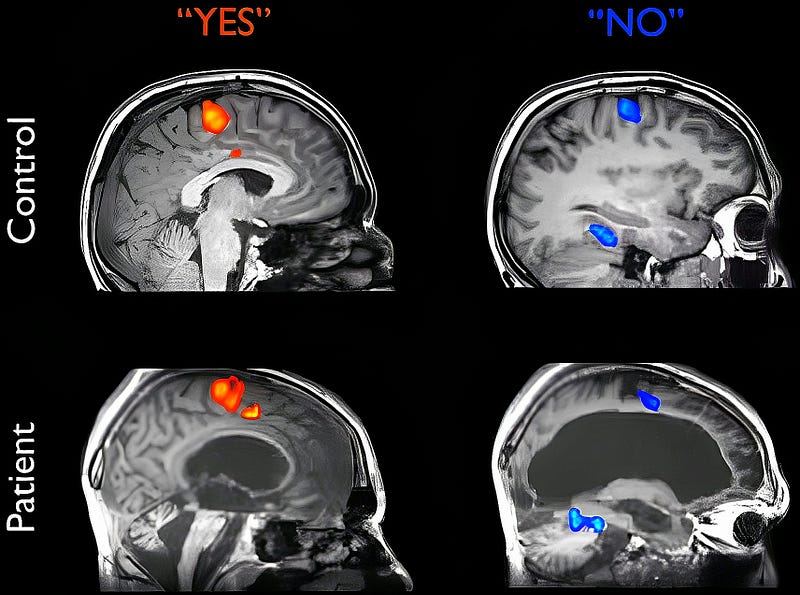
Research into consciousness and awareness is yielding practical applications that are already making a difference in medicine, technology, and daily life. Perhaps the most dramatic impact has been in the treatment and diagnosis of patients with disordered consciousness, such as those in comas or vegetative states. Traditionally, if a patient showed no response to commands or stimuli, doctors would conclude there was no awareness. This assumption has been upended by neuroscience. In a landmark study, Adrian Owen and colleagues used functional MRI to ask an unresponsive patient to perform mental imagery tasks — essentially “think about playing tennis” versus “imagine walking through your house.” Remarkably, the patient’s brain activation patterns were identical to those of healthy volunteers following the same instructions. Motor-planning regions lit up when she imagined swinging a tennis racket, and spatial memory regions lit up when she imagined navigating her home — clear evidence that she understood the commands and was wilfully shifting her thoughts, despite outwardly appearing vegetative (Owen, Adrian M., Martin R. Coleman, Melanie Boly, Matthew H. Davis, Steven Laureys, and John D. Pickard. “Detecting Awareness in the Vegetative State.” Science 313, no. 5792 (September 8, 2006): 1402–1402. https://doi.org/10.1126/science.1130197). This breakthrough demonstrated covert awareness. It has since been repeated and even extended to rudimentary communication: patients can answer yes/no questions by imagining one task for “yes” and the other for “no,” effectively communicating via brain activity. The implications are profound — clinicians now have a tool to detect consciousness that is otherwise locked-in, which can guide care (for example, avoiding discontinuing life support in someone conscious) and even allow these patients to communicate their needs or feelings. It’s estimated that a significant fraction of diagnosed vegetative patients may actually have such covert awareness. As a result, hospitals are adopting protocols for advanced neuroimaging or EEG assessments in disorders of consciousness. The very definition of “aware” vs. “unaware” is evolving, with neurotechnology giving voice to the voiceless.
Another medical application is in anesthesiology and intensive care. Monitoring awareness under anesthesia is critical — no one wants to be awake (and in agony) during surgery, yet unable to signal it. Researchers are using EEG-based indices, partly inspired by consciousness theories, to gauge when a brain has likely lost awareness. For example, a certain pattern of synchronized slow waves and disrupted frontal–parietal communication seems to accompany loss of consciousness in sleep, anesthesia, and coma. Devices that track these signals help anesthesiologists ensure a patient is truly unconscious. Conversely, in the ICU, stimulating the brain (with sounds, medication, or even mild brain stimulation techniques) based on theories of arousal and awareness has shown some success in accelerating recovery of consciousness after brain injury. These interventions stem from understanding that the thalamus and cortex form loops that sustain consciousness — stimulate the loop, and you might boot up awareness in someone who is in a borderline state. Indeed, famed neuroscientist Stanislas Dehaene has likened the fading of consciousness under anesthesia to a network collapse; keeping some activity in the right network could prevent a patient from experiencing the dreaded “anesthetic awareness” (waking up during surgery).
In mental health, the neurophilosophy of awareness intersects with treatments in surprising ways. Take mindfulness meditation, which is essentially a practice of cultivating moment-to-moment awareness in a non-judgmental way. Long before neuroscience, contemplatives claimed that this training can fundamentally transform one’s experience and understanding. Now, brain imaging studies show that even an eight-week course of mindfulness can measurably change the brain. Participants who practiced mindfulness meditation had increased gray matter in regions associated with attention, self-awareness, and memory — such as the hippocampus and parts of the prefrontal cortex. They also showed decreased activation (and even shrunken volume) in the amygdala, a region tied to stress and fear, correlating with reduced stress levels. Functionally, mindfulness seems to improve the brain’s ability to regulate attention and emotion. In terms of our discussion, it’s training the interplay between consciousness and understanding: meditators get better at observing their present experience (enhancing sensory clarity and cortical attention networks) while also recognizing transient thoughts and emotions without over-identifying with them (a meta-cognitive understanding that thoughts are just thoughts, not absolute reality). Clinically, this has been applied to treat depression, anxiety, and chronic pain — conditions where often one’s narrative understanding (ruminative thoughts, interpretations of pain) exacerbates suffering. By improving awareness, patients can uncouple the raw sensations from the layers of fearful or negative understanding that they automatically add. The success of mindfulness-based cognitive therapy in preventing depression relapse, for example, exemplifies applying the neuroscience of awareness (plasticity of attention networks) to real-world healing.
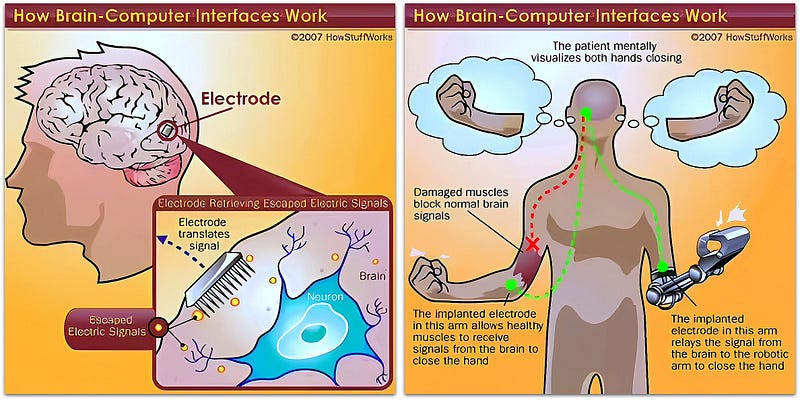
Another burgeoning application is in brain-computer interfaces (BCIs) and neurofeedback. If a certain pattern in your brain reliably indicates a certain conscious state (say, focused attention vs mind-wandering), a computer can be trained to detect it in real time. Neurofeedback systems do just that: users can learn to control their brain patterns by getting real-time feedback, effectively becoming aware of internal processes that are usually unconscious. For instance, people with ADHD have used neurofeedback to increase the amplitude of EEG waves associated with focused attention, thereby improving concentration. This is awareness in an extended sense — using technology to make one aware of their own brain states and then modulate them. In paralyzed patients, BCIs have enabled control of external devices by pure thought; for example, an implant that picks up motor intention from the cortex can move a robotic arm. What’s key is that the patient has to be aware of the feedback: they imagine moving, see the arm move or a cursor move, and through awareness of the linkage, they gradually learn to refine their thought to achieve the goal. This loop of conscious intention and perceptual feedback is essentially harnessing the patient’s awareness to retrain the brain in lieu of muscles. It underscores a point: consciousness is useful. It’s not just an epiphenomenal glow; it’s doing work by integrating perception and action in novel situations, which is why BCIs leverage it.
In the realm of education and training, understanding awareness has led to more effective strategies for learning and skill acquisition. One insight is the importance of metacognition — awareness of one’s own knowledge state. Students who are trained to be aware of what they have truly understood versus what they merely rote-memorized perform better in the long run. This aligns with neuropsychological findings that actively engaging frontal “monitoring” networks during study (thinking about how you’re thinking) leads to deeper encoding of material. Techniques like self-quizzing and explaining out loud work by forcing us to be conscious of gaps in understanding. Even the timing of study sessions can be informed by awareness research: if you study until you’re barely able to recall (difficult retrieval), that struggle for conscious recall signals the brain to consolidate memory more than if learning was easy. In other words, making the brain aware of its own effort optimizes learning — a counterintuitive idea compared to just passive review.
Beyond humans, the study of awareness is influencing artificial intelligence design. While current AI, like deep learning networks, is not conscious, researchers borrow concepts like the global workspace to improve AI’s ability to handle multiple tasks or to interpret its own actions. There is a whole field of machine consciousness theory exploring if implementing architectures analogous to the brain’s (with modules, feedback, self-monitoring loops) could yield AI that not only excels at narrow tasks but has a flexible, unified state akin to awareness. If nothing else, these efforts produce more transparent AI that can report on its “thought process,” somewhat like introspection. Such AI might not feel anything, but it could have an “understanding” layer, making it more generalizable and trustworthy. On the flipside, AI also helps model aspects of human awareness: computational simulations of brain networks allow us to test how certain connectivity patterns or neuron types contribute to conscious vs unconscious processing. This synergy accelerates both cognitive science and AI development.
Finally, in everyday life, insights from the neurophilosophy of awareness can be applied to improve well-being. Understanding that attention is a limited resource leads to practical steps like mindfulness (already discussed) and “digital dieting” to avoid constant partial attention that erodes deep awareness. Realizing that our perceptions are predictions can make us more open-minded — we might catch ourselves in a mistaken assumption more readily (“Perhaps my expectation is coloring what I think I see or hear”). Many people now use apps for “brain training” or lucid dreaming induction; these are fundamentally attempts to play with awareness — either to sharpen concentration or to become conscious within one’s dreams. While the efficacy of many commercial brain-training programs is debatable, the underlying principle is sound: targeted mental exercise can strengthen neural circuits of attention and meta-awareness.
In summary, the once esoteric study of awareness has burgeoned into tangible applications. From enabling neurologically injured patients to communicate, to enhancing mental health and cognitive performance, to inspiring new technologies, the theoretical insights are proving their worth. Each successful application also feeds back, providing new data and intuitions for theorists. As we continue to translate the science of consciousness into practice, we edge closer to a world where “awareness” is not just a philosophical concept or a clinical symptom, but a manipulable, observable, and profoundly useful aspect of our natural being.