Seeds of Flavor and Culture: The Story of Njangsa (Ricinodendron heudelotii)
Introduction
Introduction
In the dense forests and shifting farmlands of Central and West Africa grows a tree whose seeds carry not only flavor but also centuries of culture, medicine, and commerce. Known as njangsa, Ricinodendron heudelotii remains a cornerstone of culinary tradition in Cameroon, Nigeria, and Ghana, while also serving as a versatile resource for cosmetics, agroforestry, and local economies. What makes this species remarkable is not just its taste or yield, but its capacity to connect biodiversity with human ingenuity in a sustainable way.
Taxonomy
Ricinodendron heudelotii belongs to the Euphorbiaceae family, a group known for resinous trees and shrubs with diverse ecological roles. The tree is monotypic within its genus, meaning no other species shares its classification. Vernacular names vary across regions, reflecting their cultural reach. In Cameroon, speakers of Ewondo call it “njangsa” or “jangsa,” while in Ghana, the Akan language knows it as “wama.” In Nigeria, Yoruba speakers refer to it as “ogbono,” though it is distinct from Irvingia gabonensis, which is often marketed under the same name. In French-speaking Central Africa, it is called “akpi,” and in Côte d’Ivoire, it carries the name “djansang.” Each name reflects its place in kitchens, marketplaces, and cultural rituals, underscoring its importance far beyond taxonomy.
Biology
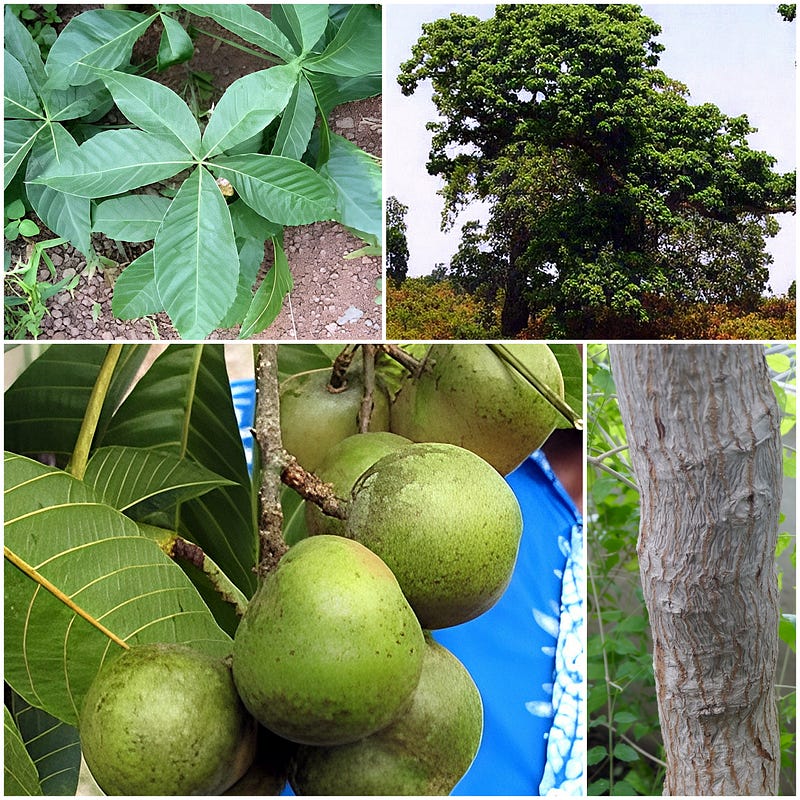
Njangsa is a fast-growing, dioecious tree that can reach 150 ft (45 m) in height. Its straight trunk is buttressed at the base, providing stability in rainforest soils. The leaves are large, palmate, and deciduous, falling seasonally to enrich the soil below. Flowering occurs at the onset of rains, with male and female flowers borne on separate trees. Fruits are woody capsules, splitting open to release two to four oily seeds. These seeds are round, brown, and aromatic when roasted, forming the basis of their culinary and medicinal significance. The species adapts well to disturbed soils and regenerates readily, a feature that makes it valuable for agroforestry systems.
Ecology
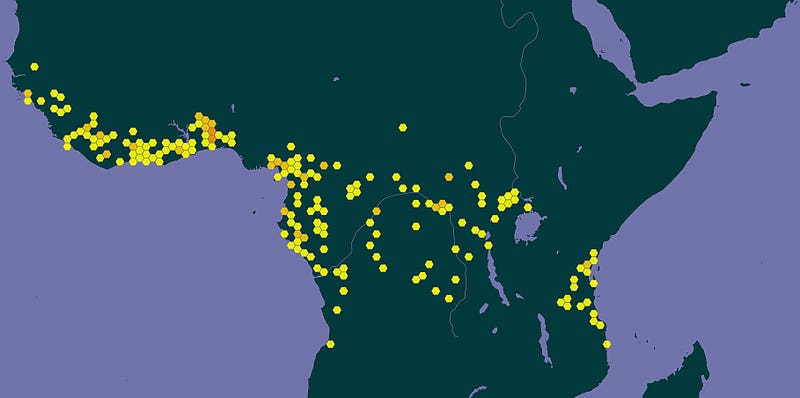
Ricinodendron heudelotii thrives in tropical rainforests, savanna edges, and secondary forests across West and Central Africa, particularly in Cameroon, Gabon, Nigeria, and the Democratic Republic of Congo. It plays a vital ecological role by stabilizing soils, sequestering carbon, and providing shade for understory crops like cacao and coffee. Pollinators such as bees are drawn to its flowers, while birds and mammals disperse its seeds. Sustainable harvesting practices ensure that both food security and biodiversity remain intact, but overexploitation of wild populations could stress ecosystems if demand continues to rise.
Uses
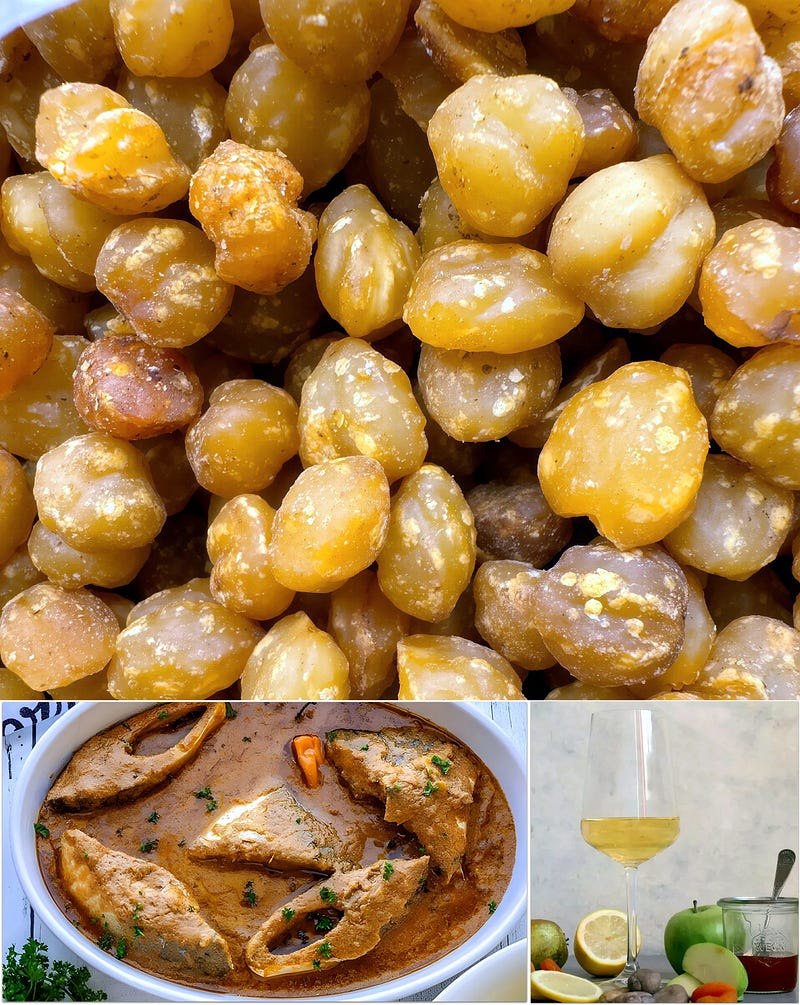
The seeds are the core edible part. They are typically roasted and ground into pastes or powders, used as thickeners in soups and stews such as Cameroonian “ndolé” or Nigerian “ogbono soup.” Seasonality aligns with fruiting cycles from June to August, though dried seeds can be stored for year-round use. A mature tree can yield 20–25 kg (44–55 lb) of dried seeds annually. Nutritionally, njangsa provides about 500 kcal per 100 g, rich in protein, essential fatty acids, calcium, magnesium, and phosphorus. Anti-nutritional factors like tannins and phytates are present but reduced by roasting. Processing requires seed extraction, drying, roasting, and grinding. Commercial products range from spice powders to seed oil, which is prized for cosmetics and cooking.
The taste is nutty, earthy, and slightly bitter with a rich aroma reminiscent of hazelnuts. When cooked, the seeds lend a silky mouthfeel and thicken broths with a complex aftertaste. Best cooking methods include roasting, slow simmering, and incorporation into palm oil–based stews. Pairings with leafy greens, smoked fish, and chili peppers enhance the flavor balance.
Medicinally, seed oil is used for anti-inflammatory purposes and as a topical treatment for skin ailments. Traditional medicine recognizes active compounds like linoleic acid and phenolics, though evidence remains largely ethnobotanical rather than clinically validated. Dosage forms are mostly decoctions and oils. Contraindications are minimal, but overconsumption of raw seeds can cause digestive discomfort.
Beyond food, the tree’s leaves and fruit husks serve as fodder for livestock, though tannin content limits palatability. The timber, though lightweight, is used in furniture and packaging. Oil extraction by cold-press methods yields cosmetic-grade material used in creams and soaps. The species also contributes to soil fertility by recycling nutrients, making it suitable for agroforestry regimes that combine trees with crops. Carbon sequestration potential is notable given its size, estimated at 5–7 tons of CO₂ absorbed annually for a mature tree.
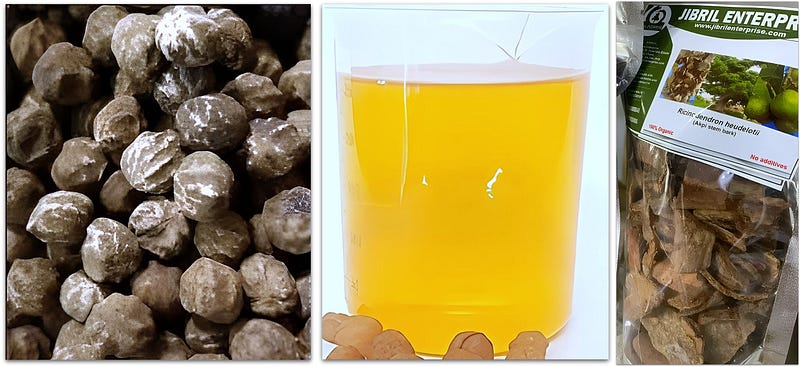
Market demand is steady, with seeds sold at regional markets for 3–5 USD per kilogram (1.36–2.27 USD per lb). Cameroon, Nigeria, and Côte d’Ivoire are major producers, while diaspora communities sustain export demand. Certification and traceability remain limited, though fair-trade initiatives are emerging. Conservation status is currently stable, but localized overharvesting requires monitoring to avoid genetic erosion.
Culinary Aspects
Njangsa offers a layered flavor profile. The taste is earthy and nutty with hints of bitterness that mellow during cooking. The aroma is warm and woody, filling kitchens with a scent that suggests roasted seeds and forest floors. Texture is creamy once ground, lending body and richness to soups. Mouthfeel is smooth, coating the palate with lingering complexity. The balance tilts toward savory, with aftertastes of smoke and subtle spice. In terms of appearance, the paste is golden-brown, while the whole seeds resemble oversized hazelnuts. Chemesthesis is mild, contributing gentle warmth without sharp heat. Culturally, njangsa stands at the intersection of daily sustenance and ritual, used in wedding dishes, communal feasts, and traditional healing practices.
Wine Pairings
The nutty, earthy character of njangsa pairs best with wines that echo its depth while cutting through its richness. A South African Chenin Blanc, particularly barrel-fermented examples from Stellenbosch, offers bright acidity and honeyed notes that lift the creaminess of njangsa-thickened stews. For red preparations with smoked fish and chili, a Tannat from Uruguay works well, its bold tannins and dark fruit complementing the dish’s intensity. For dishes leaning toward leafy greens like ndolé, a dry Furmint from Hungary provides herbal lift and minerality that resonates with the bitterness of greens while smoothing the nutty base of njangsa.
Conclusion
Ricinodendron heudelotii is more than a tree; it is a living bridge between ecology, culture, and commerce. From village kitchens to urban markets, from forest soils to international cosmetic shelves, its influence spans multiple dimensions of human life. The challenge now is to manage its use responsibly, ensuring that njangsa continues to flavor stews, enrich soils, and sustain livelihoods for generations to come. Its story illustrates how biodiversity, when respected and stewarded, can be both a cultural treasure and a pathway to sustainable futures.